


What if the persistent fatigue you’ve felt since early 2024 isn’t just a sign of a busy lifestyle, but a specific biomarker hidden in your blood work? It’s incredibly frustrating to stare at a lab report filled with cryptic abbreviations and feel more confused than when you started. You likely believe that health data should be clear and accessible, yet many people find themselves stuck behind insurance barriers or waiting weeks for a simple consultation. You deserve to understand your body without the clinical coldness often found in traditional healthcare systems.
This guide simplifies the science behind your mchc blood test tempe results, showing you exactly how these levels impact your long-term wellness and how you can access professional screenings without a doctor’s order. We’ll explore the vital connection between hemoglobin concentration and your daily energy while providing a clear, seamless path to booking your local screening in Arizona today. By the end of this article, you’ll have the factual certainty needed to take full control of your diagnostic journey and move toward a more proactive, empowered lifestyle.
Key Takeaways
- Gain clarity on how Mean Corpuscular Hemoglobin Concentration (MCHC) serves as a vital indicator of your red blood cell health and long-term vitality.
- Discover how to interpret your results with confidence, transforming complex lab values into actionable insights for your personalized wellness journey.
- Experience the empowerment of ordering your own mchc blood test tempe through a secure portal, bypassing the need for traditional doctor referrals or insurance.
- See how integrating MCHC into a comprehensive wellness panel provides a holistic view of your metabolic health when paired with markers like glucose and cholesterol.
- Learn the exact preparation protocols, including hydration strategies tailored for the Arizona climate, to ensure your diagnostic results are accurate and reliable.
Understanding the MCHC Blood Test: Your Key to Red Blood Cell Health
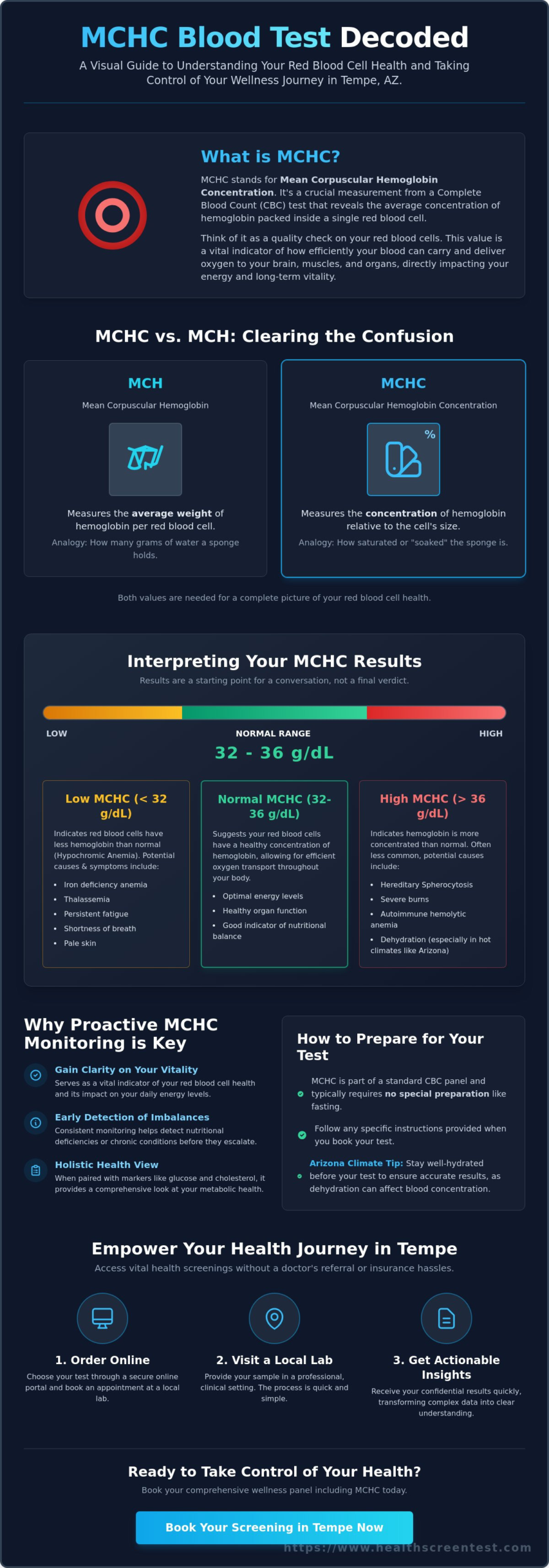
When you receive your lab results, the acronyms can feel overwhelming. A Mean corpuscular hemoglobin concentration (MCHC) test is one of the most revealing markers in a standard Complete Blood Count (CBC). It measures the average concentration of hemoglobin within a single red blood cell. For residents seeking an mchc blood test tempe providers offer, this value is a vital indicator of how effectively your blood delivers oxygen to your brain, heart, and muscles. It isn’t just a number; it’s a window into your cellular vitality.
For individuals over 40, tracking this marker is a proactive step toward maintaining high energy levels and long term wellness. As we age, our bodies become more sensitive to fluctuations in oxygen transport. If your MCHC levels are off, you might experience persistent fatigue or shortness of breath that you’ve previously dismissed as just getting older. Understanding these metrics empowers you to make informed decisions about your health in cities like Tempe, Chandler, and Scottsdale.
To better understand this concept, watch this helpful video:
- MCHC identifies the concentration of hemoglobin, not just the total amount.
- This marker is essential for distinguishing between different types of anemia, such as microcytic or hypochromic anemia.
- Testing is a standard part of a CBC and doesn’t require separate preparation.
- Consistent monitoring helps detect nutritional deficiencies or chronic conditions early.
Why MCHC Matters for Proactive Wellness
Hemoglobin is the specialized protein responsible for grabbing oxygen in your lungs and releasing it throughout your body. If your cells don’t have enough hemoglobin, your organs don’t get the “fuel” they need to function at peak performance. Monitoring these levels provides deep peace of mind, as it allows for the early detection of blood imbalances before they escalate into more serious health concerns. MCHC is a precise measurement of how packed your red blood cells are with hemoglobin. By keeping an eye on this biomarker, you take control of your health journey rather than simply reacting to symptoms.
MCHC vs. MCH: Clearing Up the Confusion
It’s common to confuse MCHC with MCH (Mean Corpuscular Hemoglobin), but they tell different stories about your blood. While MCH measures the average weight of hemoglobin in your cells, MCHC measures the concentration relative to the size of the cell. Think of a sponge as a red blood cell and water as hemoglobin. MCH tells you how many grams of water the sponge holds. MCHC tells you how saturated or “soaked” that sponge is. You need both values for a complete view of your red blood cell health. If you’re looking for comprehensive health screenings in the Phoenix or Tempe area, ensuring both markers are analyzed is key to an accurate diagnosis. This data-driven approach is the hallmark of modern, proactive medicine.
Interpreting Your Results: What Low and High MCHC Levels Reveal
Receiving your lab report can feel overwhelming, but these numbers are simply tools for better self-understanding. For most adults, a standard MCHC range falls between 32 and 36 grams per deciliter (g/dL). However, your personal “normal” might look different based on your unique medical history or current lifestyle. If your results fall outside these lines, don’t panic. It’s a prompt for a deeper conversation with a professional, not a final medical verdict. In sun-drenched cities like Tempe or Scottsdale, environmental factors play a significant role in how we read these labs. Intense Arizona heat often leads to dehydration, which subtly shifts how your blood markers appear on a screen. Understanding your Red Blood Cell (RBC) Indices helps put your MCHC in the right context within a full blood count panel.
Causes and Symptoms of Low MCHC (Hypochromia)
Low MCHC, technically known as hypochromia, means your red blood cells don’t have a sufficient concentration of hemoglobin. This is most frequently caused by iron deficiency anemia, a condition that affects roughly 10% of women and individuals assigned female at birth. For those in the 40+ demographic, this often manifests as persistent, heavy fatigue, a noticeable shortness of breath during a morning walk at Tempe Town Lake, or unusually pale skin. While a lack of iron is the usual suspect, other factors like chronic inflammation or even lead exposure can lower these levels. Identifying these shifts early by ordering an mchc blood test tempe clinics offer allows for proactive adjustments to your nutrition or supplement routine before symptoms worsen. If your fatigue and inflammation markers suggest a deeper immune response, exploring autoimmune disease testing in Chandler can help determine whether an underlying autoimmune condition is contributing to your low MCHC levels.
Understanding High MCHC Levels
When MCHC levels climb above the 36 g/dL threshold, it suggests that hemoglobin is overly concentrated within the red cells. According to clinical data from the Mayo Clinic, high levels can point toward specific conditions like hereditary spherocytosis or autoimmune hemolytic anemia. These are situations where the body’s immune system mistakenly attacks its own red cells, causing them to become fragile and small. It’s also common to see a “false high” if you’re experiencing severe dehydration, a frequent occurrence during Phoenix summers. When the liquid part of your blood decreases, the concentration of hemoglobin appears higher than it actually is. Keeping an eye on these markers through an mchc blood test tempe service is a vital part of taking control of your long-term health and ensuring your body has the oxygen-carrying capacity it needs for an active lifestyle.
The Benefits of Direct-to-Consumer Lab Testing in Tempe
The healthcare landscape in the Salt River Valley has shifted significantly by 2026. Residents are increasingly moving away from traditional, gatekeeper-heavy models toward a more autonomous approach. Choosing an mchc blood test tempe through a direct-to-consumer model means you don’t have to wait weeks for a primary care appointment just to get a lab requisition. You simply select the tests you need, pay a transparent price, and visit a local collection site. This streamlined process removes the friction of insurance approvals and the stress of justifying your health concerns to a third party.
Privacy remains a top priority for our clients. When you bypass the traditional clinical route, your results aren’t immediately funneled into a general electronic medical record that multiple providers can access. Instead, your data is delivered directly to you through a secure, encrypted portal. This discretion is especially valuable for those monitoring sensitive biomarkers or those who prefer to maintain strict control over their medical history. Convenience is another major factor. With over 15 partner locations across Tempe and the surrounding East Valley, finding a spot near your home or office takes minutes. You can find more information on local options through our comprehensive health blog.
Taking Control of Your Health Data
🛡️ Empowerment & Privacy
Accessing your own data transforms how you interact with the medical community. Instead of arriving at a consultation with vague symptoms, you can present hard data. An MCHC value is typically part of a Complete Blood Count (CBC), which serves as a foundational snapshot of your overall wellness. By 2026, data suggests that 52% of adults in Arizona prefer to review their lab results privately before discussing them with a specialist. This proactive stance allows you to research specific biomarkers and prepare meaningful questions, making your eventual doctor’s visit far more productive. It’s about moving from a reactive state of “waiting for news” to a proactive state of lifestyle optimization.
Affordability and Transparency in 2026
📈 Financial Clarity
Traditional lab billing is notoriously opaque; many patients receive “surprise bills” months after a blood draw because of unmet deductibles or out-of-network fees. We’ve eliminated that uncertainty. Our self-pay model often costs 30% to 50% less than the typical out-of-pocket expense at a hospital-affiliated lab. When you book an mchc blood test tempe, the price you see is exactly what you pay. There are no hidden facility fees or processing charges. This transparency is a core pillar of our philosophy. For those looking for broader assessments, you can view our full range of options on our wellness screenings page. We believe that high-quality diagnostic data should be accessible to everyone, regardless of their insurance status or provider network.
Why MCHC is a Critical Component of Your Comprehensive Wellness Panel
Your MCHC levels don’t exist in a clinical vacuum. When you review your mchc blood test tempe results, it’s vital to look at how this marker interacts with other key indicators like LDL cholesterol and blood glucose. For instance, if your glucose is chronically elevated, it can lead to inflammation that affects red blood cell lifespan. Seeing these markers together helps you understand if your fatigue is a simple nutrient deficiency or a more complex metabolic shift. By viewing MCHC alongside a full lipid profile, you get a clearer picture of how well your blood is delivering oxygen versus how much resistance it faces from arterial plaque. For residents across the Phoenix metro area, pairing your MCHC results with an advanced health panel phoenix providers offer gives you the most complete picture of your organ health and metabolic function.
Many of our clients in Tempe and Gilbert start their journey with the Mens Comprehensive Package. While the name follows traditional diagnostic naming, these panels serve as a vital baseline for any individual over 40 who wants total body awareness. These tests look at the hormonal and chemical environment that allows your blood cells to thrive. It isn’t just about one number; it’s about the harmony between your oxygen carrying capacity and your metabolic health. Taking this proactive approach turns a standard checkup into a powerful tool for personal empowerment.
[INSERT YOUTUBE VIDEO: How to Read Your CBC Results Like a Pro]
The Connection Between Anemia and Heart Health
Low MCHC is a primary indicator that your red blood cells don’t have enough hemoglobin to carry oxygen efficiently. This creates a significant strain on your cardiovascular system. When oxygen levels are low, your heart has to pump faster and harder to ensure your brain and muscles get what they need. The National Institutes of Health (NIH) reports that as of 2023, approximately 5.6% of the U.S. population meets the criteria for anemia. For those in Phoenix and Scottsdale, untreated anemia can lead to long-term issues like heart murmurs or even an enlarged heart. Monitoring your blood health is a direct investment in your cardiac longevity. You can explore our comprehensive screenings to see how your blood markers align with your heart health goals.
Beyond the Blood: Liver and Kidney Synergy
Your blood health depends on the silent work of your liver and kidneys. The kidneys produce a hormone called erythropoietin, which signals your bone marrow to produce red blood cells. Simultaneously, the liver acts as the primary storage site for iron and B12, the building blocks of hemoglobin. If your mchc blood test tempe shows a decline, it might be a secondary symptom of a sluggish liver or a shift in renal function. This is why we often suggest a Comprehensive Metabolic Panel to our clients in Mesa and Chandler. It allows us to see the “why” behind the numbers. When your organs are supported, your blood quality naturally improves, leading to better energy and faster recovery times.
Understanding these connections helps you move from reactive care to a proactive lifestyle. It’s about having the data to make informed choices every day.
Ready to take control of your health with clear, actionable data? Book your comprehensive wellness panel today and get the peace of mind you deserve.
How to Prepare for Your Screening and Take Charge of Your Health
Taking control of your health shouldn’t feel like a chore. We’ve streamlined the mchc blood test tempe residents rely on into three simple, manageable steps. First, you’ll select and order your screening online through our secure portal. This allows you to browse available tests from the comfort of your home. Next, you’ll visit one of our partner labs at a time that fits your schedule. Finally, you’ll receive your results electronically, usually within 24 to 48 hours. This efficient process eliminates the long wait times often found in traditional clinical settings. Our staff understands that needles can cause anxiety for some. They’re trained to provide a supportive environment that prioritizes your comfort and professional warmth throughout the draw.
Preparation Tips for Accurate Results
Preparation is the key to accuracy. In our dry Arizona climate, staying hydrated is essential for a seamless phlebotomy experience. Dehydration can make your veins harder to find, which leads to a more difficult draw. Drink plenty of water the day before and the morning of your appointment. According to the Mayo Clinic, fasting for 8 to 12 hours is often required for comprehensive panels that include MCHC. You should also discuss any supplements with your provider. High doses of biotin, also known as Vitamin B7, can sometimes interfere with certain lab assays. If you’re looking for a convenient location, it’s easy to find a Quest Diagnostics near me in Gilbert or right here in Tempe.
Interpreting Your Results with Confidence
We believe you shouldn’t need a medical degree to understand your own body. Our reports translate complex biomarkers into plain English so you can see exactly where your levels stand. While these screenings are for educational and preventive purposes, they provide the data you need to have informed conversations with your doctor. The CDC emphasizes that early detection through regular check-ups can lead to better health outcomes over time. One of our recent clients, Sarah from Chandler, shared her experience: “I finally found the peace of mind I was looking for. The results were so easy to read, and I felt empowered to make real changes.” This proactive approach is a cornerstone of modern wellness, turning clinical data into actionable lifestyle insights.
Empower Your Wellness Journey with Data-Driven Insights
Monitoring your MCHC levels offers a vital window into your cellular health and oxygen efficiency. Research from the National Institutes of Health indicates that these values are essential for identifying blood disorders and nutritional gaps that impact your daily energy. By tracking these biomarkers, you’re making an informed choice to protect your long-term vitality. This is a crucial component of wellness for anyone over 40 looking to optimize their physical performance.
Accessing a high-quality mchc blood test tempe residents can trust is simpler than ever. You don’t need a doctor’s order or insurance to get started. We provide access to more than 4,000 certified lab locations across the country, ensuring your screening is convenient and professional. Your results are delivered through a secure, private portal, keeping your information confidential while giving you the clarity you need.
Take Control of Your Health—Order Your Comprehensive Screening Today
Investing in your health today creates a foundation for a more vibrant tomorrow. You have the power to stay ahead of your wellness needs with accurate data and professional support. Start your journey toward lasting peace of mind right now.
Frequently Asked Questions
Is a fast required for an MCHC blood test?
You don’t need to fast for an MCHC blood test when it’s performed as part of a standard Complete Blood Count (CBC). However, clinicians often order this biomarker alongside metabolic panels or cholesterol tests that require an 8 to 12 hour fast for accuracy. If your Tempe healthcare provider hasn’t specified otherwise, you can eat and drink normally before your appointment. Staying hydrated is actually encouraged as it makes the phlebotomy process smoother and more comfortable.
Can I get an MCHC test in Tempe without a doctors prescription?
Yes, you can access an mchc blood test in Tempe without a traditional doctor’s order through our direct-to-consumer platform. This model empowers you to take control of your diagnostic journey by choosing tests that fit your proactive health goals. By removing the need for a prior consultation, we provide a seamless path to obtaining your hematology data at your convenience. You’ll receive professional, lab-certified results that you can review privately or share with your specialist.
What is a dangerously low MCHC level for adults over 40?
An MCHC level below 28 g/dL is generally considered critically low for adults over 40 and often indicates severe iron deficiency or chronic blood loss. According to the Mayo Clinic, the reference range for a healthy adult typically falls between 32 and 36 grams per deciliter (g/dL). Readings that drop significantly below this range require immediate medical evaluation to determine if microcytic anemia is affecting your oxygen transport. Identifying these shifts early is essential for maintaining energy levels as you age.
How long does it take to get MCHC results back in Arizona?
You can typically expect your results within 24 to 48 hours of your blood draw at our Arizona locations. Our labs prioritize efficiency to ensure you receive actionable insights without unnecessary delays. Once your pathology report is finalized, you’ll receive a secure notification to view your comprehensive data through our private portal. This rapid turnaround time allows you to make informed decisions about your wellness plan almost immediately after your visit.
Can dehydration cause a high MCHC reading?
Dehydration can cause a high MCHC reading because a decrease in plasma volume makes the hemoglobin within your red blood cells appear more concentrated. When your body lacks sufficient fluids, the laboratory analysis may show an artificial spike in this biomarker. It’s helpful to drink plenty of water before your test to ensure your results accurately reflect your baseline health rather than your hydration status. Proper fluid intake ensures the ratio of hemoglobin to cell volume remains stable during testing.
What is the difference between MCHC and Hemoglobin on a lab report?
Hemoglobin measures the total amount of oxygen-carrying protein in your blood, while MCHC calculates the average concentration of that protein within a single red blood cell. Think of hemoglobin as the total weight of cargo on a ship and MCHC as how densely that cargo is packed into each container. Both metrics are vital for diagnosing different types of anemia and understanding your overall cellular health. They work together to give a complete picture of how effectively your blood transports oxygen.
Does insurance cover direct-to-consumer blood tests at Health Screen Test?
Health Screen Test operates as a private-pay service to ensure maximum confidentiality and speed, so we don’t bill insurance providers directly. Many of our clients find that our transparent, upfront pricing is more cost-effective than high-deductible insurance plans. You can often use your Health Savings Account (HSA) or Flexible Spending Account (FSA) funds to cover these screenings, depending on your specific plan’s guidelines. This approach keeps your sensitive health data under your direct control without third-party involvement.
What should I do if my MCHC results are outside the normal range?
If your MCHC results fall outside the standard 32 to 36 g/dL range, you should schedule a follow-up with a qualified healthcare professional to discuss the findings. While a single outlier doesn’t always indicate a chronic condition, it serves as an important signal to investigate potential nutritional deficiencies or underlying health issues. We provide clear, easy-to-read reports that you can share with your primary care provider in Tempe or Scottsdale. Taking proactive steps based on your data is a powerful way to manage your long-term vitality.

Article by
Alexander Aquino, RN
With over 35 years of dedicated service within the healthcare industry, I've witnessed firsthand the profound difference early detection can make in saving lives. This experience has ignited my mission to empower individuals to take control of their healthcare before challenges arise.
Throughout my career in both nursing and medicine, I have worked in inpatient hospitals and outpatient clinical settings. I've dedicated myself to one unwavering principle: prevention saves lives. Every day in healthcare reinforces this truth—the earlier we detect potential health issues, the better the outcomes for patients.
Disclaimer
Health Screen Test does not provide medical advice, diagnosis, treatment, or prescription services, nor does it bill insurance. The content presented in this blog is intended solely for educational purposes to help you make informed decisions before purchasing any screening tests. By clicking on an affiliate link, you will be redirected to the respective screening company’s website. Please consult your physician for personalized medical advice. Kindly note that I may receive a small commission from purchases made through affiliate links.