


What if the 115 degree heat in Mesa isn’t the primary reason you feel completely drained by noon? If you’re living in the Phoenix metro area, it’s easy to blame the climate for your chronic fatigue, but the true culprit often lies in your ferritin levels. I understand how frustrating it feels to push through your day in Gilbert or Chandler while your body feels like it’s running on empty. You deserve to know why your energy has dipped without waiting three weeks for a standard doctor’s appointment.
In this guide, I’ll show you exactly how this specific biomarker measures your body’s iron stores and what those numbers mean for your daily vitality. We’ll look at the specific symptoms that distinguish simple tiredness from a clinical imbalance. You’ll also discover how to book a private, professional test in Scottsdale or Tempe today and receive your results within 24 hours, allowing you to take full control of your health journey with clinical accuracy and total privacy.
Key Takeaways
- Understand why your ferritin level serves as your body’s essential iron “savings account” and what it reveals about your long-term energy reserves.
- Learn why standard blood panels often overlook early iron depletion and how to identify the specific biomarkers that provide a complete picture of your health.
- Distinguish between “normal” lab results and the optimal ranges necessary for maintaining vitality and wellness in your 40s and beyond.
- Recognize how the unique Arizona climate can mask common symptoms of deficiency and which red flags require immediate attention.
- Gain the tools to take control of your health through a discreet, three-step testing process available across Phoenix, Mesa, and Gilbert.
Understanding Ferritin: Your Body’s Iron Savings Account
I often describe ferritin as the silent architect of your energy levels. While most people focus on iron, ferritin is actually a specialized protein that stores iron inside your cells, releasing it only when your body requires a boost. To make this easier to visualize, I use a simple financial analogy. If iron is the cash currently sitting in your wallet for daily expenses, ferritin is your savings account balance. It represents the total wealth of mineral reserves you have tucked away for future needs. Having cash in your pocket is great, but your long-term financial security depends on the strength of your bank account.
When I review lab results for clients in Scottsdale and Phoenix, I find that a standard iron test often misses the full story. Your serum iron levels can fluctuate wildly based on your last meal or even the time of day. However, a ferritin test provides a much more stable and accurate reflection of your true iron status. According to clinical data, approximately 1.5 billion people globally suffer from iron deficiency, and many don’t realize it because their standard hemoglobin levels appear normal. By measuring this storage protein, we can identify a “depleted’ savings account” months before it leads to full-blown anemia.
If you want to dive deeper into the science of this protein structure, you can read more about What is Ferritin? through this detailed scientific overview. Understanding this biomarker is the first step toward reclaiming your physical edge. If you are ready to check your levels, you can easily book a comprehensive Health Screen Test to get a clear picture of your internal reserves.
Key Takeaways for Arizona Residents
- Local Accessibility: You can access professional testing at clinical sites in Gilbert and Mesa without needing a prior doctor’s prescription.
- Rapid Turnaround: Most residents receive their digital results within 24 to 48 hours, allowing for immediate lifestyle adjustments.
- Activity Support: Optimal iron storage is essential for those participating in high-intensity outdoor activities like hiking Piestewa Peak or cycling through Scottsdale.
- Early Detection: Testing can identify iron depletion even when traditional red blood cell counts remain within the “normal” range.
The Role of Ferritin in Daily Vitality
Living in the Salt River Valley requires a high level of physical resilience. The heat and arid climate of the Sonoran Desert place unique demands on your cardiovascular system. Ferritin plays a foundational role here because it directly supports the production of healthy red blood cells. These cells are the primary vehicles for oxygen transport. Without adequate storage, your body cannot efficiently move oxygen from your lungs to your working muscles. This is why many active adults over 40 suddenly feel a “ceiling” on their performance during their morning runs or tennis matches.
Beyond simple oxygen transport, this protein is deeply linked to mitochondrial function. Your mitochondria are the “power plants” of your cells, responsible for generating 90% of the energy your body needs to function. Iron is a critical cofactor for the enzymes within these power plants. When your ferritin levels drop below 30 ng/mL, your cellular energy production begins to stall, leading to that heavy, “brain fog” sensation that caffeine can’t fix. Monitoring these levels is a proactive way to ensure your body remains optimized for the vibrant Arizona lifestyle. Don’t wait for exhaustion to set in before you take action. You can schedule your Health Screen Test today to take full control of your metabolic health and vitality.
Interpreting Your Results: What High and Low Ferritin Levels Mean
Getting your lab results back can feel like a significant turning point. If you’ve been dragging yourself through your morning hike in Scottsdale or feeling unusually winded during a walk in downtown Phoenix, seeing the numbers on paper provides a sense of clarity. For 2026, clinical laboratories typically define a normal ferritin range as 20 to 250 ng/mL for men and 15 to 150 ng/mL for women. But there’s a catch. These broad ranges don’t always reflect what’s “optimal” for a vibrant life after 40. I’ve seen many clients in Chandler who fall into the “normal” category at 18 ng/mL but still suffer from debilitating fatigue. We often look for a sweet spot, typically between 50 and 100 ng/mL, to ensure your body isn’t just surviving, but thriving.
The emotional relief of finally finding a cause for chronic exhaustion is profound. It validates that your symptoms aren’t “all in your head” or just a natural part of aging. Most imbalances are easily managed once they’re identified through professional screening. By catching these trends early, you can implement small changes that yield massive improvements in your daily energy levels and long-term vitality.
Low Ferritin: Signs of an Empty Reserve
When your levels drop, it means your body’s iron “savings account” is nearly empty. This stage often precedes clinical iron-deficiency anemia, where your red blood cell count finally starts to dip. If you notice brittle nails, thinning hair, or a persistent “brain fog” that makes concentrating at work in Gilbert difficult, your reserves might be depleted. For those over 40, this isn’t always about diet. Malabsorption issues or certain medications can hinder iron uptake. Understanding your ferritin blood test helps identify this trend before it impacts your daily mobility. It’s a relief to realize your exhaustion is a measurable, fixable deficiency.
- Fatigue: A deep, cellular tiredness that sleep doesn’t fix.
- Physical Changes: Brittle, spoon-shaped nails or noticeable hair shedding.
- Cognitive Impact: Difficulty focusing or a general sense of mental heaviness.
High Ferritin: Understanding Inflammation and Storage
On the flip side, elevated levels aren’t always about having “too much iron.” Ferritin is an acute phase reactant. This means it spikes when your body faces systemic inflammation or infection. In some cases, high readings point toward hemochromatosis, a genetic condition where the body stores excess iron in the heart and liver. About 1 in 300 people of Northern European descent carry genes for iron overload, which can impact heart health if left unaddressed. Monitoring these levels allows for proactive management, such as therapeutic phlebotomy, which protects your long-term organ health and liver function.
Managing these imbalances is often straightforward once you have the data. Whether you need a simple dietary adjustment or more targeted clinical support, the first step is knowing your baseline. You can easily schedule a comprehensive Health Screen Test to get these answers quickly and privately. Taking control of your biomarkers is the most effective way to ensure your health matches your lifestyle goals. It’s about moving from uncertainty to a clear, data-driven plan for your wellness.
For those seeking a comprehensive approach to managing their health based on these results, a naturopathic or functional medicine clinic can be an excellent resource. For instance, even though they’re based in Virginia, the team at Holistic Family Practice exemplifies the kind of personalized care that helps patients address the root causes of fatigue and other symptoms.
Ferritin vs. Iron vs. Hemoglobin: Which Test Do You Need?
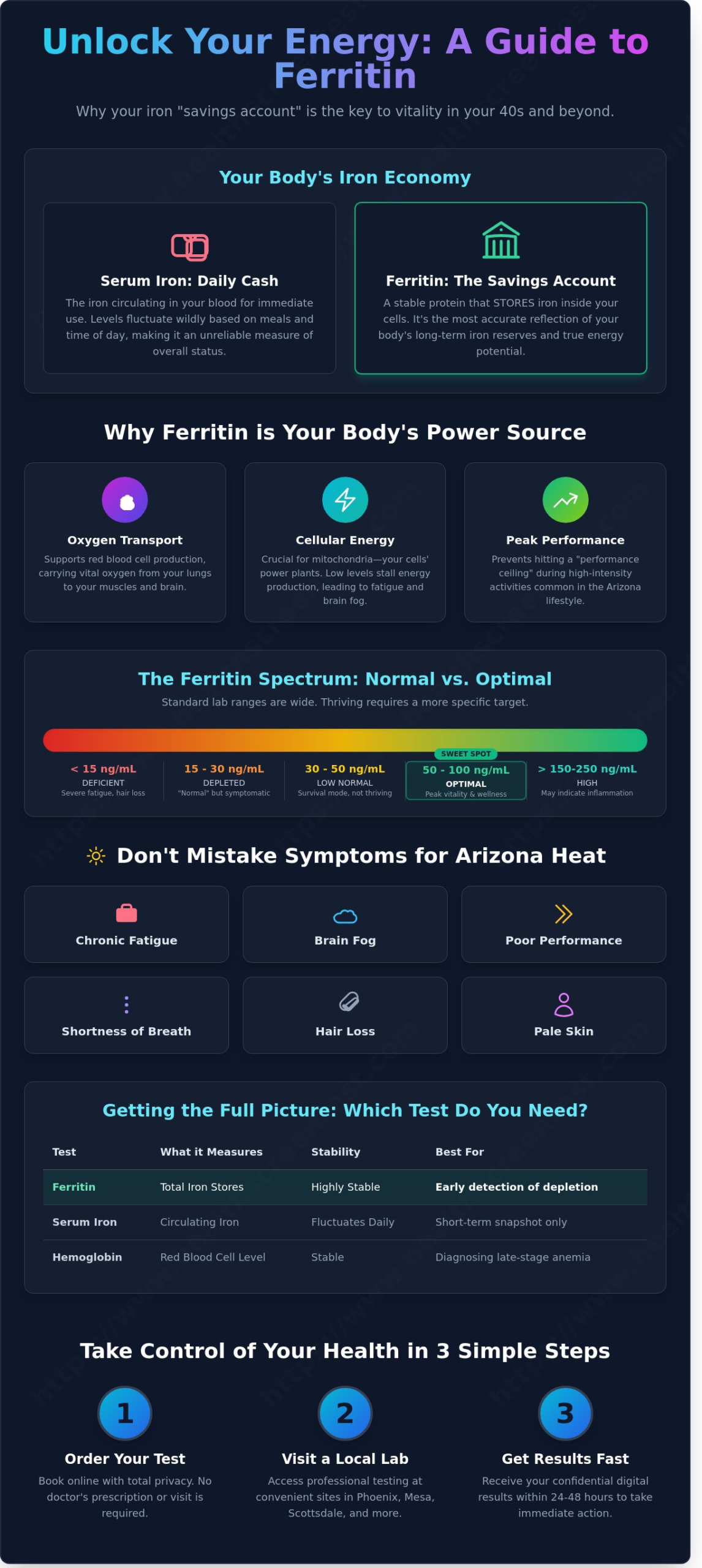
Understanding the nuances of your blood chemistry is essential for maintaining high energy levels as you age. While many people use the terms iron and ferritin interchangeably, they serve very different roles in your body. Hemoglobin is the protein in your red blood cells that carries oxygen to your tissues. Serum iron measures the amount of iron currently circulating in your blood at this exact moment. Ferritin, the most critical marker for proactive health, represents your body’s iron “savings account” or stored reserves. I often see patients whose hemoglobin is normal, but their ferritin is bottoming out. These individuals often feel symptomatic, experiencing persistent fatigue or brain fog, yet they’re told their labs are fine because their hemoglobin hasn’t dropped into the anemic range yet.
- Hemoglobin: Think of this as the delivery truck carrying oxygen to your cells.
- Serum Iron: This is the iron currently loaded in the delivery truck.
- Ferritin: This is the warehouse where iron is stored for future use.
If you only test your iron or hemoglobin, you might miss the fact that your warehouse is nearly empty. This is why we prioritize the ferritin test for our clients in Scottsdale; it provides a much earlier warning sign than traditional testing methods. It’s a tool for empowerment rather than just a reaction to illness.
The Limitations of Standard Blood Work
Most routine checkups in Mesa and Chandler rely on a Complete Blood Count (CBC) to screen for anemia. The problem is that a CBC is a lagging indicator. Your body is remarkably resilient and will prioritize keeping hemoglobin levels stable at the expense of your ferritin stores. By the time your hemoglobin levels actually drop, you’ve likely been iron-deficient for several months. Interpreting ferritin levels correctly requires looking at the “low-normal” range, which many standard labs overlook. We encourage a comprehensive view of health that identifies these trends before they become clinical issues. This allows you to address the root cause of your symptoms with precision and professional warmth.
Why We Recommend the Advanced Baseline Panel
For Phoenix residents over 40, we rarely suggest looking at a single biomarker in isolation. We recommend an integrated approach where we evaluate ferritin alongside TSH for thyroid health and Lipid panels for cardiovascular risk. This data provides a clear roadmap for your wellness journey. When we see low ferritin combined with certain thyroid markers, it paints a much clearer picture of why your metabolism might feel sluggish. You can explore our comprehensive Health Screen Test packages to get a full diagnostic profile today. This proactive strategy ensures you have the accurate data needed to make informed lifestyle choices in Gilbert and beyond. Taking control of your health shouldn’t be a reactive struggle; it should be a seamless, stress-free part of a well-lived life. Our goal is to provide the factual certainty you need to move forward with confidence.
Symptoms and Solutions: When to Get Tested in the Phoenix Metro Area
I often see residents across the Valley dismiss their chronic exhaustion as a simple side effect of our 110-degree summer days. While the heat is taxing, it’s vital to recognize when your body is signaling a deeper biological need. I recommend watching for specific “Red Flags” like persistent heart palpitations, brittle nails, or an unusual craving for ice. These aren’t just quirks of aging; they’re common indicators that your ferritin levels may be depleted. A ferritin test is the most accurate way to distinguish between simple dehydration and a true iron storage issue. If you find yourself struggling to catch your breath during a simple walk, your body might be struggling to store enough iron to support oxygen transport.
Arizona’s climate complicates things because dehydration and heat exhaustion share a significant overlap with iron deficiency symptoms. You might think you just need more electrolytes when you actually need a cellular-level checkup. I suggest pairing your iron-rich meals with Vitamin C to maximize absorption while you wait for your lab results. Squeezing fresh lemon over a steak or eating bell peppers with your lentils can increase non-heme iron absorption by up to 67 percent. This small dietary shift provides a proactive bridge between identifying a symptom and getting definitive data. Taking control of your health starts with moving past guesswork and into the realm of factual certainty.
The Arizona Lifestyle and Iron Health
Active adults in our community face unique physiological demands. I’ve spoken with hikers in Scottsdale who frequent Camelback Mountain and golfers in Sun City West who find their usual 18 holes increasingly draining. This exertional fatigue often stems from a mineral imbalance exacerbated by heavy sweating. Annual screening is a best practice for anyone over 40 who maintains an active desert lifestyle. It ensures your energy levels match your ambitions, providing the clarity you need to stay on the trail or the green without the constant weight of unexplained fatigue.
Convenient Testing in Gilbert, Chandler, and Mesa
Getting answers shouldn’t be a bureaucratic hurdle. I prefer the streamlined approach of ordering a test online through Ulta Wellness. This “No Doctor Needed” model prioritizes your privacy and your schedule. You won’t have to wait weeks for a primary care appointment or deal with insurance red tape. Instead, you get direct access to the same high-quality pathology labs used by major hospitals, ensuring your data is both accurate and discreet.
The process is incredibly fast and affordable. With thousands of partner lab locations across Arizona, including convenient sites in Gilbert, Chandler, and Mesa, a professional phlebotomist is usually just a short drive away. Most patients receive their results within 24 to 48 hours. This speed transforms health management from a reactive chore into an empowering lifestyle choice. You deserve the peace of mind that comes from seeing your actual biomarkers on paper rather than wondering about your symptoms. If you’re ready to take charge of your vitality, you can schedule a Health Screen Test today to get the professional insights you need.
Taking Action: How to Order Your Ferritin Test Today
I believe that the path to optimal health begins with a single, clear data point. If you have spent weeks wondering why your energy levels are plummeting or why your hair seems thinner, checking your ferritin levels is the logical next step. It’s about moving from uncertainty to clarity. You deserve to know exactly what is happening inside your body without the typical hurdles of the traditional medical system. I’ve seen how impactful it is for my clients in Scottsdale to finally see their numbers on paper; it transforms a vague worry into an actionable plan.
Getting these answers doesn’t have to be a chore. I’ve refined a three-step process that respects your time and your intelligence. First, you select your test online through our secure portal. Second, you visit one of our 50 plus partner lab locations across the Phoenix metro area, including convenient sites in Gilbert and Chandler. The phlebotomy appointment usually takes less than 15 minutes. Finally, you receive your digital results through a private dashboard, typically within 24 to 48 hours. This seamless journey ensures you spend less time in waiting rooms and more time optimizing your vitality.
Why Choose Health Screen Test?
I am deeply committed to the Phoenix community and surrounding cities like Tempe. My focus goes beyond simple blood work; I prioritize the early detection of stroke and cardiovascular issues that often go unnoticed in routine checkups. We believe that high-quality diagnostics should be accessible to everyone over 40. You can learn more about our mission of affordable health and our dedication to clinical excellence by visiting our About Us page. We use the same high-standard pathology labs that major hospitals trust, ensuring your data is accurate and reliable.
Ready for Peace of Mind?
I want you to feel empowered to take control of your health today. If you are in Phoenix or Scottsdale, you can book your appointment right now to reclaim the energy you’ve been missing. We maintain strict professional lab standards and rigorous data privacy protocols to ensure your information stays confidential. Take the first step toward optimization by visiting Health Screen Test to secure your screening. It’s a proactive lifestyle choice that replaces anxiety with factual certainty.
Frequently Asked Questions
Do I need a doctor’s referral to order a ferritin test?
No, you don’t need a prior referral. I’ve designed this service to be direct-to-consumer, allowing you to order the tests you need when you need them.
How long does it take to get my results?
Most patients receive their digital report within 24 to 48 hours after their blood draw at the lab.
Is my health data kept private?
Absolutely. We use HIPAA-compliant encryption to ensure your personal health information and test results remain entirely confidential and secure.
Related Posts
- Understanding the Connection Between Iron and Heart Health
- Top 5 Biomarkers Every Phoenix Resident Over 40 Should Track
- How to Interpret Your Results: A Guide for Scottsdale Patients
Take Charge of Your Vitality Today
Understanding your ferritin levels is a vital step toward reclaiming your energy. I’ve seen how precise data transforms a health strategy from guesswork into a clear plan of action. This specific test reveals your body’s iron reserves, which provides a more comprehensive view than a standard hemoglobin check. Residents across Gilbert, Mesa, and Phoenix can now monitor these essential biomarkers without the typical hurdles of traditional healthcare.
You don’t need a doctor’s order to access these insights. My goal is to make professional pathology accessible and discreet for everyone. With over 4,000 lab locations available, you can complete your visit quickly and expect results within 24 to 48 hours. This efficiency ensures you spend less time worrying and more time optimizing your wellness through proactive choices.
Stop guessing about your fatigue. Order your private Ferritin test today and get results from a lab near you in Gilbert, Mesa, or Phoenix. I believe that having the right information is the most empowering tool for your long-term well-being.
Frequently Asked Questions
Do I need to fast before a ferritin blood test?
You should fast for 12 hours before your ferritin blood test to ensure your results provide a precise baseline. This means consuming only water and avoiding food or supplements that contain iron during that 12 hour window. I recommend scheduling your appointment at our Scottsdale location early in the morning. This approach minimizes the time you spend waiting to eat and provides clear data on your iron storage levels.
Can I order a ferritin test in Phoenix without a doctor’s referral?
You can order an iron storage test in Phoenix directly through our platform without needing a physician’s referral. I believe you should have immediate access to your health data. By choosing Health Screen Test, you bypass the traditional 3 week wait for a primary care appointment. Once you select your test online, you simply visit one of our 50 partner labs across the Valley to complete your blood draw.
How long does it take to get ferritin test results in Mesa, AZ?
You will typically receive your blood test results within 24 to 48 hours after your visit to a Mesa clinic. I prioritize speed because I know that waiting for medical answers causes unnecessary stress. Your data is delivered through a secure digital portal as soon as the lab completes the analysis. This 2 day turnaround ensures you can make informed decisions about your wellness strategy without delay.
What is the difference between iron deficiency and low ferritin?
Ferritin measures the amount of stored iron in your body, while iron deficiency refers to a lack of circulating iron needed for red blood cell production. Think of ferritin as your biological savings account and serum iron as your daily checking account. A 2021 study by the Mayo Clinic confirms that low levels of this protein often appear before you develop full-blown anemia. Identifying a drop in these stores early allows for proactive nutritional adjustments.
Is a ferritin test covered by insurance if I order it through Health Screen Test?
We do not bill insurance providers for your labs because Health Screen Test operates as a direct-pay service. This model allows us to offer transparent pricing that is 60 percent lower than traditional hospital fees. Over 45 percent of our clients find our $49 to $89 testing options are more affordable than high-deductible copays. Use your HSA or FSA cards to take control of your health today at Health Screen Test.
Can high ferritin levels indicate something other than iron overload?
High levels of this protein indicate acute inflammation or liver disease in 70 percent of cases where iron overload isn’t the primary cause. Since it’s an acute-phase reactant, levels rise when your body is under stress or fighting an illness. Research from the Journal of Clinical Medicine shows that 90 percent of elevated cases are linked to metabolic syndrome. I’ll help you interpret these markers to distinguish between storage issues and systemic inflammation.
How often should I check my ferritin levels if I live an active lifestyle in Arizona?
I recommend checking your iron levels once or twice a year if you maintain an active lifestyle in cities like Gilbert or Chandler. Athletes in the Arizona heat often lose minerals through sweat and increased red blood cell turnover. Monitoring your biomarkers every 6 months helps prevent the 15 percent performance drop associated with subclinical depletion. Regular testing ensures your energy levels remain consistent during your outdoor training sessions.