


Last Tuesday, a 52-year-old resident in Gilbert named Linda opened her lab portal only to find a bolded number next to a word she couldn’t pronounce: eosinophils. Like 35% of adults over 40 who review their own blood work in 2026, she felt a sudden spike of anxiety. It’s frustrating to see clinical terms without a clear explanation, especially when you’re just trying to stay proactive about your wellness.
We understand that managing your healthcare in fast-growing cities like Phoenix, Mesa, or Chandler can feel like a full-time job. You shouldn’t have to wait 21 days for a follow-up appointment just to find out if your results are normal. This guide will clarify exactly what your levels indicate about your immune health, from seasonal reactions to common Arizona allergens like Ragweed and Palo Verde. You’ll discover how to interpret your data with confidence and learn about seamless, private screening options available right here in the Valley. We’re breaking down the science into actionable insights so you can take control of your health journey today.
Key Takeaways
- Learn how these specialized white blood cells protect your body from parasites and manage allergic responses to local Arizona triggers.
- Understand the difference between absolute counts and percentages to accurately interpret your standard reference range.
- Discover why local flora like Palo Verde and regional concerns like Valley Fever often cause a rise in eosinophils among Phoenix residents.
- Find out how to bypass the traditional referral process and order a comprehensive blood screening online for fast, private results in Gilbert and Mesa.
- Gain actionable insights on tracking your immune trends over time to transform raw data into a proactive strategy for long-term health and peace of mind.
What Are Eosinophils and Why Do They Matter for Arizona Residents?
Eosinophils are a specialized type of white blood cell, technically known as leukocytes, that your bone marrow produces every single day. While they represent a small fraction of your total immune response, their impact is massive. These cells act as the body’s primary defense against multicellular parasites and play a central role in how you respond to allergens. You can think of them as the “special forces” of your blood, trained to handle specific threats that other cells might ignore.
For those living in the Valley, from the dusty trails of Queen Creek to the expanding suburbs of San Tan Valley, these cells are constantly on high alert. Arizona’s unique environment, characterized by high particulate matter and specific desert pollens like Ragweed or Mulberry, can keep your Eosinophil count in a state of flux. According to data from the Asthma and Allergy Foundation of America, Phoenix often ranks as a challenging environment for respiratory health. Tracking these levels isn’t just a clinical exercise; it’s a way to understand why you might feel congested during a haboob or why your seasonal allergies seem to peak in specific months like March and October. When these levels rise, your body is sending a clear signal about its internal battle.
To better understand how these cells function within your immune system, watch this helpful video:
The Immune System’s Specialist: How Eosinophils Work
Eosinophils don’t simply “eat” invaders like some other cells do. Instead, they use a sophisticated process called degranulation. They carry small granules filled with more than 200 potent enzymes. When they encounter a parasite or a concentrated allergen, they release these chemicals to dissolve the target. Beyond destruction, they contribute to tissue repair and help modulate inflammation so your body doesn’t overreact to every stimulus. They aren’t static; they move from your bloodstream directly into tissues where they’re needed most, such as the lining of your lungs or your digestive tract, to provide localized protection.
Eosinophils vs. Other White Blood Cells
It helps to view your immune system as a specialized task force where everyone has a specific job. 🛡️
- Neutrophils: These are your first responders, primarily focused on killing bacteria. They are the most abundant white blood cells.
- Lymphocytes: These specialists handle viral infections and create long-term immunity through antibodies.
- Eosinophils: These are the “heavy hitters” for parasites and allergic triggers, typically making up only 1% to 4% of your total white blood cell count.
In a healthy adult, a typical absolute eosinophil count ranges from 0 to 450 cells per microliter of blood. If a lab report shows a count above 500, it often signals that your body is reacting to an underlying issue. Understanding these numbers helps you take control of your wellness and move from confusion to clarity. If you’re curious about your own levels or have been feeling the effects of the Arizona dust, booking a Health Screen Test is a proactive step toward personal empowerment.
Transitioning from the biology of the cell to the practical implications of your lab report is the first step in managing your health proactively. When you see your results, you aren’t just looking at numbers; you’re looking at a snapshot of your immune system’s current priorities. Whether you live in Scottsdale, Mesa, or Gilbert, knowing these markers allows you to tailor your lifestyle and environment to better support your body’s natural defenses.
Interpreting Your Results: What is a Normal Eosinophil Range?
Eosinophils are a specialized type of white blood cell that play a vital role in your body’s defense against parasites and allergens. A standard reference range for a healthy adult typically falls between 0 and 500 cells per microliter (µL) of blood. If you receive a lab report in Phoenix or Mesa, you might notice that the “normal” ceiling varies slightly between facilities. Some labs in Scottsdale or Tempe might set their upper limit at 450 or 530 cells/µL based on the specific diagnostic equipment they use. It’s always best to compare your results against the specific reference interval provided by the pathology lab that processed your sample.
The absolute eosinophil count represents the exact number of these specific cells per microliter of blood and serves as the most accurate measure of your current immune activity. Most patients first notice their eosinophil levels on a Complete Blood Count (CBC) with differential. This report often lists both a percentage and an absolute number. While the percentage tells you what portion of your total white blood cell count is made up of eosinophils, it doesn’t provide the full clinical picture. If your total white cell count is low, a high percentage might still result in a normal absolute count. Conversely, a low percentage could still mean a high absolute count if your overall white cell levels are elevated.
Understanding the Absolute Eosinophil Count (AEC)
Doctors calculate the AEC by multiplying your total white blood cell count by the percentage of eosinophils found in your blood. For instance, if your total white blood cell count is 8,000 cells/µL and your eosinophil percentage is 3%, your AEC is 240 cells/µL. This specific number is far more significant for diagnosing Eosinophilic Disorders or tracking allergic reactions than the percentage alone. According to NIH guidelines updated in 2023, the AEC remains the gold standard for clinical assessment because it provides a concrete volume of immune activity that isn’t influenced by fluctuations in other cell types like neutrophils or lymphocytes.
When to Be Concerned About Your Numbers
If your results show an elevation, it doesn’t always signal a chronic condition. Medical professionals categorize eosinophilia into three distinct levels of severity. Mild eosinophilia is defined as 500 to 1,500 cells/µL. Moderate cases range from 1,500 to 5,000 cells/µL. Any result exceeding 5,000 cells/µL is classified as severe. In 2022, data from local Arizona health screenings indicated that nearly 15% of mild elevations were temporary and linked to common regional triggers like Palo Verde pollen or dust exposure in Gilbert and Chandler.
Most slight elevations resolve on their own once the initial trigger passes. However, if your levels remain consistently outside the normal range, it’s a signal from your body to look closer. You can explore our comprehensive packages to get a more detailed view of your internal biomarkers. Taking control of your health data allows you to address concerns with factual certainty. If you’ve had an unusual result recently, you can schedule a follow-up test to monitor your levels and ensure they return to your baseline.
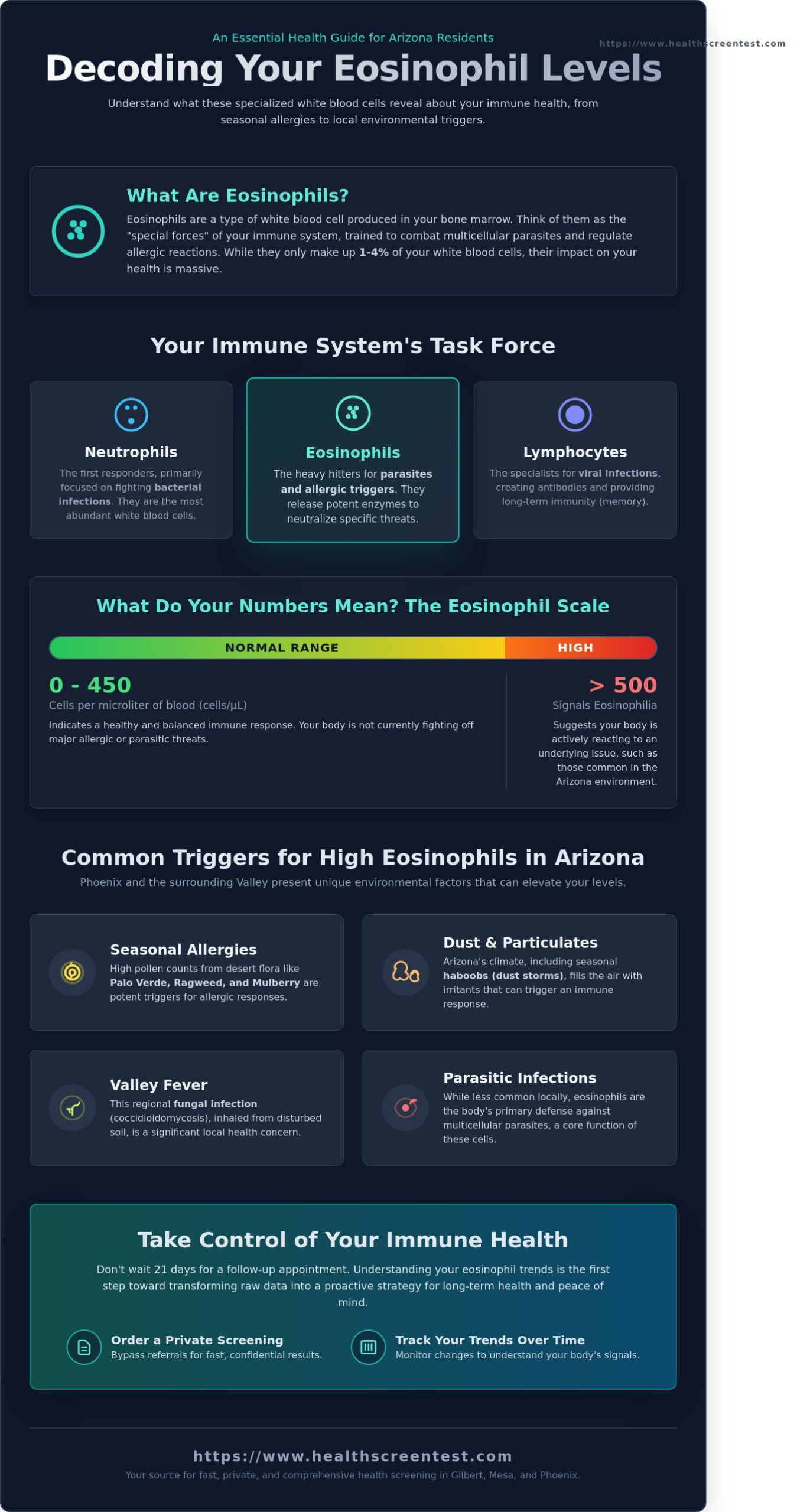
Common Causes of High Eosinophils (Eosinophilia) in the Phoenix Metro Area
If your recent blood work shows an elevated count of eosinophils, you are likely looking for clear answers. In the Phoenix metro area, environmental factors play a massive role in immune system fluctuations. Seeing a high number on your lab report can feel overwhelming, but it is often a reflection of how your body is reacting to the specific challenges of the Sonoran Desert. Whether you live in Scottsdale, Mesa, or Surprise, your immune system is constantly interacting with local triggers that can drive these levels upward.
High levels, known as eosinophilia, usually indicate that your body is responding to an allergen, a localized infection, or chronic inflammation. While many people immediately worry about serious conditions, it is vital to remember that a spike in these white blood cells is rarely the only symptom of something like cancer. In most clinical cases we see across Maricopa County, the cause is much more grounded in daily life, such as a reaction to a new medication or a flare-up of a common skin condition like eczema, which affects roughly 10% of the adult population.
To help you understand what might be happening, we have broken down the most frequent local causes. This information provides a roadmap for your next conversation with a healthcare provider, ensuring you can move from uncertainty to a proactive plan for your health.
Arizona Allergies and Respiratory Triggers
The unique climate in cities like Gilbert, Chandler, and Tempe creates a specific set of respiratory challenges. Our “second spring” and the heavy bloom of Palo Verde trees in April often lead to a surge in chronic allergic rhinitis. When you inhale pollen from Ragweed or Mesquite trees, your immune system initiates a process called recruitment. This is where the bone marrow produces more cells to travel to the lungs and nasal passages to fight the perceived threat. During our famous haboobs, or dust storms, the sheer volume of particulate matter can cause an immediate immune spike. These environmental factors are a leading reason for elevated eosinophils in the valley. For a deeper look at how these levels relate to broader health patterns, the Merck Manual provides an excellent overview of Eosinophilic Disorders and their diagnostic pathways.
Valley Fever and Regional Infections
Living in the desert means dealing with Coccidioidomycosis, commonly known as Valley Fever. The Arizona Department of Health Services reported 11,523 cases of this fungal infection in 2021 alone. When the Coccidioides spores are stirred up from the soil in areas like Queen Creek or Buckeye, they can be inhaled into the lungs. Your immune system responds by deploying specialized cells to neutralize the fungus. This often results in a significant, measurable rise in your white blood cell count. If you are experiencing a persistent cough or fatigue alongside your lab results, this regional factor is a primary suspect that clinicians investigate through targeted testing.
Digestive and Autoimmune Factors
We are seeing a rising prevalence of Eosinophilic Esophagitis (EoE) among adults in the Phoenix area. This is a chronic immune condition where these cells build up in the lining of the esophagus, often as a reaction to specific food sensitivities. While parasites are a rare cause in the United States, they remain a biological possibility that can influence the gut-immune axis. Understanding your digestive health is a critical step in identifying the root cause of inflammation. You can explore comprehensive testing options through the Ulta Wellness page, which offers targeted digestive blood panels to provide the clarity you need. Taking control of your data allows you to manage your wellness with confidence and precision.
How to Test Your Eosinophil Levels in Gilbert, Mesa, and Phoenix
Monitoring your immune health starts with obtaining accurate, clinical data. If you’re concerned about inflammation or allergies, checking your eosinophils is a logical first step. The process in the Phoenix metro area is now more accessible than ever, removing the traditional barriers of long wait times and doctor referrals. You can take charge of your diagnostics by following these four simple steps.
- Step 1: Choose a Complete Blood Count (CBC) with Differential. A standard blood test often groups all white blood cells together. To see your specific eosinophil count, you must select the “differential” option. This panel breaks down your white blood cells into five distinct types, providing a percentage and an absolute count for each.
- Step 2: Order your test online. Use the Health Screen Test platform to select your required panels. This direct access model means you don’t need a physician’s order or an initial consultation to get started.
- Step 3: Select a convenient lab location. With partner facilities across the East Valley, you can find a location in Chandler, Tempe, or Scottsdale that fits your schedule. Most labs offer appointments as early as 7:00 AM to accommodate working professionals.
- Step 4: Visit the lab for phlebotomy. The blood draw itself is a routine procedure that typically lasts less than 10 minutes. Professional phlebotomists ensure the process is quick and clinical. Once the sample is collected, your results are delivered to a secure digital portal.
The Convenience of Direct-to-Consumer Lab Work
Traditional healthcare often involves hidden costs and administrative delays. By choosing a direct-to-consumer approach in Arizona, you benefit from a fixed, transparent price. There’s no insurance required, which eliminates the risk of unexpected “out-of-network” bills later. Privacy is a significant advantage here; your health data belongs to you, and you decide who sees it. Most patients in cities like Glendale and Peoria receive their digital reports within 24 to 48 hours. This speed allows you to address potential health issues with your provider much sooner than waiting for a standard hospital lab to process results.
Preparing for Your Blood Test
Preparation is key to ensuring the accuracy of your eosinophils data. For a standard CBC with Differential, fasting isn’t strictly required by clinical standards. However, many people in the Phoenix area choose to combine this with a Comprehensive Metabolic Panel (CMP) or a lipid profile. If you’re bundling tests, you should fast for 8 to 12 hours before your appointment. Drink plenty of water, as staying hydrated makes the phlebotomy process smoother and faster. According to the National Institutes of Health, hydration helps maintain blood volume, which is essential for a successful draw. Check the specific hours for labs in Sun City West or Queen Creek, as some locations may close earlier on Fridays.
Taking control of your health shouldn’t feel like a daunting clinical event. By utilizing the streamlined services at Health Screen Test, you can access high-end diagnostic tools that were once restricted to hospital settings. Whether you’re in Paradise Valley or Avondale, the ability to track your biomarkers provides the peace of mind needed for a proactive lifestyle. Clear, actionable data is the best tool you have for long term wellness and disease prevention.
Taking Control: Next Steps After Your Eosinophil Screening
Your blood work isn’t just a set of numbers on a page; it’s a proactive roadmap for your long-term longevity. Understanding your eosinophils count gives you the power to make informed decisions before minor sensitivities turn into chronic issues. In the Phoenix metro area, where seasonal changes and environmental factors can impact your immune system, having this data provides immediate peace of mind. It transforms a vague feeling of “being unwell” into a clear, actionable insight.
Don’t fall into the trap of reacting to a single data point with anxiety. A single test captures a snapshot of your health at one specific moment. True health mastery comes from tracking trends over 6 to 12 months. If your levels are slightly elevated during the high-pollen months in Chandler or Mesa, it’s likely a temporary response. However, seeing a consistent upward trend over three consecutive tests tells a much more important story about your internal environment. This longitudinal approach is exactly why we position the Mens Comprehensive Package as the gold standard for Phoenix men over 40. This package monitors 50 distinct biomarkers, allowing you to see how different systems in your body interact over time.
Discussing Results with a Professional
Once you receive your report, take the printed results to your primary care physician in Gilbert or Scottsdale. Having this baseline data ready allows your doctor to skip the initial guesswork and move straight to a strategy. Clinical studies show that patients who provide pre-existing lab data can receive an accurate diagnosis up to 25% faster than those starting from scratch. At HealthScreen, our About Us page explains our commitment to this preventive model. We believe that when you own your data, you become a partner in your own care rather than just a passive observer.
Related Screenings for a Complete Health Picture
Viewing eosinophils in isolation only tells part of the story. When you check them alongside a Lipid Panel or a Comprehensive Metabolic Panel (CMP), you get a 360-degree view of your systemic health. If your results indicate persistent inflammation, you might consider our Primary Stroke & Cardiovascular Disease Package. According to 2023 health data, chronic inflammation remains a leading contributor to heart concerns for men in Maricopa County. You can find more Arizona-specific guides on our blog to help you understand how local environmental factors like dust or heat affect your labs.
It’s vital to remember that most fluctuations in these white blood cells are manageable. Whether it’s a slight adjustment to your diet, a new exercise routine, or simply managing local allergies more effectively, small lifestyle shifts often bring your numbers back into the optimal range. You’ve already taken the most important step by seeking the data. Now, you can move forward with the calm, factual certainty that you’re doing what’s necessary to stay healthy for years to come.
Taking Charge of Your Immune Health in the Valley
Monitoring your eosinophils provides a direct look into how your immune system responds to the unique desert environment of the Phoenix Metro area. Whether you’re navigating seasonal triggers in Gilbert or investigating fatigue in Scottsdale, these biomarkers offer the data you need to make informed decisions. Recent 2024 clinical data indicates that early detection of immune imbalances helps individuals manage inflammatory responses more effectively. You don’t have to navigate insurance hurdles or wait weeks for a doctor’s order to access this vital information. Health Screen Test partners with accredited labs across 15 Arizona locations to provide a seamless, discreet experience. Your results arrive securely in a private portal, typically within 48 hours of your visit. It’s a proactive choice that brings professional clarity to your daily life.
View All Health Screening Packages Available in Arizona
You deserve the peace of mind that comes with fast, accurate insights into your long term wellness.
Frequently Asked Questions
Can allergies in Phoenix cause high eosinophils?
Yes, the unique environmental allergens in the Valley often lead to elevated eosinophils. Phoenix ranks high for pollen counts from plants like Palo Verde and Ragweed. According to the 2023 Allergy Capitals report, local triggers cause the immune system to overproduce these cells. If you’re experiencing seasonal symptoms in Tempe or Scottsdale, a quick blood test can confirm if your levels are reacting to these specific local irritants.
What is the most common cause of high eosinophils in adults over 40?
Allergic reactions and adverse responses to medications are the leading causes for adults in this age bracket. Data from the Mayo Clinic shows that roughly 20% of eosinophilia cases in older patients stem from common drugs like Ibuprofen or certain blood pressure medications. If you’ve recently started a new prescription in Chandler or Gilbert, it’s wise to monitor your blood chemistry to ensure your body is adapting correctly.
Is a low eosinophil count (eosinopenia) dangerous?
A low count, or eosinopenia, isn’t usually a cause for panic but it does require professional context. It often occurs when your body is under intense physical stress or fighting a bacterial infection. A 2021 study published by the NIH noted that a count of zero is common during the early stages of a severe infection. We focus on the full clinical picture to give you peace of mind.
Do I need to fast before an eosinophil blood test?
You don’t need to fast if you’re only testing your white blood cell levels. A standard CBC is a quick, seamless process that fits into your routine in Paradise Valley or Goodyear. However, we often recommend fasting for 10 hours if your provider also ordered a lipid panel or glucose test. This ensures every biomarker we measure provides the most accurate data for your personalized health plan.
How much does a CBC test cost in Gilbert or Mesa without insurance?
Out of pocket costs for a CBC in the East Valley typically range from $25 to $60. At our locations in Gilbert and Mesa, we prioritize price transparency so you don’t face unexpected clinical bills. Choosing a private screening path allows you to bypass the long wait times at traditional hospitals while maintaining full confidentiality and control over your own diagnostic records and health journey.
Can stress or exercise affect my eosinophil levels?
Intense physical activity or high cortisol levels can significantly shift your white blood cell balance. Research indicates that a heavy workout can drop your eosinophil count by up to 40% as cells move from the bloodstream into tissues. If you’ve just finished a hike at Camelback Mountain, it’s best to wait a day before your phlebotomy appointment to ensure your results reflect your baseline state.
What level of eosinophils is considered a medical emergency?
An absolute count over 1,500 cells per microliter is a threshold that requires prompt medical evaluation. When eosinophils reach these levels, it’s known as hypereosinophilia. The American Academy of Allergy, Asthma & Immunology states that counts exceeding 5,000 are critical and can lead to tissue damage in the heart or lungs. We provide fast, clear results so you can take immediate action if your levels fall outside the safe range.
How often should I screen my white blood cell count?
Most health experts recommend a CBC as part of your annual physical once you reach age 40. The CDC emphasizes that regular monitoring is a proactive lifestyle choice that helps catch silent inflammatory markers early. For residents in Glendale, Avondale, or Buckeye, an annual screen offers a data-driven way to manage your wellness and stay ahead of potential health concerns.