

What if the key to understanding your unexplained weight gain and fatigue isn’t another diet plan, but a single, comprehensive blood test? I know how exhausting it can be to navigate vague symptoms and receive generic advice that leads nowhere. The constant cycle of appointments without clear answers can leave you feeling dismissed and anxious about the future, especially with the long-term risks, like the 50% increased chance of developing type 2 diabetes by age 40, associated with hormonal imbalances.
I promise this guide will cut through that confusion. We’ll provide a clear, data-driven path to understanding exactly which biomarkers are essential for a definitive pcos diagnosis and how to access affordable, private testing right here in Gilbert. Together, we’ll explore the specific hormone panels that provide actionable insights, identify local resources in the Phoenix East Valley, and empower you to take control of your hormonal health with confidence.
Key Takeaways
- Understand how Polycystic Ovary Syndrome presents differently in women over 40 and why symptoms like skin tags or thinning hair warrant a closer look.
- Identify the essential blood tests needed for a comprehensive pcos profile, including key androgen biomarkers, that you can access without a doctor’s order.
- Discover actionable lifestyle adjustments and local Gilbert resources, such as the Riparian Preserve, to help manage your hormonal health effectively.
- Learn the seamless, confidential process for ordering your own lab tests online, empowering you to take direct control of your health data and find peace of mind.
Understanding PCOS in Gilbert: A Comprehensive Guide to Hormonal Health
If you’ve spent months, or even years, feeling like something is fundamentally off with your body, I want you to know that you are not alone. I’ve spoken with countless women in Gilbert who feel dismissed or overwhelmed by a collection of confusing symptoms: irregular cycles, stubborn weight gain that defies diet and exercise, sudden acne, or thinning hair. This journey can create a significant amount of health anxiety. The clinical term for what many are experiencing is Polycystic Ovary Syndrome, a common endocrine and metabolic disorder. Defining it is the first step. It’s not just a reproductive issue; it’s a whole-body condition that impacts your hormones, metabolism, and long-term health, requiring a comprehensive and personalized approach to manage effectively.
To help clarify what a diagnosis involves, Dr. Natalie Crawford provides an excellent overview in this video:
From my perspective, I see a growing number of Gilbert residents seeking private health screenings because they are tired of waiting for answers. The traditional path can be slow, often involving multiple appointments and referrals before a clear picture emerges. A direct-to-consumer approach offers speed, privacy, and the actionable data needed to start making progress right away.
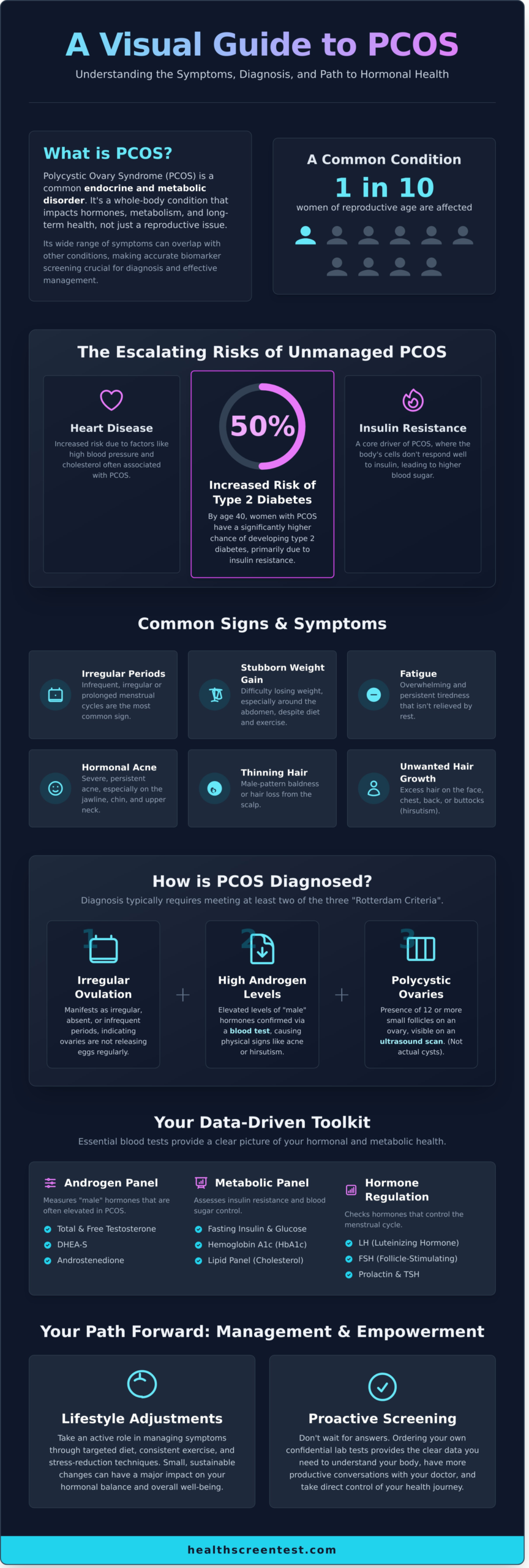
Key Takeaway: PCOS is more common than you might think. It affects up to 10% of women of reproductive age, making it one of the most prevalent endocrine disorders in the United States. Because its symptoms can overlap with other conditions, early and accurate detection through biomarker screening is critical for effective long-term management and reducing the risk of related health issues like type 2 diabetes and heart disease.
The Three Pillars of a PCOS Diagnosis
Clinicians typically use the Rotterdam Criteria to diagnose pcos, which requires meeting at least two of the following three conditions. You don’t need all three, which is a common misconception.
- Irregular Periods: This points to ovulatory dysfunction, where your ovaries don’t release eggs regularly. It’s often the first sign women notice.
- High Androgen Levels: These are often called “male” hormones, though women have them too. Excess levels, confirmed via a blood test, can cause symptoms like hormonal acne and unwanted hair growth (hirsutism).
- Polycystic Ovaries on Ultrasound: This refers to the presence of 12 or more small follicles on an ovary. It’s important to know that these are not true cysts and their presence alone doesn’t mean you have PCOS.
In the East Valley, our dynamic but often high-stress lifestyle-from demanding careers in Chandler’s tech corridor to the thriving local food scene-can directly impact insulin resistance, a key driver of PCOS symptoms. This can make it difficult to distinguish between lifestyle effects and underlying hormonal imbalances without precise biomarker data.
Why Proactive Screening Matters in 2026
I’ve seen a significant shift in the Phoenix metro area toward direct-to-consumer health solutions. Waiting weeks for an appointment and then more time for results is becoming a thing of the past. Gilbert residents, in particular, are seeking faster, more discreet ways to get health answers. Establishing your hormonal baseline now provides invaluable data for tracking your wellness journey into 2026 and beyond. This proactive data allows you to have more productive conversations with your doctor and make informed lifestyle changes. It’s central to our mission at Health Screen Test: to provide the clear, accurate, and private data you need to take control of your health narrative.
PCOS Symptoms and Health Risks for Women Over 40
One of the most persistent myths I encounter is that Polycystic Ovary Syndrome (PCOS) simply “goes away” after the childbearing years conclude. The truth is that while the focus may shift away from fertility, the condition’s metabolic and hormonal impact often becomes more pronounced. For women over 40, pcos doesn’t disappear; it evolves. The underlying hormonal imbalances persist, and the health risks can escalate, making proactive management more critical than ever. According to comprehensive PCOS facts from the WHO, this condition affects an estimated 8-13% of reproductive-aged women, and its long-term health consequences are a significant global concern.
After 40, the visible symptoms often change. You may notice less acne but begin to experience hair thinning on your scalp, a condition known as androgenic alopecia. Small, benign growths called skin tags may appear more frequently on the neck or under the arms, which are often a sign of underlying insulin resistance. Perhaps most frustrating is the shift in weight distribution. Many women report a stubborn accumulation of visceral fat around their midsection, leading to an “apple-shaped” body type that increases cardiovascular risk.
To help you better understand these changes, I’ve included a helpful video that breaks down what happens to your body with PCOS after 40. It offers a clear, expert perspective on navigating this next chapter.
The Silent Risks: Diabetes and Heart Health
The primary health concern for women with PCOS over 40 is the increased risk for metabolic syndrome. The root cause is often insulin resistance, a condition where your body’s cells don’t respond effectively to insulin. This forces your pancreas to work overtime, and eventually, it can lead to Type 2 Diabetes; in fact, more than half of women with PCOS will develop pre-diabetes or diabetes by age 40. Persistently high androgen levels also negatively affect your lipid profile, often causing elevated triglycerides and low HDL (“good”) cholesterol, which are direct risk factors for heart disease and stroke. To learn more about protecting your cardiovascular system, you can find valuable insights on our blog for more on heart health.
Hormonal Shifts vs. Perimenopause
This life stage can be particularly confusing because the symptoms of PCOS often overlap with those of perimenopause. You might experience irregular periods, hot flashes, sleep disturbances, and mood swings and be unsure of the cause. While both conditions involve hormonal fluctuations, they are distinct. Perimenopause is characterized by declining estrogen, whereas PCOS typically involves consistently high levels of androgens. Distinguishing between them based on symptoms alone is nearly impossible. This is why objective data is so critical. Getting a comprehensive biomarker analysis is the only definitive way to understand your unique hormonal landscape and ensure you receive the correct support and treatment for your body’s needs.
Essential Blood Tests and Biomarkers for PCOS in Phoenix
Understanding what’s happening inside your body is the first step toward managing your health effectively. For many women in Phoenix grappling with symptoms like irregular periods, weight gain, or acne, getting clear answers can feel like a challenge. A comprehensive lab panel, often called a “PCOS profile,” provides the objective data you need to move forward. The great news is that you don’t need to wait for a doctor’s order to get this crucial information. You can take control of your health journey today by exploring our confidential lab panels and scheduling a test at a convenient local phlebotomy center.
At the core of a pcos diagnosis is often a specific hormonal imbalance. We look closely at several key biomarkers to build an accurate picture. Two of the most important are:
- Testosterone (Total and Free): Testosterone isn’t just a male hormone; women produce it too. However, elevated levels can lead to hyperandrogenism, the clinical term for high androgens that cause symptoms like excess hair growth (hirsutism) and cystic acne. We measure both total testosterone and the “free” or bioavailable testosterone, which is the amount actively circulating in your system.
- LH/FSH Ratio: Luteinizing Hormone (LH) and Follicle-Stimulating Hormone (FSH) are crucial for ovulation. In many women with Polycystic Ovary Syndrome (PCOS), the typical 1:1 ratio is disrupted, with LH levels often measuring two to three times higher than FSH. While not a standalone diagnostic tool, this inverted ratio provides a powerful clue for your healthcare provider.
Metabolic Markers: Insulin and Glucose
Insulin resistance is the engine that drives PCOS symptoms in nearly 70% of cases. That’s why assessing your metabolic health is non-negotiable. We analyze Hemoglobin A1c (HbA1c) to see your average blood sugar over the past three months and Fasting Insulin to see how hard your pancreas is working to control it. For Gilbert residents, this data offers a clear, personal view of your risk for developing metabolic syndrome or type 2 diabetes, empowering you to make proactive lifestyle changes.
The Role of DHEA-S and Prolactin
A thorough evaluation goes beyond confirming what something is; it also confirms what it is not. Measuring DHEA-S, an androgen produced by the adrenal glands, helps differentiate ovarian-driven androgen excess from an adrenal issue. Similarly, checking Prolactin levels can rule out a pituitary gland condition that might also cause irregular cycles. Our role is to provide you with accurate, confidential data. You can then take these results to your healthcare professional, who will provide the clinical diagnosis and a personalized treatment plan.
Managing PCOS Locally: Guidance for Residents in the East Valley
Living in the East Valley presents a unique set of environmental and cultural factors that can influence your health. For those managing Polycystic Ovary Syndrome (PCOS), adapting your strategy to the local Gilbert and Mesa lifestyle isn’t just helpful; it’s essential for long-term success. Many of the women I’ve consulted with ask a common question born from frustration: “Is it too late to manage my symptoms?” My answer is always an emphatic and evidence-backed no. It is never too late to take control of your health. Your body has a remarkable capacity to heal and rebalance when given the right tools, and you can start implementing them today.
Small, consistent changes tailored to our unique desert environment can lead to significant shifts in your hormonal biomarkers. The key is to leverage local resources to support your wellness journey, turning potential challenges into advantages. By understanding how to navigate everything from the dry heat to the vibrant local food scene, you can create a sustainable and effective management plan.
Nutrition and the Arizona Lifestyle
Managing insulin resistance, a core issue in over 70% of pcos cases, is foundational. Dining out in vibrant areas like downtown Gilbert doesn’t have to derail your progress. When you’re at a local favorite, you can make smart choices. For example, instead of carb-heavy entrees, build a meal around protein and fiber. Start with a lean protein source and pair it with double vegetables instead of starches. This simple swap helps stabilize blood glucose and prevent the insulin spikes that worsen symptoms. Thriving in the desert also demands a focus on hydration and fiber. Our intense heat increases the risk of dehydration, which can impact hormone detoxification. Aim to drink half your body weight in ounces of water daily. You can support this by shopping at the Gilbert Farmers Market for fiber-rich, anti-inflammatory foods like leafy greens, avocados, and berries, which aid gut health and hormonal balance.
Stress Management and Hormonal Balance
The fast-paced careers common in the greater Phoenix area can contribute to chronically elevated cortisol levels. This stress hormone directly disrupts ovulation and promotes insulin resistance, creating a difficult cycle for anyone managing their health. You can counteract this by integrating local wellness practices into your routine. A 30-minute walk through the tranquil Riparian Preserve at Water Ranch has been shown to lower cortisol by over 20% in some studies. Finding a local yoga or pilates studio in Mesa can also provide a structured way to reduce stress markers. Don’t underestimate the power of sleep hygiene. Consistently getting 7-8 hours of quality sleep per night is critical for regulating appetite hormones and improving insulin sensitivity, providing a solid foundation for all your other efforts.
Making these lifestyle adjustments is powerful, but data provides the clarity and peace of mind needed to stay motivated. Consistent monitoring through regular screenings allows you to see the direct, positive impact of your efforts on your key biomarkers. Seeing your fasting insulin levels or inflammatory markers improve provides tangible proof that your hard work is paying off. Take the next step in your health journey and book a comprehensive screening to get the actionable insights you deserve.
Ordering PCOS Lab Tests Online in Gilbert, Mesa, and Phoenix
Understanding your body is the first step toward effective management of your health. For women in the East Valley, gaining clarity on potential hormonal imbalances shouldn’t be a complicated or drawn-out process. We provide a direct, confidential path to obtaining the crucial health data you need, empowering you to take control long before you step into a specialist’s office. This proactive approach transforms your healthcare journey from reactive to preventative.
Having actionable data in hand provides not just information, but also peace of mind. It allows for a more focused and productive conversation with your healthcare provider, whether they are in Chandler or Scottsdale. You’re no longer just describing symptoms; you’re discussing concrete biomarker levels.
“After months of uncertainty and feeling dismissed, getting my results from Health Screen Test was the first time I felt in control. The process was so simple, and I had my numbers back in two days. I walked into my endocrinologist appointment in Chandler with actual data, not just a list of symptoms. It changed the entire conversation.”
– Jessica L., Gilbert, AZ
Our direct-to-consumer model is built on two core principles: confidentiality and speed. Because you order directly, your results are private and are not automatically sent to an insurance company. This discretion is a cornerstone of our service. You receive your secure results electronically, typically within 2-3 business days, allowing you to quickly move forward with the next steps in your health plan.
Steps to Get Your Lab Work Done
We’ve streamlined the entire process to be as seamless and stress-free as possible. It’s a simple, four-step journey to getting the answers you need.
- Step 1: Select Your Test Panel. Browse our website and choose the specific hormone or metabolic panels related to pcos that align with your health goals. Our descriptions help you understand what each biomarker measures.
- Step 2: Find a Local Lab. Choose from dozens of our convenient, certified partner lab locations across Gilbert, Mesa, and Phoenix. You can find one close to your home or work.
- Step 3: Provide Your Sample. Visit your chosen lab at a time that works for you; no appointment is necessary. A professional phlebotomist will perform a quick blood draw, which usually takes less than 10 minutes. You don’t need a doctor’s order or insurance.
- Step 4: Receive Your Results. Your discreet, easy-to-understand results will be available in your secure online portal within a few business days.
Why Choose Health Screen Test?
Our commitment extends directly to the Gilbert community and surrounding cities. We believe in transparent pricing, so the amount you see on our website is exactly what you’ll pay, with no hidden fees or surprise bills. This straightforward approach removes the financial uncertainty often associated with medical testing.
To provide an even more comprehensive view of your well-being, we’ve also partnered with Life Line Screening. This collaboration allows you to access a wider range of preventative health screenings that go beyond specific blood tests, offering a holistic perspective on your cardiovascular health and more. If you’re unsure which test is the right starting point for your unique situation, our team is here to help. Contact us today, and we can guide you toward the most appropriate panel for your needs.
Take Proactive Steps for Your Hormonal Health in Gilbert
Navigating your hormonal health after 40 requires clear, actionable information, not guesswork. Understanding your specific biomarkers through targeted blood tests is the definitive foundation for an effective management plan. For residents across the East Valley, accessing these crucial diagnostics is more direct than ever. You don’t have to wonder about the underlying causes of your pcos; the data you need to move forward with confidence is within your grasp.
Taking control begins with one simple step. With thousands of convenient lab locations across the Phoenix metro area, you can order your screening without a doctor’s visit or insurance authorization. Your discreet and confidential results are delivered directly to your secure portal, providing the insights you and your healthcare provider need. Don’t wait for answers. Order Your Comprehensive Hormonal Screening in Gilbert Now.
Gaining clarity is the most powerful move you can make. Your journey toward balanced health and peace of mind can start today.
Frequently Asked Questions
Is PCOS curable for women living in Gilbert?
No, Polycystic Ovary Syndrome (PCOS) is a chronic condition without a known cure, but its symptoms are highly manageable. Effective management strategies, accessible through healthcare providers in Gilbert, focus on lifestyle adjustments and medical treatments. These personalized plans can control symptoms like irregular periods and hormonal imbalances, significantly improving your long-term health and daily quality of life. It’s about managing the condition, not eliminating it.
Can I have PCOS if I have regular periods?
Yes, you can absolutely have PCOS even if your menstrual cycles are regular. While irregular periods are a classic sign affecting up to 80% of women with the condition, a diagnosis only requires two of the three main criteria. These are high androgen (male hormone) levels, cysts on the ovaries confirmed by ultrasound, and irregular periods. You could meet the first two criteria and still menstruate on a predictable schedule.
How much does a PCOS blood test cost in Phoenix without insurance?
Without insurance, the cost for a comprehensive PCOS blood test panel in the Phoenix area typically ranges from $200 to $650. The final price depends on the specific biomarkers being analyzed, such as testosterone, insulin, and LH/FSH ratios. Direct-access labs often provide clear, upfront pricing; for example, a targeted hormone panel can start at around $199, which avoids the variable billing you might encounter elsewhere.
What is the best age to get screened for PCOS?
The ideal time for PCOS screening is usually in your late teens or early 20s, at least two years after you’ve started menstruating. Symptoms often emerge during puberty, but it’s difficult to diagnose then because irregular cycles are common. If symptoms like severe acne, excess hair growth, or very infrequent periods persist beyond age 17, it’s a strong signal to seek a professional evaluation from a healthcare provider.
Can I order a PCOS test online without a doctor’s referral?
Yes, you can order a PCOS test online without a physician’s referral through a direct-access testing service. This modern approach allows you to purchase a comprehensive hormone panel online and then visit a local partner lab for a simple blood draw. It’s a confidential, fast, and empowering way to get the health data you need before scheduling a consultation with a specialist in the Gilbert area.
How long does it take to get PCOS lab results back?
You can generally expect to receive your PCOS lab results within 2 to 5 business days after your sample is collected. The exact timing depends on the specific tests included in your panel. We prioritize an efficient turnaround; our partner labs typically process samples and release your secure, easy-to-read results to your private online portal within 48 to 72 hours, so you can get clear answers without a long wait.
What happens if my PCOS test results show high testosterone?
If your test results indicate high testosterone, it confirms the presence of hyperandrogenism, a key criterion for a PCOS diagnosis. Your healthcare provider will use this data point to build a targeted treatment plan. This plan may include medications like spironolactone or oral contraceptives to lower androgen levels, alongside lifestyle recommendations to help manage related symptoms such as acne and unwanted hair growth effectively.
Are there local Gilbert clinics that specialize in PCOS management?
Yes, Gilbert and the surrounding East Valley are home to excellent clinics and specialists for PCOS management. Major healthcare systems like Banner Health and Dignity Health have endocrinologists and OB-GYNs with specific expertise in hormonal disorders. You can also find board-certified specialists by searching the provider directory on the American College of Obstetricians and Gynecologists (ACOG) website, filtering for providers near the 85297 zip code.