
Does that familiar ache in your legs begin when you’re walking through a local market or enjoying the Arizona sunshine? It’s all too easy to dismiss this discomfort as a simple sign of aging, but it could be your body’s early warning for a more significant vascular issue. This underlying concern, which can increase the risk for heart attack and stroke, is precisely why proactive health management is so vital. Gaining clarity on your options for a professional peripheral arterial disease screening Phoenix residents can access is the first, most empowering step toward protecting your mobility and heart health for years to come.
In this comprehensive 2026 guide, we will cut through the confusing medical jargon and bypass the frustrating insurance referral maze. My goal is to provide you with clear, direct-to-consumer pathways for taking control of your well-being. You will discover what PAD is, how a simple screening works, and where to find convenient, accurate testing near you in communities like Scottsdale and Gilbert. Let’s get you the answers and peace of mind you deserve.
Key Takeaways
- Recognize the subtle symptoms of PAD, such as leg cramping or cold feet, and understand its direct link to your overall cardiovascular risk.
- Discover how non-invasive technologies like the Ankle-Brachial Index (ABI) test provide a fast and accurate assessment of your arterial health without discomfort.
- Compare the benefits of convenient, direct-access peripheral arterial disease screening Phoenix services against traditional hospital-based testing to find the right fit for you.
- Learn the simple process for booking your screening and what to expect during your quick, professional appointment at a local mobile event.
What is Peripheral Arterial Disease and Why is Screening Critical in Phoenix?
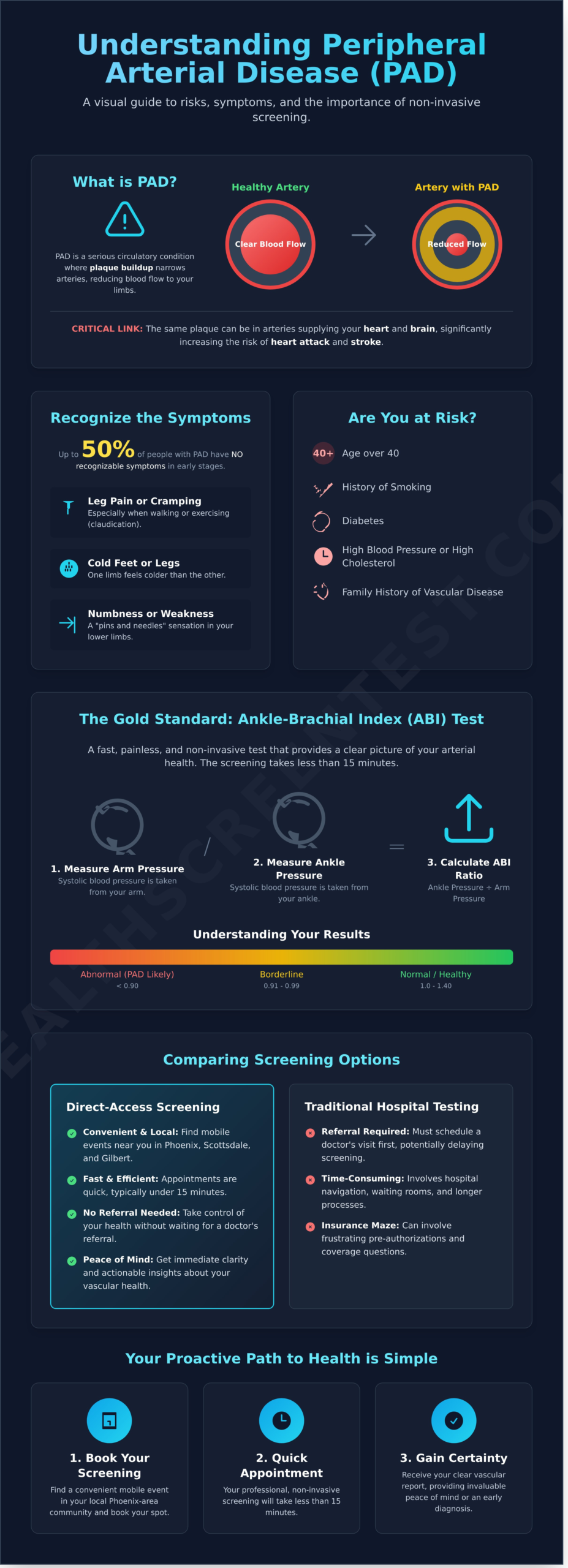
Peripheral Arterial Disease, or PAD, is a common and serious circulatory condition that occurs when plaque builds up in the arteries. This buildup, a process called atherosclerosis, causes the arteries to narrow and stiffens them, which reduces the amount of oxygen-rich blood flowing to your limbs, most often your legs and feet. While it can cause symptoms like leg pain when walking, Peripheral Arterial Disease (PAD) is often a silent indicator of a much larger, body-wide problem.
The presence of PAD is a powerful red flag for your overall cardiovascular health. The same arterial plaque that restricts blood flow in your legs is very likely present in the arteries supplying your heart and brain. Because of this, individuals with PAD have a significantly higher risk of experiencing a heart attack or stroke. Early detection through screening is the only definitive way to intervene before irreversible vascular damage occurs, allowing for effective management and risk reduction.
To better understand this concept, watch this helpful video on the screening process:
The Silent Nature of Vascular Disease
One of the most dangerous aspects of PAD is that up to 50% of people with the condition have no recognizable symptoms in its initial stages. This means you could have significant arterial narrowing without feeling any pain, cramping, or numbness. This is why proactive health monitoring is so vital. For adults over 40, especially in active communities like Gilbert and Mesa, establishing a baseline with a simple screening provides the clarity needed to take control. Gaining this knowledge is the first and most powerful step toward prevention.
Key Takeaway: Why Proactive Screening Matters
Taking charge of your vascular health begins with one simple, proactive step. At Health Screen Test, we believe that providing accessible peripheral arterial disease screening Phoenix residents can trust is fundamental to community wellness. Here is what you need to remember:
- Treatable vs. Dangerous: When detected early, PAD is highly manageable with lifestyle adjustments and medical care. When left undiagnosed, it can lead to severe complications, including critical limb ischemia and amputation.
- A Small Investment of Time: Our comprehensive screening takes less than 15 minutes but delivers insights that can protect your health and add years to your life.
- The Value of Certainty: A clear vascular report provides invaluable peace of mind. An early diagnosis empowers you and your physician to create an effective management plan, putting you in control.
The Science of PAD Screening: Non-Invasive Technology Explained
When considering your cardiovascular health, the thought of testing can be intimidating. I want to reassure you that the technology we use for peripheral arterial disease screening in Phoenix is designed for your comfort and confidence. Our state-of-the-art methods are entirely non-invasive, meaning there are no needles or surgical instruments involved. We rely on proven, painless science to gather accurate data, providing you with the peace of mind that comes from having clear, actionable information about your vascular health.
How the Ankle-Brachial Index (ABI) Works
The Ankle-Brachial Index (ABI) is the established gold standard for initial PAD detection, and its elegance lies in its simplicity. A technician places a standard blood pressure cuff on your arm and then on your ankle to measure systolic blood pressure in both locations. We then calculate a simple ratio by dividing the ankle pressure by the arm pressure. A healthy ratio is 1.0 or higher, while a significantly lower number suggests that blockages may be restricting blood flow to your lower limbs. This vital screening is a standard part of our Primary Stroke & Cardiovascular Disease Package.
Vascular Ultrasound: Seeing Inside the Arteries
While the ABI provides a crucial number, a vascular ultrasound gives us a direct view inside your arteries. This procedure uses a small, handheld device (a transducer) and a clear gel on your skin to send harmless sound waves into your body. These waves create a live image of your blood vessels and the blood flowing through them. This advanced imaging is a cornerstone of The Science of PAD Screening, as it allows our technicians to visually identify specific areas of plaque buildup or narrowing. It is a completely painless way to get a definitive look at your arterial health.
The combination of these tests provides a comprehensive and highly accurate assessment. The data empowers you and your physician with the insights needed to take proactive steps toward managing your cardiovascular well-being. For more technical details on the procedures involved in our peripheral arterial disease screening in Phoenix, please review our comprehensive screenings page.
Comparing Local Screening Options: Why Phoenix Residents Choose Direct-to-Consumer Testing
When considering a peripheral arterial disease screening Phoenix residents have traditionally navigated the complex hospital system, often requiring doctor referrals, multiple appointments, and confusing insurance paperwork. This path can be time-consuming and fraught with uncertainty, especially regarding the final cost. Today, a more streamlined and empowering alternative exists: direct-access mobile screenings that prioritize your convenience, privacy, and peace of mind.
We believe that proactive health management should be straightforward and accessible. Instead of waiting for symptoms to worsen or dealing with administrative hurdles, you can access clinical-grade screenings on your own terms. The key benefits of this modern approach include:
- Transparent Pricing: You see the full cost upfront. There are no surprise bills or hidden fees that often accompany insurance-based procedures.
- Unmatched Convenience: With mobile screening locations across the Valley, including Sun City West, Scottsdale, and Tempe, getting tested fits easily into your schedule.
- Rapid, Secure Results: Your confidential results are delivered directly to your secure online portal, often within days, not weeks.
No Doctor Referral Needed
One of the most significant advantages is the ability to take control of your health journey without a gatekeeper. Through Health Screen Test, you can order your own PAD screening and other vital tests, bypassing the need for a preliminary doctor’s visit. This empowerment saves valuable time and reduces the cognitive load of coordinating appointments. Our partnership with Life Line Screening ensures you have local access to these professional, high-quality screenings right in your community.
Privacy and Confidentiality in Testing
We are committed to the discreet and secure management of your health data. Unlike traditional systems where your information is shared across multiple providers, our process ensures your results remain confidential. You-and only you-decide if and when to share your screening report with your primary care physician. This puts you firmly in control of your personal health information, allowing for informed and private decision-making.
“As a Scottsdale resident, I was worried about my leg pain but didn’t want the hassle of multiple appointments. The peripheral arterial disease screening Phoenix service was so simple and completely private. I got my results online in two days and was able to have a productive conversation with my doctor armed with real data. It was a seamless experience.”
– Mark R., Scottsdale, AZ
Identifying PAD Symptoms and Risk Factors in the Arizona Climate
Many Arizona residents attribute persistent leg pain to the natural aging process or overexertion in our unique climate. However, it is clinically vital to recognize when this discomfort is actually a critical warning sign from your vascular system. Dismissing these signals can delay diagnosis and treatment. Be mindful of these common indicators of Peripheral Arterial Disease (PAD):
- Painful Cramping: Aching or cramping in your hips, thighs, or calf muscles after physical activity, such as walking, that subsides with rest. This is known as claudication.
- Cold Feet: A noticeable coldness in your lower leg or foot, especially when compared with the other side.
- Non-Healing Sores: Ulcers or sores on your toes, feet, or legs that heal very slowly or not at all are a significant red flag for poor circulation.
What you might mistake for “aging” pain is often your body signaling arterial blockage. Early identification through a peripheral arterial disease screening Phoenix residents can access is the most effective way to manage your vascular health.
The Impact of Heat on Leg Circulation
In the Phoenix summer, your body naturally widens blood vessels (vasodilation) to release heat. For someone with PAD, whose arteries are already narrowed by plaque, this can place additional stress on the circulatory system. Proper hydration is essential for everyone, but particularly for residents in Mesa and Chandler with circulatory concerns, as dehydration can increase blood viscosity, making it harder to pump. We advise a simple self-monitoring checklist during warmer months:
- Check for new or worsening swelling in your feet and ankles.
- Note any changes in skin color (paleness or blueness) on your legs.
- Pay close attention to any leg pain that feels different from typical muscle soreness.
Risk Factors You Can Manage
While genetics play a role, you have significant control over many PAD risk factors. Adopting a diet low in saturated fats and cholesterol, maintaining a healthy weight, and ceasing all tobacco use are powerful steps to prevent further arterial narrowing. Individuals who smoke, have diabetes, or have been diagnosed with high cholesterol are at a significantly higher risk.
Understanding your specific biomarkers empowers you to take decisive action. A comprehensive Lipid Panel provides the precise data needed to understand your cholesterol levels and overall cardiovascular risk. We encourage you to take control of your health data today to make informed, proactive decisions for your future wellness.
How to Book Your PAD Screening in Phoenix and What to Expect
Taking control of your vascular health is a decisive step toward long-term wellness. We’ve streamlined the entire process to be as clear, convenient, and reassuring as possible. From finding a nearby event to understanding your results, our focus is on providing you with actionable health insights without the stress of a traditional clinical visit. Here’s a guide to securing your appointment and what you can anticipate on the day of your screening.
Finding a Location Near You
Booking your peripheral arterial disease screening Phoenix appointment is simple. We host frequent mobile screening events across the metro area to ensure accessibility. You can easily find the most convenient location by entering your zip code on our website. We regularly serve communities throughout Gilbert, Mesa, and Phoenix, with a consistent presence in active adult communities like Sun City. If you need help finding an event or wish to inquire about scheduling, please visit our Contact Us page for dedicated support.
The Screening Experience and Your Results
Our mobile screening events are designed for your comfort and privacy. The Ankle-Brachial Index (ABI) test for PAD is entirely non-invasive, painless, and typically takes only 15-20 minutes. A highly trained technician will place blood pressure cuffs on your arms and ankles to measure and compare blood flow, a key indicator of arterial health.
Following your screening, you will receive a comprehensive, easy-to-interpret report. We use a color-coded system to deliver your results with absolute clarity:
- Green: Indicates normal circulation and no signs of PAD.
- Yellow: Suggests a borderline result that may require monitoring or lifestyle adjustments.
- Red: Signifies an abnormal result, indicating potential PAD that should be promptly discussed with your primary care physician.
Preparing for Your Screening Day
Preparation is minimal, as we want your experience to be stress-free. There is no special fasting required. Simply wear comfortable, loose-fitting clothing that allows easy access to your arms and ankles, and ensure you are well-hydrated. Our clinical team is there to make you feel at ease throughout the professional and reassuring process. Take the most important step today for your future health and peace of mind.
Order your Peripheral Arterial Disease Screening today.
Take the Proactive Step for Your Vascular Health in Phoenix
As we’ve explored, understanding the risks of Peripheral Arterial Disease is the first critical step toward protecting your long-term health and mobility. The key takeaways are clear: early detection through non-invasive technology is your most powerful tool, and you have accessible, direct-to-consumer options right here in the Valley that put you in control.
When you’re ready to move from awareness to action, securing a peripheral arterial disease screening Phoenix is a simple, straightforward process. With over 10 million people screened nationwide via our partners, convenient mobile locations across Phoenix, and no need for insurance or a doctor’s referral, gaining peace of mind has never been easier.
Your future wellness is worth prioritizing. Take a definitive step toward understanding and managing your vascular health today. View PAD Screening Packages in Phoenix to find the right option for you.
Frequently Asked Questions About PAD Screening
Is a PAD screening covered by insurance in Arizona?
Insurance coverage for a PAD screening can vary significantly based on your plan and medical necessity. Preventive screenings for asymptomatic individuals may not be covered. However, if your physician orders the test due to symptoms or high-risk factors like diabetes or smoking, it is more likely to be covered as a diagnostic procedure. We always recommend contacting your insurance provider directly to confirm the specifics of your coverage for vascular testing in Arizona before your appointment.
Do I need a doctor’s order to get a vascular screening in Phoenix?
For our proactive health screenings, you do not need a doctor’s order. We believe in empowering individuals to take control of their health, making it simple and direct to access this vital information. This allows you to schedule a screening at your convenience without a prior physician visit. Should your results indicate a need for further evaluation, we provide a comprehensive report for you to share with your primary care physician for diagnostic follow-up.
What is the difference between PAD and PVD?
Think of Peripheral Vascular Disease (PVD) as a broad category for diseases of blood vessels outside the heart and brain. Peripheral Arterial Disease (PAD) is the most common type of PVD and refers specifically to the narrowing or blockage of arteries that carry blood from the heart to the legs. While all PAD is a form of PVD, not all PVD is PAD, as PVD can also include issues with veins or lymphatic vessels.
How long does the PAD screening take at a mobile location?
Our mobile screening process is designed for your convenience and is exceptionally efficient. From the moment you check in to the completion of the test, the entire appointment typically takes only 15 to 20 minutes. We value your time and have streamlined every step to provide a seamless and comprehensive screening experience without a long wait, allowing you to get back to your day with minimal disruption. This is proactive healthcare designed to fit your schedule.
Is the PAD screening painful or does it involve needles?
The screening for PAD is completely non-invasive and painless. Our primary method is the Ankle-Brachial Index (ABI) test, which is similar to having your blood pressure taken. We use standard blood pressure cuffs on your arms and ankles and a handheld Doppler ultrasound device to listen to the blood flow. There are absolutely no needles or injections involved, ensuring a comfortable and stress-free experience for you from start to finish.
How soon will I get my PAD screening results?
We understand that waiting for health results can be stressful, which is why we prioritize a rapid turnaround. After your peripheral arterial disease screening Phoenix appointment, your results are promptly reviewed by our qualified medical team. You will receive a secure, easy-to-understand digital report within 24 to 48 hours. This report provides clear insights into your vascular health, empowering you with the information you need to take the next steps with confidence.
Can PAD be reversed if it is caught early during a screening?
While the arterial damage from atherosclerosis cannot be fully reversed, early detection of PAD is critical because its progression can be stopped or significantly slowed. Identifying the condition early allows for immediate and effective intervention through lifestyle modifications like diet and exercise, smoking cessation, and medication. These proactive steps can manage symptoms, reduce the risk of heart attack or stroke, and dramatically improve your long-term health outlook. For those interested in professionally guided exercise programs, you can find out more about specialized services like exercise physiology and hydrotherapy.
Where are the most common mobile screening locations in the Phoenix metro area?
To make our services accessible, we host mobile peripheral arterial disease screening Phoenix events across the valley. You can frequently find us at community centers in Scottsdale and Mesa, corporate wellness fairs in the Downtown Phoenix and Tempe tech corridors, and at health events in active adult communities like Sun City and Peoria. We partner with local businesses and organizations to bring these crucial screenings directly into the neighborhoods where people live and work.