Just last week, a new client described a persistent, cramping pain in his calves that only appeared during his morning walks around Freestone Park. He initially dismissed it as a simple sign of getting older, but a nagging worry about his mobility finally brought him to our Gilbert clinic. That quiet fear, the one that questions if a small pain could threaten the active, independent lifestyle you’ve worked so hard to build, is something I see almost every day.
It’s completely understandable to brush off these aches as minor annoyances. In this guide, I promise to show you how a quick and entirely non-invasive peripheral arterial disease screening can replace that uncertainty with clear, actionable information about your vascular health. We’re here to provide a definitive understanding of what’s happening in your legs and deliver the profound peace of mind that comes from proactively managing your risk for more serious conditions like heart attack and stroke.
Together, we’ll break down the symptoms in simple terms, detail the painless screening process, and show you how taking this one proactive step is an empowering decision for your long-term wellness.
Key Takeaways
- Learn to distinguish between simple muscle cramps from an active Arizona lifestyle and the more serious signs of PAD that are often overlooked.
- Understand how a quick and painless peripheral arterial disease screening, using the Ankle-Brachial Index (ABI), provides critical insight into your vascular health.
- Discover the simple steps you can take to prepare for your vascular assessment, ensuring a smooth and stress-free experience from start to finish.
- Find out how to access affordable, direct-to-consumer vascular health checks in convenient locations across the Phoenix area, bypassing the need for a doctor’s referral.
Understanding Peripheral Arterial Disease (PAD) Screening in Gilbert
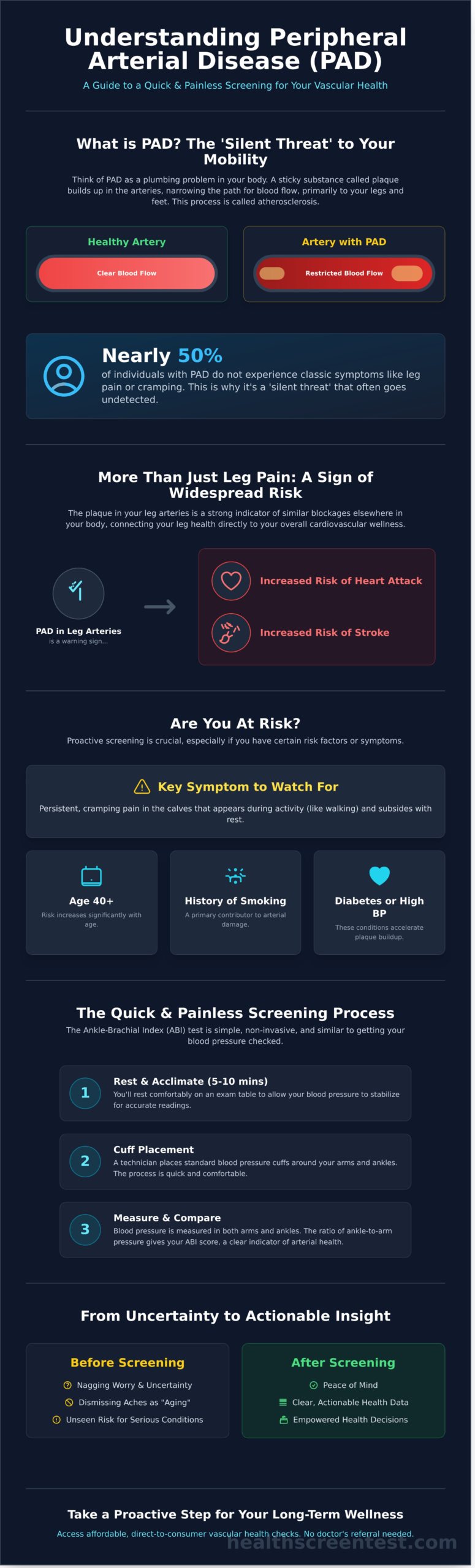
As I often explain to my clients here in Gilbert, a peripheral arterial disease screening is one of the most important checks we can perform, because the condition it detects is both common and silent. Think of it as a plumbing problem in your body’s most critical pipes. Over time, a sticky substance called plaque can build up inside the arteries that carry blood from your heart to your limbs, narrowing the passageway. This process, called atherosclerosis, restricts blood flow, primarily to your legs and feet.
For those of us who love staying active in our community, whether it’s walking the trails at Freestone Park or enjoying the scenery at the Riparian Preserve at Water Ranch, healthy circulation is non-negotiable. Strong vascular health is the foundation of that active lifestyle. Unfortunately, because PAD often develops without obvious warning signs, many people don’t realize their mobility is at risk until the condition has progressed significantly.
To help you visualize what this means for your health, this short video provides a clear overview of the screening process:
The silent nature of this disease is precisely why it’s so concerning. Data from the Centers for Disease Control and Prevention (CDC) shows that nearly 50% of individuals with PAD do not experience the classic symptoms like leg pain or cramping. This is why I refer to it as a ‘silent threat.’ The screening itself is a simple, non-invasive assessment we use to measure the blood flow in your lower extremities. It’s a quick check that provides a clear and accurate picture of your arterial health.
What Exactly is PAD and Why Does It Matter?
I define PAD as a critical circulatory problem where narrowed arteries reduce oxygen-rich blood flow to your limbs. But the concern doesn’t stop at your legs. The plaque buildup happening in your leg arteries is often an indicator of similar blockages in other parts of your body, including the arteries leading to your heart and brain. This directly connects your leg health to a significantly higher risk for heart attack and stroke. For a more detailed medical overview, this guide to Understanding Peripheral Arterial Disease is an excellent resource. It’s a widespread condition affecting over 8.5 million Americans aged 40 and older, making proactive screening a vital health measure.
Early Detection for Phoenix Area Seniors
If you live in the East Valley and are over 40, you’re in a demographic with an increased risk for PAD, especially if you have a history of smoking, diabetes, or high blood pressure. The uncertainty of not knowing your vascular health status can create a lot of anxiety. A screening replaces that worry with actionable health data. It gives you the power to make informed decisions alongside your doctor, providing peace of mind and a clear path forward. This targeted check is just one part of a holistic approach to wellness, which is why we also offer comprehensive screenings for your full-body health.
How the Ankle-Brachial Index (ABI) and Vascular Screenings Work
Many people delay important health checks because they anticipate a complex, uncomfortable, or time-consuming procedure. Let me put that concern to rest immediately. A peripheral arterial disease screening is remarkably straightforward. If you’ve ever had your blood pressure taken at a doctor’s office, you already understand the core principles. The entire process is designed for your comfort and to provide accurate data with minimal disruption to your day.
The screening is a simple, three-step process that provides a clear window into your arterial health:
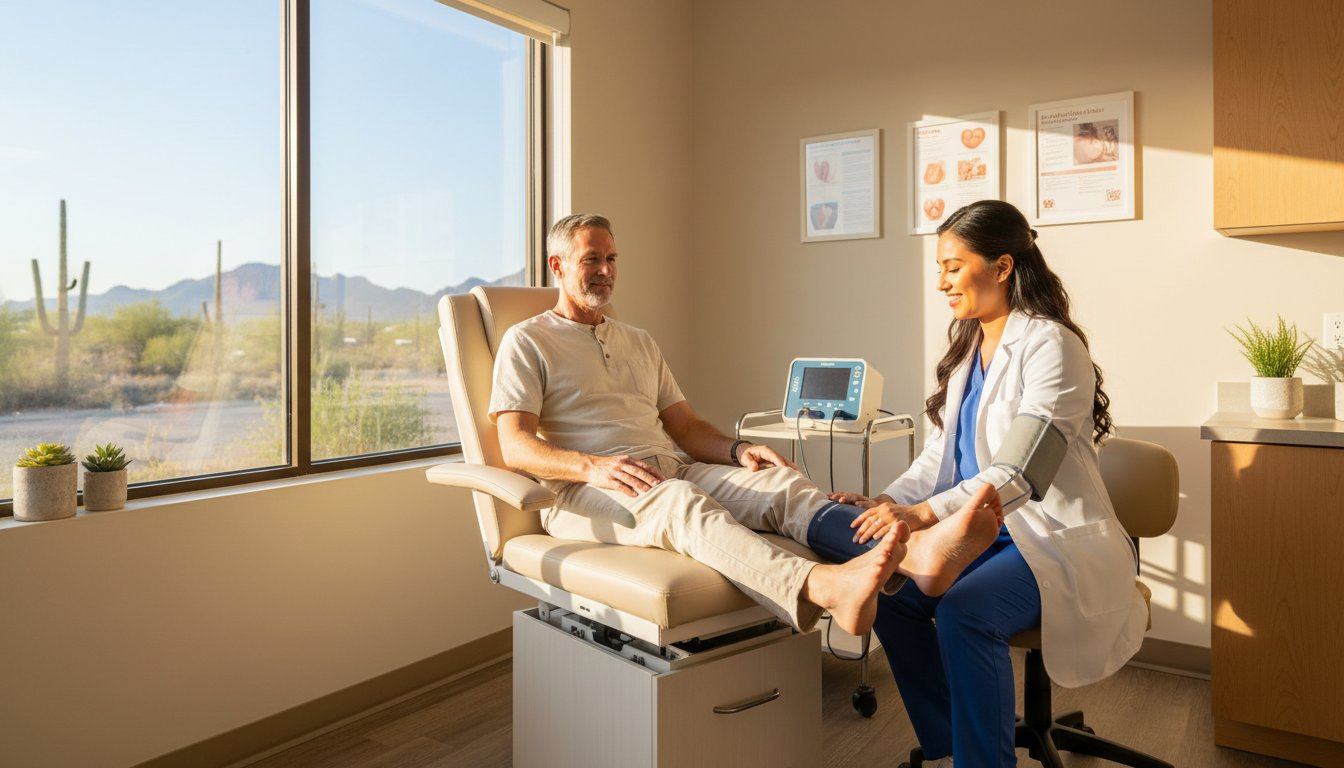
- Step 1: Rest and Acclimate. You’ll begin by resting comfortably on an examination table for about 5 to 10 minutes. This allows your blood pressure to stabilize, ensuring our readings are as accurate as possible. Our partner screening rooms are quiet, private, and climate-controlled to create a calming environment.
- Step 2: Cuff Placement. Next, a technician will place standard blood pressure cuffs around both of your arms and both of your ankles. These are the same type of cuffs used in any routine physical exam.
- Step 3: Doppler Measurement. The technician then uses a small, handheld device called a Doppler ultrasound probe. This instrument uses sound waves to listen to the blood flow in the arteries of your arms and ankles. It’s completely painless; you’ll only feel the light pressure of the probe on your skin and hear the sound of your pulse.
The Non-Invasive ABI Test Explained
The data we collect is used to calculate your Ankle-Brachial Index, or ABI. This is a simple mathematical comparison between the blood pressure at your ankle and the blood pressure in your arm. This specific ratio is the foundation of the Ankle-Brachial Index (ABI) test, recognized by the National Heart, Lung, and Blood Institute as the gold standard for diagnosing PAD. A significantly lower pressure in your ankle suggests that a blockage in an artery may be restricting blood flow. It’s an elegant and highly effective diagnostic tool. Most importantly, this is a completely non-invasive screening. There are no needles, no radiation exposure, and absolutely no downtime required.
What to Expect During Your Screening in Mesa or Chandler
From the moment you walk into one of our partner locations, our goal is to provide a seamless and professional experience. The entire screening session, from check-in to completion, typically takes less than 15 minutes. Our certified phlebotomists and vascular technicians are not only experts in their field but are also trained to ensure your comfort and privacy. This quick, painless assessment is one of the most effective first steps toward taking control of your vascular health. To help you visualize the process, here is a short video demonstrating exactly how an ABI test is performed.
Identifying PAD Risk Factors Specific to the Arizona Lifestyle
In my experience providing health screenings in the East Valley, a concerning pattern emerges. Many Gilbert residents dismiss persistent leg pain, cramping, or fatigue as a simple consequence of living in Arizona. They tell me, “It must be the heat,” or “I probably didn’t drink enough water today.” While hydration is critical here, these assumptions can dangerously mask the early warning signs of Peripheral Arterial Disease (PAD).
The most common misconception I hear is, “It’s just leg cramps from hiking Camelback Mountain.” It’s easy to attribute muscle aches to a vigorous weekend activity. However, if that cramping or pain occurs predictably with mild exertion, like walking through the aisles at Safeway, and then subsides with rest, it’s a classic symptom of a vascular issue, not just muscle fatigue. Ignoring this can allow the underlying condition to progress unchecked.
For many Arizonans, the primary risk factors combine into what I call the “Triple Threat”:
- Type 2 Diabetes: Arizona has a significant population managing diabetes, a condition known to accelerate arterial damage.
- High Blood Pressure (Hypertension): This common condition puts constant strain on artery walls.
- A History of Smoking: The long-term effects of tobacco use are a direct assault on your vascular system.
Another unique local factor is our climate-driven lifestyle. The intense summer heat, often soaring above 110°F from June through September, forces many of us into a more sedentary “indoor season.” This lack of regular activity can prevent the early symptoms of PAD from appearing, as they are most noticeable during exercise. The problem doesn’t go away; it simply hides until the cooler months when a return to activity can reveal a more advanced issue. This makes proactive evaluation through a peripheral arterial disease screening a crucial health step for at-risk individuals.
Age, Diabetes, and Smoking: The Primary Triggers
For adults over 50, diabetes is a particularly aggressive risk factor. Consistently high blood sugar levels inflict damage on the delicate inner lining of the arteries, making them susceptible to plaque buildup (atherosclerosis). This process is often silent but progressive. The cumulative effect of smoking compounds this damage significantly. Each cigarette introduces toxins that inflame arterial walls and promote plaque formation. In fact, current or former smokers should know that smoking increases the risk of PAD by fourfold compared to non-smokers.
Environmental Factors in the Valley of the Sun
Living in the Valley of the Sun requires special attention to your circulatory health. The extreme climate can place unique stress on your body. It’s vital to recognize symptoms like “Intermittent Claudication” (pain upon exertion that is relieved by rest) during routine errands. If you feel cramping in your calves walking from your car to the entrance of SanTan Village, that’s a signal worth investigating. Our team is deeply familiar with the health challenges our community faces. You can learn more about us and our commitment to providing accessible, accurate health data for Arizonans.
Preparing for Your Vascular Health Assessment in Scottsdale and Tempe
I’ve managed countless health screenings, and I can tell you with certainty that simple preparation is the key to a stress-free and accurate experience. Taking a few proactive steps before your appointment doesn’t just help our clinicians; it empowers you, ensuring the data we collect is a true reflection of your vascular health. Think of it as setting the stage for a clear and productive conversation about your well-being.
Your comfort and the accuracy of the test are our top priorities. For this reason, we ask that you wear loose-fitting, comfortable clothing. This allows our technicians easy access to place blood pressure cuffs on both your arms and your ankles without any restrictive fabric getting in the way. It’s a small detail that makes the entire process smoother and quicker.
To ensure the most precise reading, please avoid stimulants like caffeine and nicotine, as well as any heavy exercise, for at least two hours before your scheduled peripheral arterial disease screening. These activities can temporarily elevate your blood pressure and heart rate, which could potentially skew the Ankle-Brachial Index (ABI) results. Finally, please bring a current list of your medications and any supplements you take. This is especially important for medications related to blood pressure, cholesterol, or diabetes, as this information provides critical context for your results.
Your Pre-Screening Checklist
To guarantee the most accurate ABI reading, a few simple steps go a long way. Proper hydration improves blood flow, so we recommend drinking plenty of water the day before and the morning of your test. Your checklist for appointment day is straightforward:
- What to Wear: Loose pants or a skirt and a short-sleeved top.
- What to Avoid: Coffee, energy drinks, smoking, and strenuous activity for at least 120 minutes prior.
- What to Bring: Your government-issued ID, appointment confirmation, and your list of medications.
Interpreting Your Results with Confidence
Once your screening is complete, you will receive a clear, concise report. The central figure is your ABI score. A score between 1.0 and 1.4 is considered normal, indicating healthy, unobstructed blood flow. A score of 0.91 to 0.99 is borderline, while a score of 0.90 or below suggests a potential blockage and the presence of PAD. My advice is to share these results directly with your primary care physician in Gilbert. Your report is a powerful tool to facilitate a productive discussion about next steps, whether it’s lifestyle changes or further diagnostic tests.
This screening is an excellent first step. For an even more comprehensive view of your cardiovascular health, it’s vital to establish your baseline biomarkers. Our Ulta Wellness panels provide in-depth analysis of cholesterol levels, inflammation markers, and other key indicators. Combining your ABI score with this bloodwork gives you and your doctor the complete picture needed for truly proactive health management.
Now that you know how simple it is to prepare, take control of your vascular health. Schedule your peripheral arterial disease screening in the Gilbert area today.
Accessing Affordable PAD Screenings Across the Phoenix Metropolitan Area
I’ve seen firsthand how the traditional healthcare system can create unnecessary anxiety. You notice a concerning symptom like leg pain, but getting answers involves a frustrating chain of referrals, weeks of waiting for appointments, and the uncertainty of complex medical bills. That’s why I am proud to offer a modern, direct-access model that skips the “referral runaround” and the high, unpredictable costs associated with hospital-based diagnostics. We put you in control of your health timeline.
Your well-being shouldn’t be dictated by your zip code. To ensure our services are truly accessible, we’ve established a strong presence across the Valley with convenient mobile locations and partner clinics near major communities, including Sun City West, Scottsdale, and Tempe. Our goal is to remove common barriers to proactive health, making a vital peripheral arterial disease screening a simple and stress-free part of your life, not a logistical challenge.
One of our foundational promises is absolute pricing transparency. The price you see on our website is the final price you pay. There are no hidden lab fees, no surprise facility charges, and no complicated insurance hurdles to clear. Because you don’t need a doctor’s referral, you are empowered to take action the moment you feel a health concern. This direct-to-consumer approach saves you both time and money, providing clear, definitive value from the very beginning.
“I was worried about my leg pain for months. Health Screen Test made the process so simple and reassuring.” – Sarah M., Gilbert resident.
The Health Screen Test Advantage
Think of us as your expert guide through the world of diagnostic testing. We’ve simplified the entire process by creating a seamless system that connects you to thousands of certified partner lab locations across the United States. This extensive network ensures you receive professional and discreet service. The outcome is what matters most: fast, accurate results delivered securely, providing the peace of mind that comes from knowing, not guessing.
Booking Your Screening Today
Getting started is designed to be effortless. Our secure online ordering process is a simple, three-step journey: you select the screening you need, pay securely online, and then schedule your appointment at a nearby location that fits your schedule. In just a few minutes, you can take a definitive step toward understanding and managing your vascular health. Don’t let uncertainty linger any longer.
Understanding the importance of proactive care is the first step. Watch this short video to learn more about the value of preventive health screenings:
Take the first step towards clarity and confidence. Schedule your PAD Screening in Gilbert today.
Your Proactive Path to Vascular Health in Arizona
Throughout this guide, I’ve highlighted two crucial points for Gilbert residents. First, understanding how our unique Arizona lifestyle can impact your vascular system is essential. Second, the Ankle-Brachial Index (ABI) test isn’t complicated or intimidating; it’s a simple, non-invasive assessment that provides powerful insights. This knowledge is your first tool for taking charge.
Now, it’s time to act on that knowledge. A proactive peripheral arterial disease screening gives you a clear, data-driven picture of your arterial health, allowing you to move forward with confidence. You don’t need a physician’s referral, which removes a common barrier to care. With access to thousands of mobile and partner lab locations, scheduling your test in Gilbert, Scottsdale, or Tempe is seamless.
We provide reassuring, expert-led results that give you the certainty you need. Take control of your vascular health, book your PAD screening in Gilbert now. Your peace of mind is just one simple step away.
Frequently Asked Questions
Is peripheral arterial disease screening covered by insurance?
Yes, Medicare Part B typically covers a one-time peripheral arterial disease screening if you receive a referral from your doctor due to symptoms or specific risk factors. For private insurers like Aetna or Cigna, coverage often depends on your specific plan and whether the screening is deemed medically necessary. We always recommend confirming coverage details directly with your insurance provider before your appointment to understand any potential out-of-pocket costs.
How often should I have a PAD screening if I am over 60?
If you are over 60 and have risk factors like diabetes, high blood pressure, or a history of smoking, vascular specialists recommend a baseline screening. If your initial results are normal, the American Heart Association suggests re-screening every 3 to 5 years or sooner if new symptoms appear. Your primary care physician can create a personalized screening schedule based on your complete health profile to ensure proactive monitoring.
Can I get a PAD screening in Gilbert without a doctor’s order?
Yes, you can absolutely get a PAD screening in Gilbert without a doctor’s order at our facility. We believe in empowering you to take proactive control of your vascular health. This direct-access approach offers a convenient and discreet way to get the answers you need. While a referral isn’t required to book with us, we always encourage you to share your results with your primary physician for integrated and comprehensive care.
What happens if my PAD screening results show a blockage?
If your results indicate a possible blockage, our board-certified physicians will review the findings and provide clear, actionable next steps in your report. We will securely deliver these results to you and your designated physician. Common recommendations may include lifestyle changes, medication management, or a referral to a vascular specialist for advanced imaging like a duplex ultrasound to assess the blockage’s severity and location.
Is the PAD screening test painful or uncomfortable?
No, the Ankle-Brachial Index (ABI) test we use for PAD screening is a non-invasive and painless procedure. You will feel a sensation of pressure on your arms and ankles from the blood pressure cuffs, very similar to a routine check at your doctor’s office. Each cuff inflates for just 30 to 60 seconds. Our patients consistently describe the feeling as a temporary, mild tightness rather than any significant discomfort.
How long does it take to receive my vascular screening results?
You can expect to receive your complete, physician-reviewed vascular screening results within 2 to 3 business days. We prioritize an efficient and accurate process because we know that timely information provides peace of mind. Your confidential report will be made available through our secure online patient portal, allowing you to access and share it with your doctor promptly to plan any necessary follow-up care.
Are there any side effects to the Ankle-Brachial Index (ABI) test?
The Ankle-Brachial Index (ABI) test is exceptionally safe and has virtually no side effects. As a non-invasive diagnostic tool, it uses only standard blood pressure cuffs and a handheld Doppler device. The most you might notice is a temporary, faint indentation on your skin where the cuff was placed, which typically disappears within 15 to 20 minutes. It’s considered one of the lowest-risk vascular tests available.
What is the difference between PAD and deep vein thrombosis (DVT)?
The key difference is that PAD is a condition of the arteries, while DVT occurs in the veins. PAD involves the narrowing of arteries due to plaque buildup, which restricts oxygen-rich blood flow from the heart to your limbs. In contrast, DVT is a blood clot that forms in a deep vein (usually in the leg), obstructing blood flow back toward the heart. Though both affect circulation, their causes and treatments are very different.