Discover how to evaluate your bone fracture risk and access convenient screenings across the Phoenix metro area without a doctor’s order.
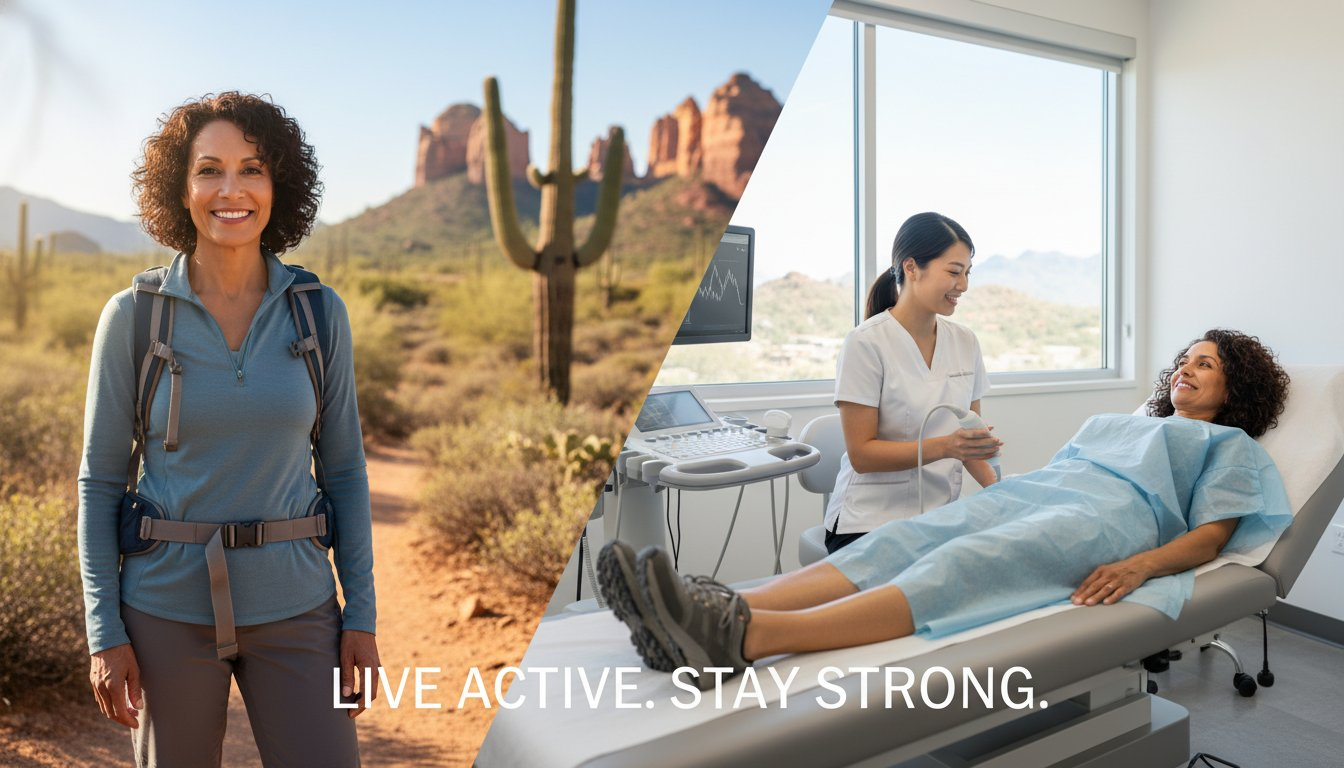
As we age, maintaining an active, independent lifestyle is a top priority. For many of us in Arizona, that means enjoying a round of golf in Mesa, hiking the trails in Scottsdale, or simply keeping up with grandchildren in Gilbert. However, a silent condition called osteoporosis can quietly undermine this lifestyle by weakening our bones, making them susceptible to sudden and debilitating fractures.
An osteoporosis risk assessment is your first line of defense. It’s a proactive step that provides a data-driven "early warning system" before a minor fall turns into a major medical event. This guide will walk you through understanding your personal risk, the tools used for assessment, and how you can access easy, affordable screenings throughout the Phoenix area.
[Placeholder for AI-generated image: A vibrant, active senior couple hiking with Camelback Mountain in the background, looking healthy and happy.]
Key Takeaways
-
Osteoporosis is a "silent disease" that often shows no symptoms until a bone breaks.
-
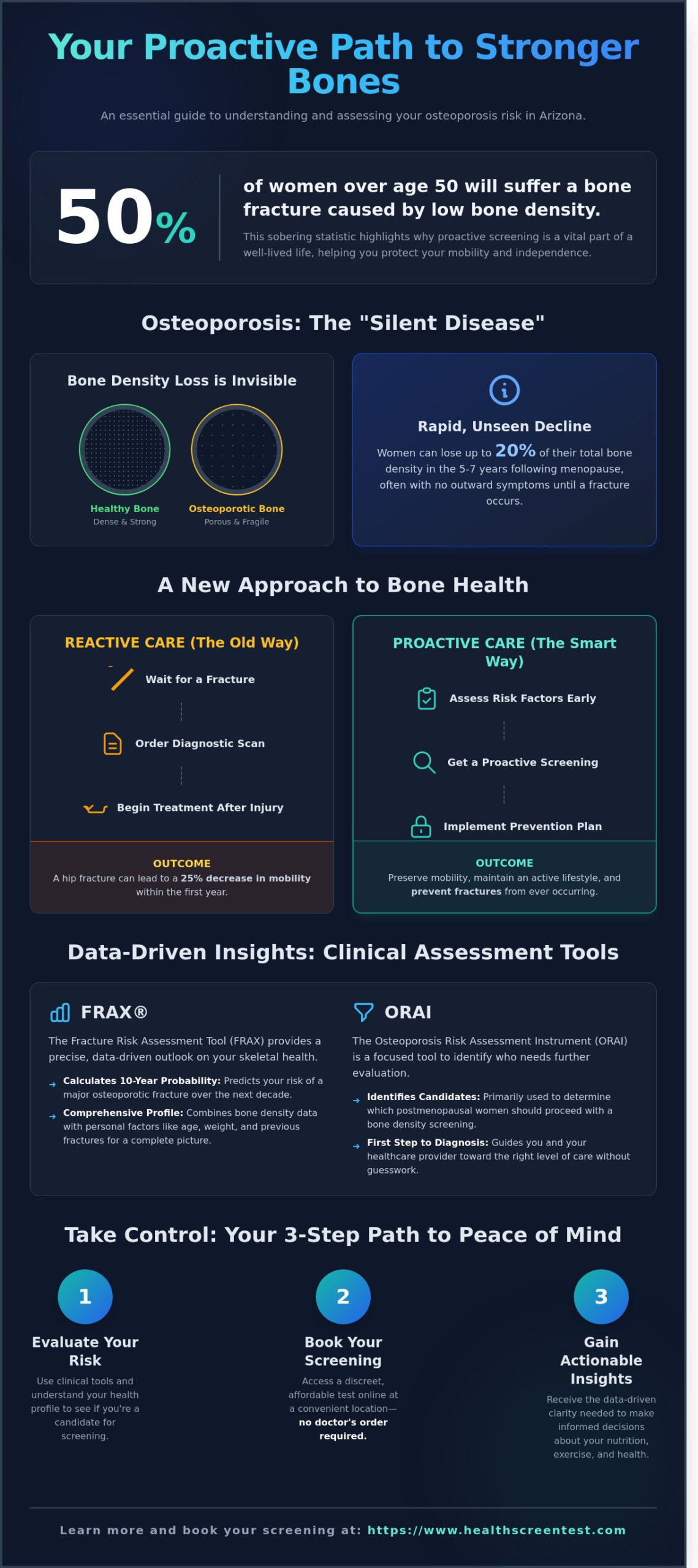
Risk assessment tools like FRAX and ORAI help predict your 10-year fracture probability to determine if you need further testing.
-
Screening is recommended for all genders aged 65 and older, as well as for younger postmenopausal women and men with specific risk factors.
-
Mobile screenings in cities like Tempe, Chandler, and Phoenix offer a convenient, affordable way to assess your bone health without a doctor’s order or insurance.
Understanding Osteoporosis Risk Assessment in the Phoenix Metro Area
Osteoporosis is a bone disease that develops when bone mineral density and bone mass decrease, or when the structure and strength of bone change. This can lead to a decrease in bone strength that can increase the risk of fractures. Because it progresses without any outward signs, it’s often called the "silent disease."
For residents in active retirement communities like Sun City West or vibrant neighborhoods in Chandler, a proactive approach is far better than a reactive one. Instead of waiting to treat a painful fracture, a risk assessment allows you to prevent one from ever happening. At Health Screen Test, we provide Arizona families with accessible data to make informed decisions about their bone health.
The "Silent" Nature of Bone Loss in Active Adults
Many people don’t realize their bone mass is low until a seemingly minor incident—like a stumble or even a strong cough—causes a painful fracture. This is especially critical for women. According to the Office on Women’s Health, a woman can lose up to 20% of her bone density in the five to seven years following menopause. This rapid loss can happen without any symptoms, making early detection essential for maintaining long-term independence.
Why Proactive Screening Matters for Arizonans
Living in Arizona means enjoying plenty of sunshine, a great source of Vitamin D. While Vitamin D is crucial for bone health, it is not a substitute for a clinical screening. A formal osteoporosis risk assessment provides the concrete data you need to understand your true risk level.
Fortunately, you no longer have to navigate complex hospital systems to get this information. Convenient mobile screenings regularly move through Gilbert, Mesa, and other Phoenix-area neighborhoods, bringing this vital service directly to you.
Key Tools for Evaluating Bone Health: FRAX, ORAI, and Beyond
To assess your risk, clinicians use validated scoring systems that analyze key factors in your health profile. These tools don’t measure your bone density directly; instead, they calculate your probability of a fracture to determine if a physical bone density scan is necessary.
The most common tools include:
-
ORAI (Osteoporosis Risk Assessment Instrument): A simple yet effective system that uses your age, weight, and current estrogen use to generate a risk score.
-
FRAX (Fracture Risk Assessment Tool): A more detailed tool developed by the World Health Organization that calculates your 10-year probability of having a major osteoporotic fracture or a specific hip fracture.
These assessments combine your personal risk factors to create a clear picture of your bone health, empowering you and your doctor to create a preventative strategy.
The Role of Ultrasound Bone Densitometry
The screenings offered at our mobile events in Scottsdale and Tempe often use a technology called ultrasound bone densitometry. This quick and painless test typically involves placing your foot into a small device that uses sound waves to measure the bone density in your heel.
It serves as an excellent initial screening tool because it’s non-invasive, radiation-free, and provides immediate insight. While a DEXA scan (dual-energy x-ray absorptiometry) is the diagnostic gold standard, an ultrasound screening is a highly effective and convenient way to determine if you are at risk and need to pursue further testing with your physician.
[Placeholder for YouTube video: A short, reassuring video demonstrating how a quick and painless heel ultrasound for osteoporosis screening is performed.]
Who Needs a Bone Density Screening in Mesa and Chandler?
While bone health is important for everyone, certain groups are at a significantly higher risk. Understanding if you fall into one of these categories is the first step toward protecting yourself.
The U.S. Preventive Services Task Force recommends screening for all women aged 65 and older. They also recommend screening for postmenopausal women younger than 65 who are at an increased risk.
Use this checklist to see if you should book a screening:
-
✅ Are you a woman aged 65 or older?
-
✅ Are you a postmenopausal woman under 65 with risk factors?
-
✅ Do you have a family history of osteoporosis or hip fractures?
-
✅ Are you a smoker or do you consume more than two alcoholic drinks per day?
-
✅ Do you have a low body weight (a BMI under 21)?
-
✅ Have you taken certain medications long-term, like steroids (prednisone)?
-
✅ Are you a man over 70?
Men and Osteoporosis: The Overlooked Risk
It’s a common myth that osteoporosis only affects women. In reality, men are also at risk. The National Institute on Aging reports that "about one in four men over age 50 will break a bone due to osteoporosis." For men in the Phoenix metro area, specific triggers can include low testosterone levels or prolonged use of steroids for conditions like asthma or arthritis. We encourage men to consider including bone health in their overall wellness plan, which can be easily done with our comprehensive health packages.
➡️ Did You Know? Our Men’s Comprehensive Package can be customized to include an osteoporosis risk assessment, providing a fuller picture of your health.
Preparing for Your Osteoporosis Screening in Scottsdale or Tempe
One of the biggest benefits of a mobile health screening is the simplicity and convenience. The entire process is designed to be quick, comfortable, and stress-free, giving you peace of mind without disrupting your day.
Here’s a simple step-by-step guide on what to expect:
-
Simple Preparation: Wear comfortable clothing and be prepared to remove your shoe and sock from one foot. There are no special dietary or medication restrictions.
-
Quick Process: The screening itself usually takes less than 15 minutes. A friendly technician will guide you through the painless heel ultrasound. There are no needles and no disrobing required.
-
Understanding Your Results: The screening provides a "T-score," which is a number that compares your bone density to that of a healthy young adult.
Interpreting Your Results and Next Steps
After your screening, you will receive a report with your T-score. Here is what the numbers generally mean:
-
Normal: A T-score of -1.0 or above.
-
Osteopenia (Low Bone Mass): A T-score between -1.0 and -2.5.
-
Osteoporosis: A T-score of -2.5 or below.
It is crucial to remember that these results are a screening tool, not a diagnosis. The report is meant to be shared with your primary care physician in Mesa or Phoenix, who can use this valuable data to determine the best course of action for your long-term bone health.
A Word From a Local Resident
"I was worried about my bone health because my mother had a bad hip fracture. Getting the screening with Health Screen Test in Scottsdale was so easy. It took 10 minutes, and having that T-score number gave me incredible peace of mind. I took the results to my doctor, and now we have a plan. I’m so glad I didn’t wait."
– Susan P., Scottsdale, AZ
Accessing Affordable Bone Health Screenings Across Arizona
At Health Screen Test, we believe that proactive health management should be accessible to everyone. That’s why we’ve made it simple to get an osteoporosis risk assessment without needing a doctor’s referral or dealing with insurance paperwork. We partner with Life Line Screening to bring mobile health events to thousands of convenient locations, including community centers and churches in Glendale, Avondale, Goodyear, and Buckeye.
This model allows you to bypass the hassle of a traditional hospital visit for preventative care. With no hidden facility fees and transparent pricing, you are in complete control. Our Women’s Comprehensive Package is an affordable option that bundles osteoporosis assessment with other vital screenings.
Ready to take the first step? Check our local Arizona screening schedule to find an event near you.
Find an Osteoporosis Screening Event Near You in Arizona
Frequently Asked Questions (FAQ)
What is the most accurate osteoporosis risk assessment tool?
The FRAX and ORAI scoring systems are highly accurate for predicting fracture risk. For diagnosis, the DEXA scan is considered the gold standard for measuring bone mineral density. Our ultrasound screening is an excellent first step to determine if a DEXA scan is needed.
Do I need a doctor’s order for an osteoporosis screening in Phoenix?
No. With Health Screen Test, you can book your screening directly online without a referral from a doctor, making preventative care more accessible for residents in Phoenix, Gilbert, and surrounding areas.
How much does an osteoporosis screening cost in Arizona without insurance?
Our screenings are designed to be affordable. The Osteoporosis Risk Assessment is often included in cost-effective packages like the Women’s Comprehensive Package. Please check our website for the most current pricing.
Is a heel ultrasound as good as a DEXA scan for bone density?
A heel ultrasound is a highly effective screening tool that assesses risk, while a DEXA scan is the diagnostic tool used to confirm osteoporosis. The ultrasound is a convenient, radiation-free way to identify individuals who would benefit from a follow-up DEXA scan.
Can men get osteoporosis screenings at Health Screen Test locations?
Absolutely. We encourage men, especially those over 70 or with known risk factors, to get screened. This assessment can be added to any package.
What are the early warning signs of osteoporosis I should look for?
Unfortunately, there are typically no early warning signs, which is why it’s called the "silent disease." Signs like loss of height, a stooped posture, or a bone that breaks easily are often indicators that the disease is already advanced. This is why proactive screening is so important.
How often should a woman over 65 in Scottsdale be screened for bone loss?
The general recommendation is every two years, but your doctor may suggest a different frequency based on your personal T-score and other risk factors.
What should I do if my osteoporosis risk assessment shows a high fracture risk?
If your results indicate you are at high risk, the most important next step is to schedule an appointment with your primary care physician. Share your results with them so they can determine if a diagnostic DEXA scan or other follow-up care is needed.