Discover how to access life-saving vascular and heart screenings across the Phoenix Metro area to detect “silent killers” before they become emergencies.
In Arizona, our sunny skies and active lifestyle invite us to enjoy life to the fullest. But as we age, underlying health risks can develop silently, often without any symptoms until it’s too late. Preventive health screenings offer a powerful way to look beneath the surface, giving you the knowledge and peace of mind to protect your future. This guide will walk you through everything you need to know about Life Line Screening events in Phoenix and across Arizona, from what they test for to how you can prepare for your appointment.
Key Takeaways
- What It Is: Life Line Screening provides non-invasive, community-based health screenings using ultrasound and other simple tests to detect risks for stroke, heart disease, and other chronic conditions.
- Why It Matters: These screenings can identify “silent killers” like arterial plaque, aneurysms, and irregular heart rhythms before they cause a medical emergency.
- Who It’s For: The screenings are especially valuable for Arizona residents over 40, particularly those with a family history of cardiovascular disease, high blood pressure, or other risk factors.
- Local Convenience: Events are held in accessible community locations throughout the Valley, including Gilbert, Mesa, Scottsdale, Sun City West, and Phoenix. Or enter your ZIP code if you are outside AZ on the order page.
- Empowerment: The service provides direct access to vital health information without a doctor’s referral, allowing you to take a proactive role in your long-term wellness.
What is Life Line Screening and Why is it Essential for Arizonans?
Life Line Screening is a leading provider of community-based preventive health screenings. Instead of navigating a complex hospital system, they bring advanced screening technology to convenient locations right in your neighborhood—from community centers in Chandler to church halls in Queen Creek. Their focus is on identifying risks for vascular disease and other chronic conditions that are often called “silent killers” because they develop without obvious symptoms.
For many Arizonans, especially those in our vibrant active adult communities like Sun City West or retirees enjoying the good life in Scottsdale, staying healthy is key to maintaining an active lifestyle. These screenings provide a crucial snapshot of your internal health, detecting issues like plaque buildup in your arteries long before they could lead to a stroke or heart attack. As your trusted expert guide, we’re here to explain how this technology works and why it’s a game-changer for proactive health management.
The Science of Ultrasound: Non-Invasive Peace of Mind
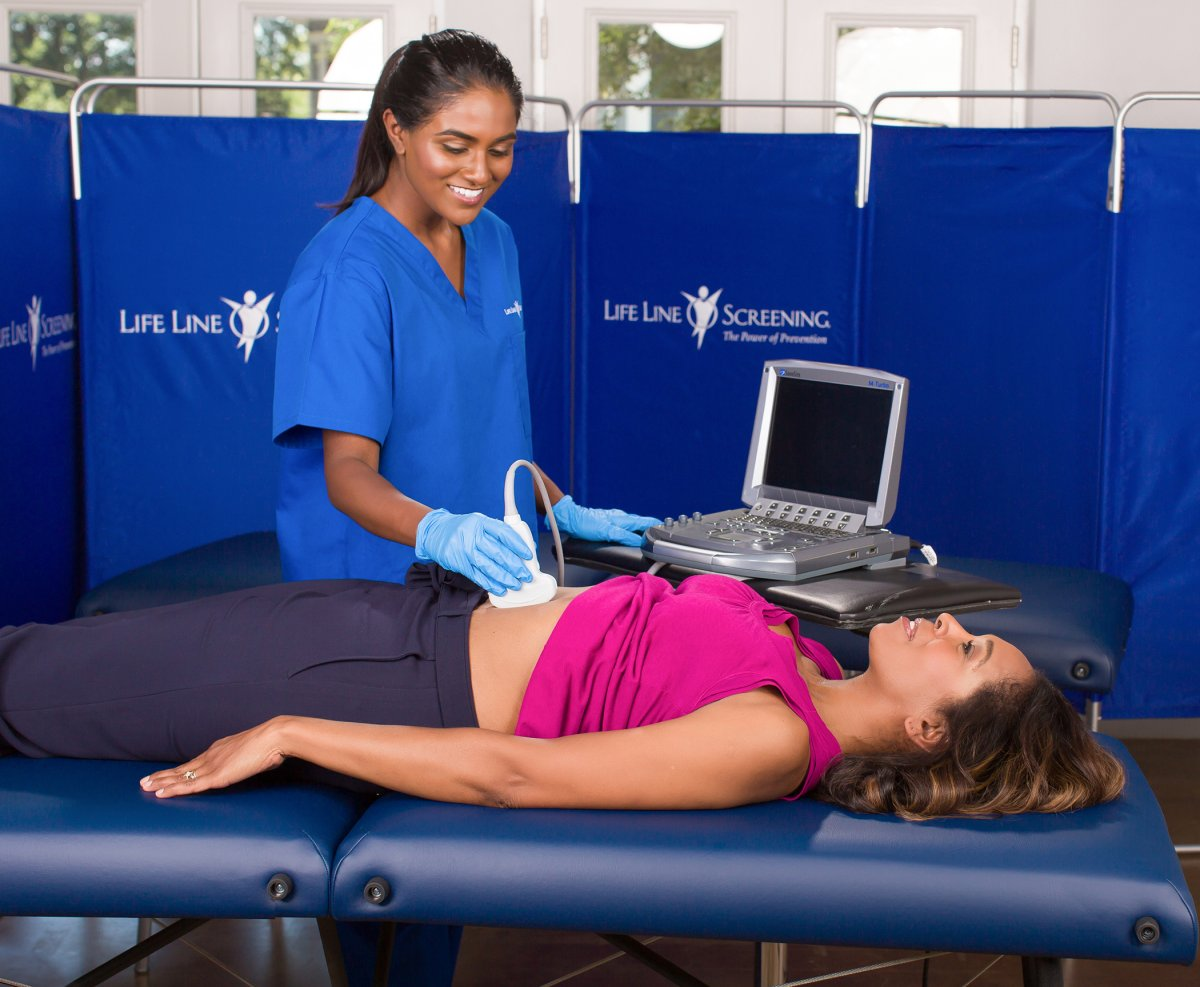
The core of Life Line Screening’s service is advanced ultrasound technology. This is the same safe, painless method used to view babies in the womb. For vascular screening, a trained technologist uses a small, handheld device called a transducer, which emits sound waves that create a detailed image of your arteries.
This process allows them to see blockages or abnormalities without any radiation, needles, or discomfort. A typical 10-minute scan can provide more information about your stroke risk than many more invasive and costly hospital procedures. For your peace of mind, every result is reviewed by a board-certified physician to ensure the highest level of accuracy.
The Direct-to-Consumer Advantage in 2026
One of the biggest advantages of this model is the freedom it gives you. In 2026, you don’t need a doctor’s referral to order a screening. You can choose the tests that are right for you based on your personal and family health history. This approach offers:
- Transparent Pricing: You know the full cost upfront, with the Cardiovascular and Stroke Screening package at $159, which is 50% off. This is a stark contrast to the often unpredictable and complex billing associated with hospital visits.
- Speed and Confidentiality: After your screening, you receive a complete, easy-to-understand report within about 10 days. Your results are confidential, empowering you to share them with your doctor and make informed decisions together.
Core Vascular and Heart Screenings Offered in the Phoenix Metro Area
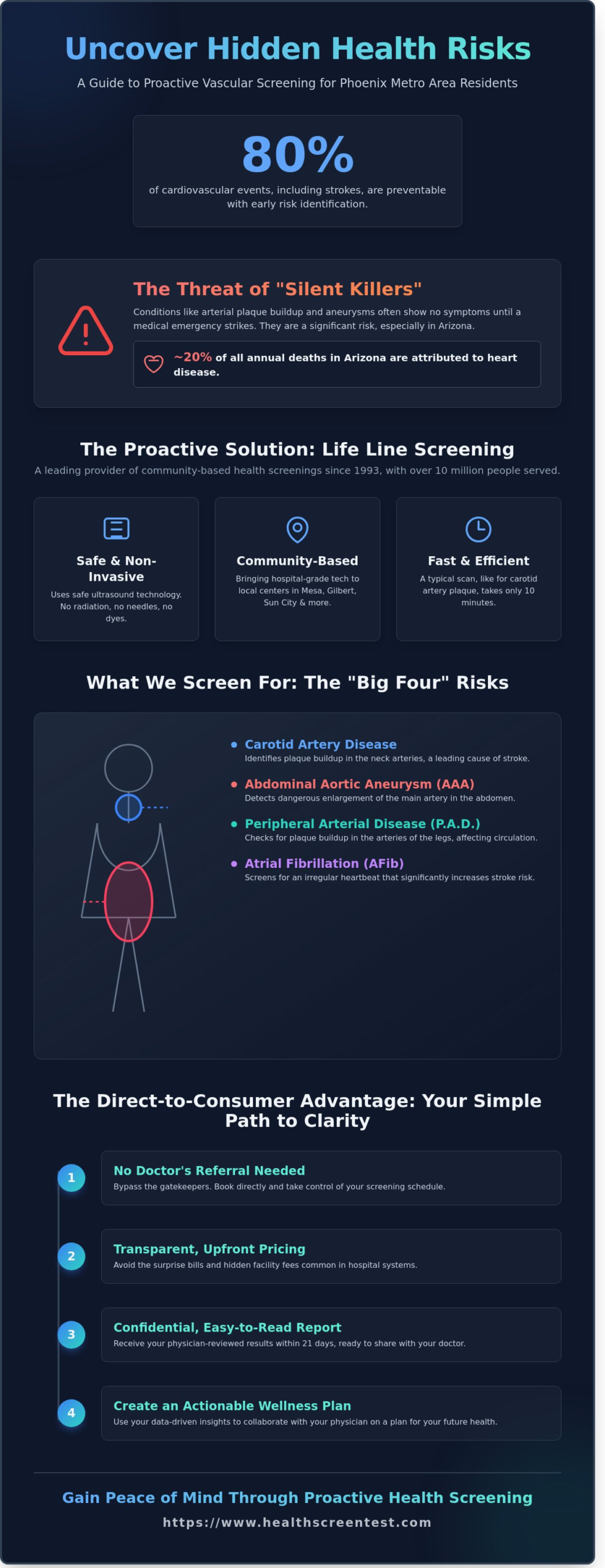
At a typical screening event in the Phoenix metro area, you can access a suite of tests designed to evaluate your cardiovascular health. The most popular package focuses on the “Big Four” vascular screenings, which are critical for assessing your risk of stroke and other serious conditions. Given the health trends we see in communities from Gilbert to Glendale, understanding these tests is the first step toward prevention.
Here’s a breakdown of the primary screenings offered
❤️ Stroke and Carotid Artery Disease Screening
This ultrasound scan examines the carotid arteries on either side of your neck, which supply blood to your brain. The test looks for plaque buildup, a fatty deposit that can narrow the arteries and is a leading cause of stroke. A carotid artery screening is a painless 10-minute window into your future stroke risk. With 1 in 4 adults over 40 at risk, this simple test is one of the most important preventive measures you can take.
🩺 Abdominal Aortic Aneurysm (AAA) & PAD Detection
An Abdominal Aortic Aneurysm (AAA) is a potentially life-threatening bulge in the body’s largest artery. Because they are almost always asymptomatic, they are particularly dangerous. An ultrasound of your abdomen can detect an aneurysm early when it can be safely monitored or treated.
The event also screens for Peripheral Arterial Disease (PAD), which involves plaque buildup in the arteries of the legs and feet. For the many active hikers and golfers in Arizona communities from Avondale to Paradise Valley, optimal circulation is essential. PAD not only causes leg pain but is also a major red flag for a heightened risk of heart attack and stroke.
💓 Atrial Fibrillation (AFib) and Heart Rhythm
Using simple EKG electrodes placed on your arms and legs, this screening checks for Atrial Fibrillation (AFib), an irregular and often rapid heart rhythm. According to the American Heart Association, AFib increases the risk of stroke by up to 500%. Detecting it early allows you and your doctor to manage the condition and significantly reduce your risk.
Evaluating the Value: Is Preventive Screening Right for You?
One of the most common questions we hear is, “Is this medically necessary if I feel fine?” It’s a valid concern, and the answer lies in understanding the difference between preventive and diagnostic medicine. Diagnostic tests are ordered when you have symptoms; preventive screenings are designed to find risks before you have symptoms.
Think of it like a routine oil change for your car—you do it to prevent a major breakdown, not because the engine is already smoking. These screenings offer that same proactive care for your body.
*”I had the screening done in Mesa and was surprised they found a 60% blockage in my carotid artery. I had no idea. My doctor was able to get me on medication right away. I truly believe it saved me from having a stroke.” – Robert P., Mesa, AZ *
Taking the initiative to learn more about your health is always a positive step. At Health Screen Test, we provide access to a wide range of Health Screen Test Screenings to empower you with the information you need.
The Debate: Screening vs. Over-Diagnosis
It’s true that some medical organizations debate the necessity of mass screenings for the general population, citing concerns about potential over-diagnosis or unnecessary follow-up procedures. However, we believe that knowledge is the ultimate tool for personal health management. An informed individual is an empowered one. The goal isn’t to create anxiety but to provide a clear, data-driven baseline of your health. We always encourage you to share your results with your primary care physician in Phoenix or your local community to create a comprehensive wellness plan together.
Cost-Benefit Analysis for Arizona Families
When you consider the cost-benefit analysis, the value becomes even clearer. A screening package that costs between $159 and $249 is a small investment compared to the devastating financial and emotional cost of a major medical event like a stroke, which can easily exceed $20,000 in initial treatment costs, not to mention long-term rehabilitation. For families in Tempe, San Tan Valley, and across Arizona, the “peace of mind” return on investment is immeasurable. Plus, the convenience of direct payment without insurance hassles makes the process simple and straightforward.
What to Expect: Preparing for Your Screening Event in Gilbert or Mesa
One of the best parts of Life Line Screening is its convenience. Events are held in familiar, low-stress environments like community centers, VFW halls, and churches throughout the Valley, making them far more approachable than a hospital.
The entire process is designed to be simple and efficient. Here’s a quick walkthrough of what to expect, from booking your appointment to receiving your results.
View Upcoming Arizona Screening Dates
To help you visualize the simple and painless ultrasound process, watch this short video:
Step-by-Step: The Day of Your Appointment
- Arrival and Check-In: You’ll arrive at the local Gilbert or Scottsdale venue at your scheduled time. The check-in process is quick, and the friendly staff will guide you through the necessary paperwork.
- The Screening Rooms: You’ll be escorted to a private screening area. For the ultrasound tests, a technologist will apply a small amount of warm gel to your skin and gently press a transducer against the area being scanned. You won’t feel any pain or discomfort.
- Total Time: The entire appointment for a full package of screenings usually takes 60 to 90 minutes. You can relax, read, or listen to music during the short waits between tests.
Preparation Checklist for Success
To ensure your screening is as accurate as possible, follow these simple preparation steps:
- Fasting: For the Abdominal Aortic Aneurysm (AAA) scan, you will likely be asked to fast for at least 4 hours beforehand. This reduces gas in your abdomen, which can interfere with the ultrasound image.
- Clothing: Wear comfortable, loose-fitting, two-piece clothing. For the PAD test, you’ll need to remove your shoes and socks, and for the EKG, you’ll need access to your arms and lower legs.
- Hydration: Be sure to drink plenty of water before your appointment (unless lab tests requiring fasting are included). Good hydration can make veins more accessible if a blood draw is part of your package.
Taking Control: How to Interpret and Use Your Results
Approximately within 10 days after your screening, you’ll receive a confidential report in the mail or online. This report is your personal health roadmap, and at Health Screen Test, we see ourselves as your expert guide for the next steps on your wellness journey. We are committed to helping you understand your health, and you can learn more about our mission by reading about Health Screen Test.
Understanding Your Risk Levels
The results are typically presented in a clear, color-coded format to make them easy to understand:
- Normal/Green: This indicates no significant issues were found. You can use this as a valuable baseline for your health records and continue your healthy lifestyle.
- Borderline/Yellow: This suggests a mild to moderate level of disease or risk. It’s a signal to take proactive steps, such as lifestyle changes, and to discuss the findings with your doctor.
- Significant/Red: If a significant blockage or abnormality is detected, this indicates a high-risk situation. The report will strongly advise you to see your physician immediately for follow-up and potential treatment.
Your Next Steps in the Phoenix Health Network
Your screening results are the first step, not the last. The next move is to share them with your primary care doctor. They can integrate this new information into your overall health profile and, if necessary, connect you with local Arizona specialists in cardiology or vascular health for further evaluation.
Continuing your health education is also vital. The Health Screen Test Blog is a great resource for ongoing articles and advice on maintaining a proactive and healthy lifestyle.
By getting screened, you’ve taken the most important step—showing up for your future self.
Secure Your Peace of Mind—Book Your Arizona Health Screening Today
Take control of your health with convenient, affordable, and non-invasive screenings. Join the over 10 million people who have trusted Life Line Screening.
- ✅ Trusted by over 10 million customers nationwide and Better Business Bureau A+rated
- ✅ Board-certified physician review on every report
- ✅ Convenient mobile locations across Gilbert, Mesa, and Phoenix and surrounding cities in AZ and across the USA.
Frequently Asked Questions (FAQ)
Is Life Line Screening legitimate and accurate?
Yes, Life Line Screening is a legitimate and well-established provider of preventive health screenings. They use the same technology and standards found in hospitals, and all results are reviewed by board-certified physicians to ensure high accuracy and reliability.
How much does a full health screening package cost in Arizona?
While prices can vary, a comprehensive vascular screening package in Arizona typically costs between $159 and $249. This provides an affordable way to get a broad overview of your cardiovascular health without needing multiple specialist appointments.
Do health insurance or Medicare cover these screenings?
Generally, these are considered preventive screenings for asymptomatic individuals, so they are not typically covered by Medicare or most private insurance plans. But check first with your Medicare plan to see if they will cover it. The service is designed to be paid for directly by the consumer, which keeps the process simple and transparent. You can use your Flexible Spending Account (FSA) or Health Savings Account (HSA) to help pay for it.
Where can I find Life Line Screening locations in Phoenix or Mesa?
Life Line Screening holds events in various cities across the Phoenix Metro area, including Phoenix, Mesa, Gilbert, Chandler, Scottsdale, Sun City West, Goodyear, and Buckeye. If you are outside of AZ, just type in your zip code to find your nearest location. They use accessible community venues like churches, community centers, and event halls. You can find a schedule of upcoming events on their website.
Do I need to fast before my appointment?
Fasting for about 4 hours is usually required for the Abdominal Aortic Aneurysm (AAA) screening to ensure the clearest possible ultrasound image. Specific instructions will be provided when you book your appointment.
What happens if the screening finds a problem?
If a significant issue is detected, your report will clearly state the findings and recommend that you follow up with your physician immediately. This early detection is the primary benefit, as it allows you and your doctor to take action before a serious medical event occurs.
Is the ultrasound for stroke screening painful?
No, the ultrasound screening for carotid artery disease (stroke risk) is completely painless. A technologist will apply a warm gel to your neck and gently move a transducer over the skin. You will not feel any discomfort.
How often should I get these preventive tests done?
The recommended frequency depends on your age, risk factors, and previous results. Many people choose to get screened every one to two years to monitor their health. Your doctor can provide a personalized recommendation based on your individual health profile. There are other packages available at your convenience.