
Discover how monitoring your homocysteine levels can prevent heart disease and stroke, and where to find accessible testing in the Phoenix metro area.
Key Takeaways
What it is: Homocysteine is an amino acid in your blood.
Why it matters: High levels (a condition called hyperhomocysteinemia) are linked to a greater risk of heart attack, stroke, and blood clots because they can damage the lining of your arteries and indicate potential vitamin deficiencies.
What you can do: Simple blood tests can measure your levels. If they’re high, lifestyle changes, including diet and B-vitamin supplementation, can often bring them back into a healthy range.
Local Access: Residents in Gilbert, Phoenix, and across the Valley can now order homocysteine tests directly without a doctor’s referral.
What Are Homocysteine Levels and Why Should Arizona Residents Care?
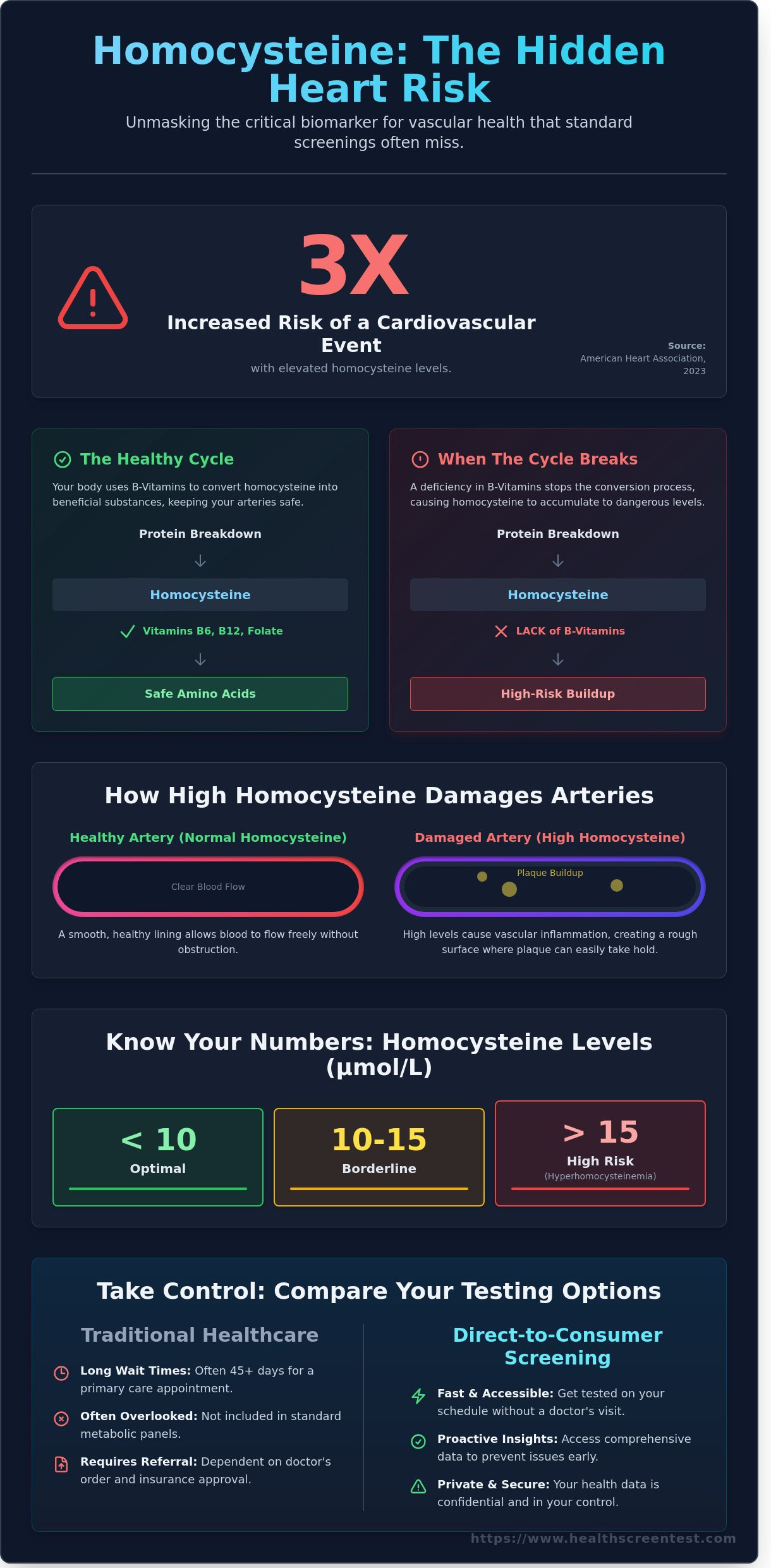
If you’re a health-conscious resident in Arizona, you’re likely familiar with cholesterol and blood pressure checks. But have you heard of homocysteine? Think of it as a crucial, yet often overlooked, piece of your cardiovascular health puzzle. Homocysteine is an amino acid that your body produces when it breaks down proteins. In a healthy system, vitamins like B6, B12, and folate quickly convert it into other, harmless substances.
However, when this process falters—often due to a vitamin deficiency or a genetic factor—homocysteine levels can build up in the blood. For the vibrant, active communities in places like Sun City West and Scottsdale, understanding this biomarker is a proactive step toward long-term wellness. High levels can act as an early warning sign for inflammation in your blood vessels, giving you the chance to make changes before more serious issues arise.
The "Hidden" Biomarker for Heart Health
So, why isn’t homocysteine tested at every routine physical in Phoenix? It’s often considered a secondary test, ordered only when a patient has specific risk factors. Yet, its power lies in its ability to reveal underlying issues that a standard lipid panel might miss. The clinical term for elevated levels is hyperhomocysteinemia, which is generally defined as a blood concentration greater than 15 µmol/L. This buildup can make your blood more prone to clotting and damage the delicate inner lining of your arteries, setting the stage for atherosclerosis.
Why Preventive Screening is the Standard in 2026
The healthcare landscape across the Phoenix metro area is shifting. More than ever, residents are moving away from reactive sick-care and embracing proactive wellness. We no longer want to wait for a diagnosis; we want the data to prevent one. This empowerment is a core reason why direct-access testing services like Health Screen Test are becoming the new standard. According to the U.S. Department of Health and Human Services, increasing the use of clinical preventive services is a leading health indicator, highlighting a national trend toward taking control of our own health data.
The Connection Between Homocysteine, B-Vitamins, and Stroke Risk
The link between high homocysteine and cardiovascular events is well-established. When elevated, homocysteine can irritate the lining of your blood vessels (the endothelium), contributing to the inflammation that leads to plaque buildup. It can also increase the risk of blood clots, a primary cause of strokes.
This connection is sometimes influenced by a common genetic variation known as the MTHFR gene mutation, which can impair your body’s ability to process folate and, consequently, regulate homocysteine. While this sounds complex, the key takeaway is simple: managing your homocysteine is a powerful strategy for protecting your vascular health. The Centers for Disease Control and Prevention (CDC) emphasizes that controlling risk factors is fundamental to stroke prevention, and homocysteine is one you can actively manage.
🥦 Vitamin Deficiencies: The Common Culprit
Think of vitamins B12 and folate as the "clean-up crew" for homocysteine. They are essential cofactors that help metabolize and clear it from your bloodstream. When you’re deficient in these crucial nutrients, the crew can’t keep up, and levels rise. Residents in Mesa and Chandler should be mindful of symptoms of vitamin deficiency, which can include:
-
Fatigue or weakness
-
Pale skin
-
Tingling or numbness in hands and feet
-
Mouth sores
-
Difficulty with balance
Homocysteine and Cognitive Decline
The health of your arteries impacts more than just your heart—it’s directly linked to your brain. For older people in communities like Sun City West, this connection is especially important. Emerging research has linked high homocysteine levels with an increased risk of cognitive decline and even dementia. Major health organizations like the National Institutes of Health (NIH) have explored this link, suggesting that by maintaining healthy homocysteine levels, you are also investing in your long-term brain health.
Comparing Homocysteine Testing Options in the Phoenix Metro Area
Traditionally, getting a homocysteine test required a doctor’s visit, a referral, and a trip to a specific lab. Today, Phoenix-area residents have more convenient and affordable options. Direct-to-consumer screenings allow you to take control of the process, often at a lower cost and without needing insurance.
| Feature | Traditional Doctor’s Order | Direct-to-Consumer Screening |
|---|---|---|
| Referral Needed? | ✅ Yes | ❌ No |
| Appointment Wait Time | Can be weeks or months | Often available next-day |
| Insurance Required? | Usually, with co-pays/deductibles | ❌ No, transparent pricing |
| Convenience | Limited to specific clinics | Mobile events in Gilbert, Tempe, etc. |
| Privacy | Part of your medical record | Confidential results sent to you |
Mobile Screening Events vs. Clinical Labs
Imagine a screening experience that comes to your neighborhood. Mobile screening events, a key part of the services offered through partners like Life Line Screening, provide a seamless and private alternative to traditional labs. For residents in Tempe or Avondale, this means you can book a comprehensive package online and visit a convenient local venue for a quick, professional screening without the hassle of a clinical setting.
What to Expect During Your Blood Draw
The process is designed to be simple and stress-free:
-
Order Online: Choose the test or package that fits your needs.
-
Schedule: Pick a time and location near you.
-
Attend: A quick blood draw (phlebotomy) is performed by a trained professional.
-
Get Results: Your confidential results are delivered securely to your online portal.
Preparation Tip: For the most accurate homocysteine test, you will typically be asked to fast for 8-12 hours beforehand. Be sure to drink plenty of water.
How to Interpret Your Results and Take Proactive Steps
Receiving your lab results is the first step toward empowerment. While specific ranges can vary slightly by lab, here is a general guide:
-
Optimal: Below 10 µmol/L
-
Mildly Elevated: 10-15 µmol/L
-
High: Above 15 µmol/L
It is crucial to discuss your specific results with a healthcare provider for a clinical diagnosis and personalized advice. However, armed with this knowledge, you can begin making proactive lifestyle changes that support your cardiovascular health and give you long-term peace of mind.
🥗 Natural Ways to Lower Homocysteine
For many people, high homocysteine can be managed effectively through simple, natural methods:
-
Dietary Adjustments: Focus on foods rich in folate and B vitamins, such as leafy greens (spinach, kale), beans, lentils, and fortified cereals.
-
Supplementation: A high-quality B-complex supplement containing folate (or its active form, L-methylfolate), B12, and B6 can be highly effective.
-
Lifestyle: Regular exercise and reducing alcohol intake also contribute to healthier levels.
Leading health organizations have noted that lowering homocysteine levels is a positive step for vascular health, especially for those with identified vitamin deficiencies.
Tracking Your Progress Over Time
Your health is a journey, not a destination. For residents in high-activity areas like Scottsdale and Paradise Valley, tracking your biomarkers over time is key. Re-testing your homocysteine every 6-12 months allows you to see the direct impact of your lifestyle changes and ensure your levels remain in the optimal range. Digital results make it easy to monitor these trends and share them with your healthcare provider. For more tips on understanding your results, check out the resources on the Health Screen Test Blog.
Accessing Affordable Homocysteine Screening in Gilbert and Mesa
Health Screen Test is your local solution for direct, affordable access to vital health screenings. We believe that everyone in the Valley deserves to have this critical information without the barriers of referrals or insurance. A homocysteine test is often included in our comprehensive packages, such as the Men’s Comprehensive Package and Women’s Comprehensive Package, providing a broad overview of your cardiovascular health.
"I was worried about my family history of heart issues, but my doctor’s schedule was booked for months. I used Health Screen Test to get a full screening in Gilbert. The process was fast, professional, and the results gave me the peace of mind I was looking for." – Placeholder Testimonial, Phoenix Resident
Why Phoenix Residents Choose Health Screen Test
Our mission is to make preventive health accessible. With thousands of convenient locations across Arizona and the nation, we make it easy to get screened. You can order the tests you need online, without a doctor’s referral, and receive accurate, confidential results from CLIA-certified labs. To learn more about our commitment to your health, visit our About Us page.
Schedule Your Screening Today
Ready to take the next step? It’s easy to book a screening at a location near you, whether you’re in Buckeye, Goodyear, or right here in Gilbert. Take control of your cardiovascular health and gain the knowledge you need to live a longer, healthier life.
Book Your Cardiovascular Screening Now
Frequently Asked Questions
Do I need a doctor’s order to check my homocysteine levels in Arizona?
No, with services like Health Screen Test, you can order a homocysteine test or a comprehensive screening package directly online without a doctor’s referral.
How much does a homocysteine blood test cost in Phoenix without insurance?
Pricing can vary, but direct-to-consumer testing is often more affordable than traditional lab work billed through insurance, with transparent, upfront costs.
What is considered a dangerous level of homocysteine?
Levels above 15 µmol/L are generally considered high and are associated with an increased risk for cardiovascular events. Any elevated level should be discussed with a healthcare professional.
Can high homocysteine levels be reversed with diet and vitamins?
Yes, in many cases, high levels caused by vitamin deficiencies can be effectively lowered and managed through a diet rich in B vitamins and targeted supplementation.
How often should I test my homocysteine if I have a family history of heart disease?
If you have a family history or other risk factors, it’s a good idea to establish a baseline and then re-test every 6-12 months to monitor your levels and the effectiveness of any lifestyle changes.
Are there specific preparation steps for the blood draw in Gilbert labs?
Yes, you will typically need to fast for 8-12 hours before your blood draw. You will receive specific instructions when you schedule your appointment.
What is the difference between homocysteine and cholesterol testing?
Cholesterol (specifically LDL) contributes directly to plaque buildup in arteries. Homocysteine is an amino acid that, when elevated, can damage the artery walls, making them more susceptible to plaque buildup and clotting. They are two different but related risk factors for heart disease.
Is homocysteine testing covered by Medicare or private insurance?
Coverage depends on your specific plan and whether the test is deemed "medically necessary" by a physician. Direct-to-consumer testing is an alternative that does not require insurance.