


Did you know that the CDC reports 98 million American adults, which is more than 1 in 3, have prediabetes, yet 80% are completely unaware of their status? 📉 It’s a startling figure that highlights why relying on a single daily glucose reading isn’t enough to see the full picture. You’ve likely felt that familiar sting of anxiety when your morning sugar reading fluctuates, leaving you wondering if you’re truly managing your metabolic health or just guessing. We understand that waiting weeks for a primary care appointment in Phoenix or Scottsdale just to get basic answers is incredibly frustrating. This is why a hemoglobin a1c test is so essential for your peace of mind.
I’m here to show you how this simple screen acts as a powerful 3-month window into your blood sugar levels, offering the factual certainty you need to take control. 🩺 In this guide, you’ll discover exactly what your percentages mean and where to access seamless, affordable testing in Gilbert, Mesa, and Chandler without the typical clinical hurdles. We’ll walk through the science of this vital biomarker and provide a clear path to the proactive, data-driven lifestyle you deserve.
Key Takeaways
- Understand how a single test captures your average blood sugar levels over the past three months, offering a comprehensive view of your metabolic health. 🩸
- Learn to interpret your specific percentages to identify if you are in the “gray area” of prediabetes and what proactive steps you can take right now. 📈
- Find out why tracking your hemoglobin a1c is one of the most empowering steps you can take to protect your heart health while living in the Phoenix heat. 🌵
- Prepare for a stress-free lab visit with our checklist, including the convenient fact that no fasting is required for this essential screening. ✅
- Get step-by-step guidance on ordering your own private, discreet health tests online today, empowering you to manage your wellness on your own terms. 💻
What is a Hemoglobin A1c Test and Why Is It Essential?
If you live in Gilbert or Phoenix, you’ve likely heard your doctor mention your “A1c” during a routine wellness checkup. But what does it actually measure? Essentially, a hemoglobin a1c test provides a 90-day snapshot of your blood sugar levels. It acts like a long-term report card for your metabolism rather than a single moment in time. Understanding What is a Hemoglobin A1c Test helps you see why this specific biomarker is so critical for identifying prediabetes or managing existing health conditions with confidence. 🩸
To better understand this concept, watch this helpful video from the Cleveland Clinic:
The Science of Glycated Hemoglobin
Hemoglobin is the vital protein in your red blood cells responsible for carrying oxygen from your lungs to the rest of your body. When sugar enters your bloodstream, it naturally attaches to these proteins. Glycation is the permanent bonding of sugar to protein. Because red blood cells typically have a lifespan of about 120 days, measuring this “stuck” sugar allows clinicians to calculate your average glucose levels over the preceding three months. This 90-day window is the gold standard for metabolic tracking because it reveals the reality of your health, unaffected by what you ate for dinner last night.
A1c vs. Fasting Glucose: What is the Difference?
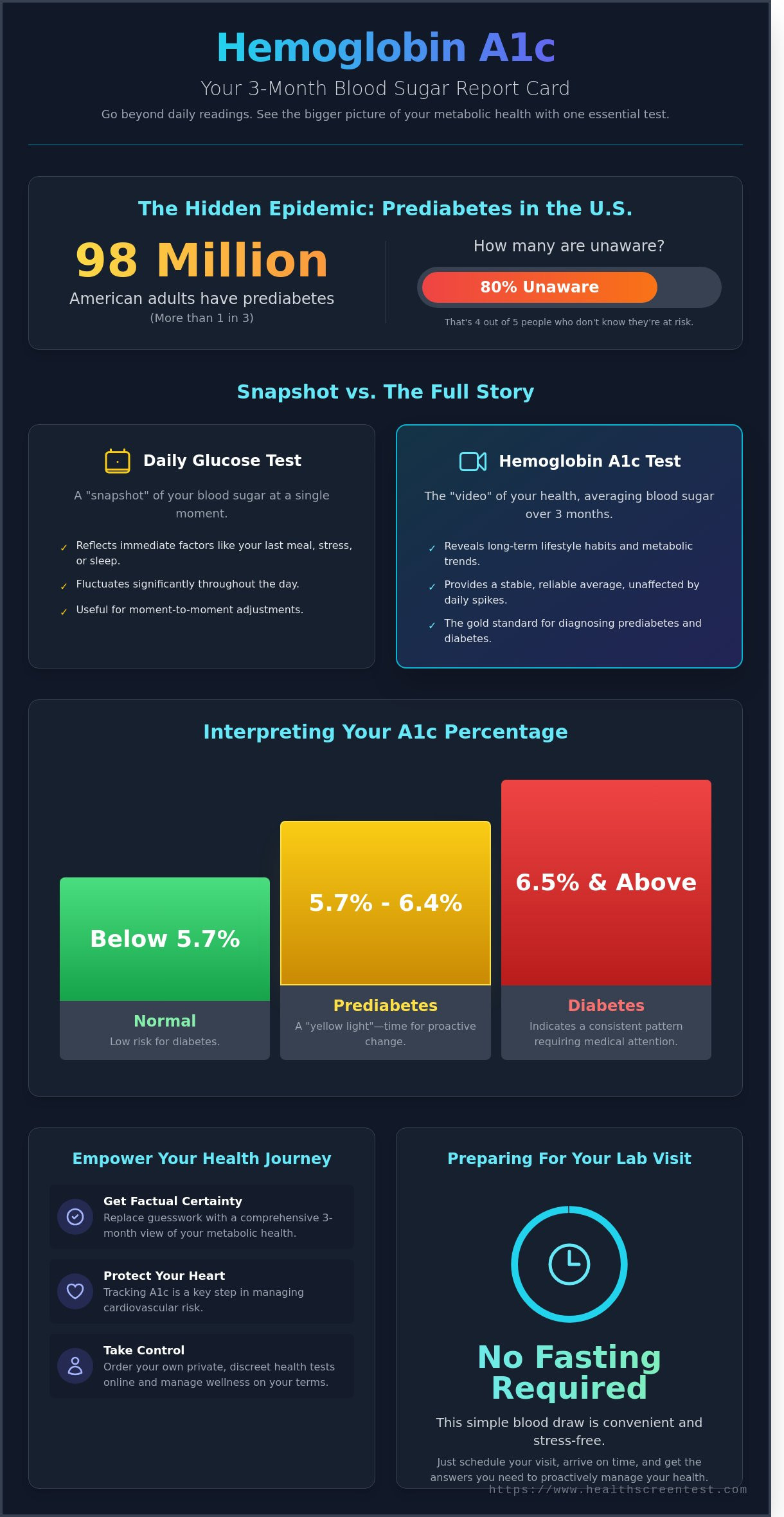
Many patients in Mesa and Chandler wonder why they need an A1c if they already do daily finger-stick tests. A fasting glucose test is a “snapshot” taken in a single second. It fluctuates based on stress, recent meals, or even how well you slept. In contrast, the hemoglobin a1c is the “video” of your health journey. It provides a stable average that isn’t swayed by temporary spikes. One high glucose reading doesn’t always mean you have diabetes, but a high A1c indicates a consistent pattern that requires attention. We encourage our readers in Scottsdale and Tempe to look at both metrics for a comprehensive health view. Utilizing both tests ensures that you aren’t just reacting to daily fluctuations but are instead taking control of your long-term wellness.
- Daily Tests: Reflect immediate choices and short-term biological reactions.
- A1c Test: Reflects lifestyle habits and metabolic trends over a 12-week period.
- Clinical Value: Helps residents in Sun City West and Surprise catch early warning signs of insulin resistance.
Interpreting Your A1c Results: What the Percentages Mean
Understanding your Interpreting Your A1c Results is the first step toward taking control of your metabolic health. While a standard glucose test shows your sugar levels at one specific moment, the hemoglobin a1c test measures your average blood sugar over the past 90 days. It’s a powerful metric that helps us see the bigger picture of how your body processes energy. Think of it as a three-month video recording of your health rather than a single blurry photograph.
If your result falls between 5.7% and 6.4%, you’re in the prediabetes range. It’s helpful to view this “gray area” as a yellow traffic light. It isn’t a diagnosis of permanent illness, but a clear call to action. Statistics from the CDC show that roughly 98 million American adults have prediabetes, and about 80% don’t even know they have it. Factors like age and ethnicity can also play a role; for example, some studies suggest that African American, Hispanic, and Asian populations may have slightly higher baseline A1c levels. This is why we treat the test as a vital screening tool, not a standalone verdict. You should always discuss these numbers with a professional who understands your full medical history.
A1c Reference Range Table
| Category | A1c Percentage | Estimated Average Glucose (eAG) |
|---|---|---|
| Normal | Below 5.7% | Below 117 mg/dL |
| Prediabetes | 5.7% to 6.4% | 117 to 137 mg/dL |
| Diabetes | 6.5% or higher | 140 mg/dL or higher |
*Note: For individuals already managing diabetes, the CDC generally suggests a target of less than 7%, though your personal goal may vary based on your age and other health conditions.
When Should Phoenix Residents Be Concerned?
Living in the heat of the Sonoran Desert makes it easy to dismiss certain symptoms. You might think your dry mouth or fatigue is just the result of a 110-degree day in Scottsdale or Mesa. However, some “red flags” require your attention. If you notice any of these, it’s time to check your hemoglobin a1c levels:
- Sudden, unexplained fatigue that doesn’t improve with rest 🩺
- Increased thirst or frequent urination, even when it’s cool outside 🌵
- Blurred vision that seems to come and go ⚠️
- Slow-healing cuts or bruises, particularly on the feet or legs 🩸
The most challenging part of high blood sugar is its “silent” nature. Many people in Gilbert and Chandler feel perfectly fine while their levels are slowly rising. Proactive testing is the only way to get the data you need to stay healthy. If you want to skip the long wait for a doctor’s appointment, you can explore private lab options through our Ulta Wellness partnership to get fast, discreet insights into your metabolic health.
Taking charge of your data is the best way to ensure peace of mind. You can easily schedule a comprehensive screening to see where your levels stand today.
The Importance of A1c Screening for Arizona Adults Over 40
Living in the Phoenix Metro area brings specific lifestyle challenges that directly impact your blood sugar. Between the triple-digit summer heat that keeps us indoors for months and the calorie-dense dining scenes in Scottsdale and Gilbert, it’s easy for activity levels to dip. For adults over 40, these environmental factors often lead to insulin resistance. This is a silent condition where your body stops using glucose effectively. It isn’t just a concern for those worried about diabetes; it’s a critical marker for your entire vascular system. High hemoglobin a1c levels act as an early warning signal for your heart. When glucose stays elevated, it creates oxidative stress that scars your arteries, making it a cornerstone of preventive health.
Diabetes and Heart Health: The Arizona Connection 🌵
The CDC reports that adults with diabetes are twice as likely to suffer from heart disease or a stroke compared to those without it. This connection is vital for residents in Sun City West and Mesa, where maintaining vascular health is the key to an active retirement. High blood sugar doesn’t just sit in the blood; it actively damages the lining of your blood vessels. The Importance of A1c Screening cannot be overstated because it identifies these risks long before a cardiac event occurs. Many proactive residents find that Life Line Screening offers a convenient way to include A1c checks in their annual wellness routine to ensure their heart remains protected.
Why “Feeling Fine” Isn’t Enough 🩺
One of the biggest myths in healthcare is that you’ll feel “sick” if your blood sugar is high. In reality, your body can compensate for elevated glucose for years without obvious symptoms. By the time you feel thirsty or fatigued, significant damage may have already occurred to your kidneys or eyes. Whether you live in Chandler, Tempe, or the growing communities of Buckeye and Goodyear, choosing proactive screening over reactive treatment is essential. “Prevention is the most powerful tool in the Arizona desert for long-term vitality,” and it starts with a simple hemoglobin a1c test. This data-driven approach provides the peace of mind you need to stay in control of your health journey without the stress of the unknown.
Preparing for Your Lab Visit in Mesa, Gilbert, or Phoenix
Getting your hemoglobin a1c checked shouldn’t feel like a stressful medical event. One of the best things about this specific test is that you don’t need to fast. Unlike a lipid panel or a basic metabolic suite that often requires a 12 hour fast, you can eat your breakfast at a local cafe in downtown Chandler or grab a coffee in Scottsdale before your appointment. Since the test measures your average blood sugar over a 90 day period, a morning bagel won’t skew the data.
Checklist for a Seamless Screening Experience
Preparation is simple, but a few small steps can make your visit much smoother. Arizona’s heat is a major factor to consider. Staying hydrated is vital because being well-hydrated makes your veins easier to access, which speeds up the blood draw. Follow this quick checklist before heading to your Gilbert or Phoenix location:
- 💧 Hydrate: Drink at least 16 ounces of water about an hour before your appointment.
- 🪪 Identification: Bring a valid photo ID and your digital confirmation if you booked for a Mesa or Glendale site.
- 👕 Attire: Wear a shirt with loose sleeves that can be easily rolled up. Phlebotomists need clear access to the crook of your arm.
- 💊 Supplements: Be aware that high doses of Vitamin C or Vitamin E can sometimes interfere with accuracy. According to the National Institute of Diabetes and Digestive and Kidney Diseases, conditions like iron deficiency anemia can also lead to false readings. Mention these to your technician.
Understanding the Testing Process
Most professional labs in the Valley use a venous draw rather than a simple finger prick. While a finger prick is common for daily monitoring, a venous draw provides a larger sample for a more precise hemoglobin a1c measurement. The entire process is incredibly efficient. You’ll likely spend less than 10 minutes in the chair from start to finish.
The technician will clean the area with an antiseptic wipe, insert a small needle, and collect the sample into a vial. It’s a minor pinch that lasts only a few seconds. Your privacy is a top priority; results are delivered through secure, encrypted portals that meet all federal HIPAA standards. Taking charge of your health in your 40s and 50s is a proactive choice that brings immense peace of mind. You aren’t just getting data; you’re gaining a roadmap for your long term wellness.
How to Order Your Hemoglobin A1c Test Online Today
You don’t need to wait weeks for a doctor’s appointment or deal with insurance hurdles to check your blood sugar levels. We’ve simplified the process so you can access your hemoglobin a1c data on your own terms. Taking charge of your health shouldn’t feel like a second job. By choosing direct-to-consumer testing, you’re choosing a path of empowerment and clarity. 🩸
The process is straightforward and discreet. First, you’ll select your test online. Next, you’ll choose a convenient laboratory near your home or office. After a quick blood draw, your results are processed by certified clinical labs. According to the Centers for Disease Control and Prevention (CDC), regular monitoring is the most effective way to manage or prevent type 2 diabetes. We make that monitoring happen without the typical clinical friction.
Direct Access Testing in Your Neighborhood
Whether you’re living in Phoenix, Scottsdale, Tempe, or Glendale, professional lab services are just a short drive away. We’ve partnered with thousands of locations across Arizona to ensure you don’t have to travel far for answers. Residents in Gilbert, Chandler, and Mesa can often find a partner lab within five miles of their front door. 📍
Once your sample is collected, your data is uploaded to a secure, private online portal. You’ll receive an email notification the moment your results are ready, usually within 24 to 48 hours. This isn’t just a number on a page; it’s a snapshot of your metabolic health over the last three months. I encourage you to browse our full list of screenings to see how we can help you monitor other vital biomarkers in Sun City West or Paradise Valley. 💻
The Value of Comprehensive Health Packages
While checking your hemoglobin a1c is vital, it’s often more effective when viewed alongside other health markers. We highly recommend our Mens or Womens Comprehensive Package. These bundles provide a full health baseline by combining your A1c test with lipid panels and metabolic screenings. 🛡️
Bundling these tests saves you significant money compared to ordering them individually. It also gives you a more complete picture of your cardiovascular and organ health. If you’re in San Tan Valley, Queen Creek, or Buckeye, you deserve the same high-end diagnostic experience as someone in the heart of the city. We believe health information should be accessible and actionable for everyone, regardless of their zip code.
Ready to take control of your wellness journey?
Key Takeaways
- No doctor’s order or insurance is required for testing.
- Results are typically available within 24-48 hours via a secure portal.
- Testing is available in all major AZ cities, including Avondale and Goodyear.
- Bundling tests into comprehensive packages offers the best value.
Frequently Asked Questions
Do I need to fast before an A1c test?
No, you don’t need to fast for a standalone hemoglobin a1c test. However, if you’re bundling it with a lipid or metabolic panel, a 12-hour fast is usually required for accuracy.
How often should I get tested?
For most adults over 40 in areas like Mesa or Chandler, an annual check is a great baseline. If your results are in the pre-diabetic range, your healthcare provider might suggest testing every 3 to 6 months.
Is my data private?
Absolutely. We prioritize confidentiality. Your results are delivered through an encrypted portal and are not shared with employers or insurance companies without your explicit consent.
Related Posts
Take Charge of Your Long-Term Wellness Today
Maintaining your health shouldn’t feel like a guessing game. Monitoring your hemoglobin a1c levels provides a precise three-month snapshot of your blood sugar, which is a vital metric considering the CDC reports that over 38 million Americans now live with diabetes. Whether you’re at home in Gilbert, Mesa, or Phoenix, you have the power to skip the traditional waiting room and access professional diagnostics on your own terms. We’ve streamlined the entire experience to ensure you get the clinical certainty you need without the typical stress of a doctor’s visit. 🌵
Our network provides you with immediate access to over 4,000 certified lab locations, making it easy to find a spot near your neighborhood. Your data stays protected within our secure, HIPAA-compliant portal, and you’ll typically see your results in just 24 to 48 hours. It’s a modern, discreet way to prioritize your longevity and stay ahead of potential health shifts. You’re making a smart choice for your future self by choosing proactive screening over reactive care. 📍
Order Your Hemoglobin A1c Test Online – No Doctor Required
You’ve got the tools to stay healthy, and we’re here to support you every step of the way. ✨
Frequently Asked Questions About Hemoglobin A1c Testing
How often should I have my Hemoglobin A1c tested if I am healthy?
✅ Most healthy adults over age 45 should schedule a hemoglobin a1c test every 36 months according to CDC guidelines. If your initial screening shows you’re in the healthy range below 5.7%, this 3-year interval keeps you on track. However, if you’re managing weight or have a family history of diabetes, checking your levels every 12 months provides better peace of mind and proactive control. You can find more details on these recommendations at the CDC website.
Can I lower my A1c level quickly before a test?
📉 You can’t lower your A1c level in a few days because this test measures your average blood sugar over the past 90 days. Since it tracks how glucose binds to your red blood cells, which live for about 3 months, a last-minute diet change won’t alter the data. Focus on consistent lifestyle shifts over a 12-week period to see a real drop in your results. It’s about the long-term trend rather than a single day of perfect eating.
Is fasting required for a Hemoglobin A1c blood test?
☕ No, you don’t need to fast before a hemoglobin a1c blood test. Unlike a standard glucose test, this biomarker isn’t affected by what you ate for breakfast or your morning coffee. You can visit our Phoenix or Gilbert clinics at any time of day that fits your schedule, making it a very convenient way to take control of your health. This flexibility is why over 15,000 of our Arizona neighbors prefer this method for routine screening.
What is a dangerous level for Hemoglobin A1c?
⚠️ An A1c level of 6.5% or higher typically indicates diabetes, but levels above 9.0% are considered high-risk for immediate health complications. The American Diabetes Association notes that for every 1% rise in your A1c, your risk of microvascular complications increases by 40%. Getting your results back quickly helps you and your doctor intervene before these numbers reach a critical point, ensuring your long-term wellness.
Can stress or a cold cause my A1c to be high?
🤒 A temporary cold won’t skew your results, but chronic stress that lasts for 60 days or more can cause a slight elevation. While a 24-hour flu doesn’t change your 3-month average, long-term cortisol spikes can influence how your body processes sugar. If you’ve been under intense professional or personal pressure for several months, it might reflect in a slightly higher percentage during your screening.
What is the difference between A1c and a glucose tolerance test?
🧪 The A1c test provides a 90-day snapshot of your blood sugar, while a glucose tolerance test measures how your body reacts to sugar in a 2-hour window. During a tolerance test, you’ll drink a 75-gram sugary solution and have your blood drawn multiple times. The A1c is much simpler, requiring just one quick blood draw without the sugar drink or the long wait in the lab lobby.
Can I get an A1c test in Phoenix without a health insurance plan?
🌵 Yes, you can absolutely get an A1c test in Phoenix, Scottsdale, or Mesa without a health insurance plan through our private screening service. We believe transparent pricing is essential, so we offer direct-to-consumer testing that bypasses the need for insurance approvals or doctor referrals. This ensures your health data remains discreet and accessible whenever you decide to check your biomarkers. Our goal is to make professional health insights available to every resident in the Valley.