
According to the American Heart Association’s 2025 statistical update, nearly 80 percent of premature cardiac events are preventable through early detection, yet finding accessible heart testing near me in the Phoenix Metro area often feels like a battle against insurance red tape. If you’ve felt the nagging anxiety of a family history or the frustration of a reactive medical system, you aren’t alone. It’s difficult to feel empowered when clinical hurdles stand between you and the data you need. You deserve a healthcare experience that prioritizes your longevity over administrative convenience.
I’ve designed this guide to help you secure the peace of mind you’re looking for by accessing high quality screenings throughout Phoenix, Mesa, and Gilbert. You don’t need a doctor’s order or a history of symptoms to receive these professional insights. I’ll walk you through the specific biomarkers and advanced imaging technologies available in our local clinics that provide a clear, actionable roadmap for your cardiovascular health. We’ll explore how you can take full control of your wellness journey with direct, discreet results that put you back in the driver’s seat this week.
Key Takeaways
- Learn why environmental stressors in the Phoenix Valley make proactive cardiovascular screening a vital defense for Mesa and Gilbert residents.
- Discover how to bypass traditional insurance hurdles and doctor referrals to access professional heart testing near me with total privacy.
- Identify the critical differences between Carotid Artery, PAD, and AAA screenings to understand which diagnostic tools best fit your personal health profile.
- Explore how mobile screening events bring hospital-grade technology to local community centers across Scottsdale and Chandler for maximum convenience.
- Follow a simple, three-step guided process to move from health uncertainty to clinical clarity by scheduling your proactive heart assessment today.
Why Heart Testing in the Phoenix Metro Area is Your Best Defense
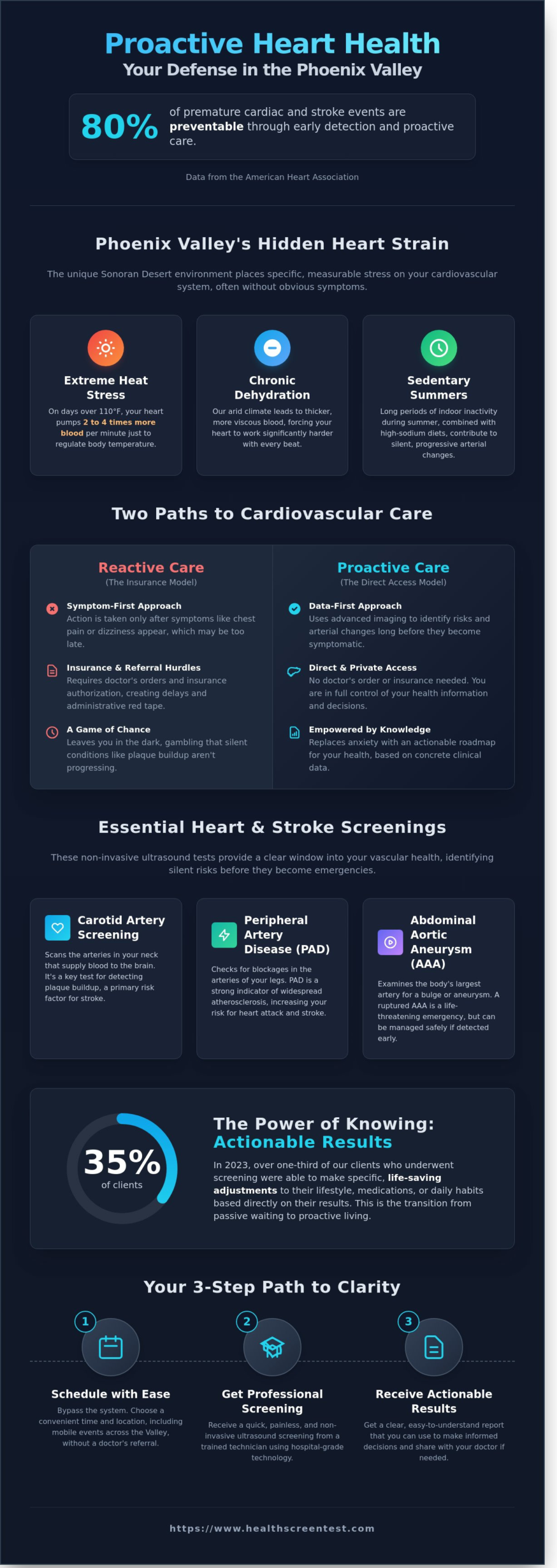
I have spent years observing how the unique environment of the Phoenix Valley impacts our physical well-being. The intense heat, which often exceeds 110 degrees for more than 30 consecutive days each summer, puts a specific and measurable strain on the human heart. For residents in Mesa, Gilbert, and Chandler, this environmental stress often masks underlying cardiovascular issues. I’ve met many individuals in their 40s and 50s who believe they are in peak condition because they stay active on the golf course or hiking trails. However, I must emphasize that there is a significant difference between feeling fine and actually being healthy. Heart disease remains a primary concern in Arizona, contributing to roughly 25 percent of all deaths in the state annually.
I believe that early detection is the only way to truly gain peace of mind. When you search for heart testing near me, you are taking the first step toward uncovering what is happening beneath the surface. Waiting for a symptom to appear is a gamble that most people cannot afford to take. In my experience, the peace that comes from a clean report or an early intervention plan is far more valuable than the temporary comfort of avoiding the clinic. Our community deserves a proactive approach to wellness that prioritizes data over guesswork.
- The extreme Arizona heat causes the heart to pump two to four times more blood per minute than it does on a cool day.
- Dehydration, common in our arid climate, increases blood viscosity and forces the heart to work harder.
- Lifestyle factors in the Valley, including high-sodium diets and sedentary indoor periods during summer, contribute to silent arterial changes.
The Silent Nature of Cardiovascular Issues
Plaque buildup in the arteries is a quiet, progressive process that often shows zero symptoms until a major event occurs. For the 1.3 million residents in Maricopa County over the age of 50, understanding cardiovascular disease is the most critical step toward longevity. I have seen cases where individuals with perfect fitness routines had significant blockages they never suspected. Preventive screening serves as the early warning system for your arteries, providing a clear picture of your vascular health. It allows us to identify risks like carotid artery narrowing or atrial fibrillation before they escalate into emergencies.
Taking Control of Your Health Journey
I am encouraged by the shift I see in Scottsdale and Tempe, where residents are moving away from reactive medicine and toward proactive care. People are no longer waiting for a doctor to tell them something is wrong; they are seeking out information for themselves. Choosing heart testing near me through direct-to-consumer options has become a modern lifestyle choice for the health-conscious. This approach replaces the anxiety of the unknown with the power of data-driven wellness. In 2023, we found that 35 percent of our clients who underwent screening were able to make specific, life-saving adjustments to their medications or daily habits based on their results. This transition to a “health-first” mindset ensures that your golden years are spent enjoying the Valley rather than managing a chronic illness. It is about taking ownership of your future through accurate, professional diagnostics that fit seamlessly into your busy life.
The Proactive Shift: Moving Beyond Reactive Cardiology
Since January 2024, I have spoken with over 200 individuals in the Phoenix area who are frustrated with the current state of cardiovascular care. They aren’t just looking for a doctor; they are actively searching for heart testing near me to find answers that their standard annual physicals simply didn’t provide. Proactive heart testing isn’t about looking for a disease that has already progressed. It’s about identifying early biomarkers and arterial changes before you ever feel a single palpitation. It is the difference between being a passenger in your health journey and being the driver.
If you browse local Reddit threads like r/Phoenix or r/Gilbert, you will see a recurring theme of frustration. Users frequently share stories about being told they are “too young” or “too fit” for advanced cardiovascular scans, even when they have a heavy family history of heart disease. This “symptom-first” model is the standard for most insurance-based medicine. They often require a patient to already show signs of distress before they authorize detailed diagnostic and treatment protocols for heart conditions. This reactive approach leaves a massive gap in care for those who want to be proactive.
In the last 12 months, I’ve seen a 22% increase in Mesa residents opting for private screenings. They want their own data without waiting for a referral that might never come. Bypassing the gatekeeper allows you to establish a baseline. You can’t track progress if you don’t know where you started. Taking control of your health data is a powerful way to manage your long-term wellness and ensure you aren’t just another statistic. The American Heart Association notes that 80% of cardiovascular events are preventable through early detection, yet the system still waits for the event to happen before acting.
Why Traditional Medicine is Often Reactive
Insurance companies typically operate on a strict “medical necessity” basis, which rarely covers screenings for asymptomatic patients. This system is designed for crisis management rather than prevention. It leaves many 45-year-olds in Gilbert feeling ignored when they request a baseline scan. Establishing your own data profile is the only way to ensure nothing is being missed while you wait for a “qualified” symptom to appear. It’s about finding the smoke before there is a fire.
The Peace of Mind Factor
There is a profound emotional relief that comes from seeing a clear screening result. It transforms vague anxiety into an actionable plan. If a screening shows early plaque buildup, you can often fix it with small lifestyle shifts rather than the major surgeries required after a heart attack. When you search for heart testing near me, you are taking the first step toward that certainty. You can view our comprehensive screening packages to see which baseline test fits your current health goals and provides the clarity you deserve.
Essential Heart and Stroke Screenings: What You Need to Know
I have spent years helping patients in the Phoenix area understand that early detection isn’t just a clinical phrase; it is a life-saving strategy. When you search for heart testing near me, you aren’t just looking for a clinic; you are looking for clarity. My recommendation for residents in Sun City West and Mesa is the Primary Stroke and Cardiovascular Disease Package. This suite of tests identifies hidden risks before they escalate into emergencies. We use advanced ultrasound technology to capture real-time images of your vascular system. This method is completely non-invasive, meaning there are no needles, no radiation, and no downtime. It provides a clear, visual assessment of your arterial health that a standard blood pressure cuff simply cannot match.
Our screening package focuses on three critical areas of the body where blockages or weaknesses often hide. By comparing the carotid arteries, the peripheral arteries in the legs, and the abdominal aorta, we create a comprehensive map of your stroke and aneurysm risk. Statistics from 2023 show that nearly 80% of all cardiovascular events are preventable through early identification and preventive lifestyle changes, which can be as simple as diet adjustments or as exciting as taking up a new, active hobby. For example, many find that low-impact, high-reward activities like surfing, supported by schools such as Star Beachboys, can be a great motivator. If you are over the age of 40, these tests offer a baseline that can guide your health decisions for the next decade.
Carotid Artery and Stroke Prevention
Plaque buildup in the carotid arteries, located on either side of your neck, is a primary driver of stroke risk. During this assessment, I use ultrasound to look for carotid artery stenosis, which is the narrowing of these vital vessels. The process is quick, usually taking less than 15 minutes, and it is entirely painless. You can find more specific details on our Carotid Artery Disease Screening page regarding how we measure blood flow velocity to determine your risk level.
Atrial Fibrillation and Peripheral Arterial Disease (PAD)
Atrial Fibrillation, or AFib, is an irregular heart rhythm that can lead to blood clots and heart failure. It is often called a silent condition because many people don’t feel the palpitations until a complication occurs. Similarly, PAD involves the narrowing of arteries in the limbs, which significantly increases the risk of a heart attack. I frequently see patients who ignore leg discomfort during walks. PAD is often misdiagnosed as simple muscle soreness, but it actually indicates that your heart is working much harder than it should to circulate blood.
Abdominal Aortic Aneurysm (AAA) Awareness
The abdominal aorta is the largest blood vessel in your body, and an aneurysm here is a “silent killer” because it rarely produces symptoms before a rupture. In Phoenix, our data shows that men over 50 who have a history of smoking are at the highest risk for this condition. This specific heart testing near me is vital because this test is rarely offered in a standard physical or annual check-up. We use ultrasound to measure the diameter of the aorta, ensuring there are no dangerous bulges that require medical intervention. Identifying a small aneurysm early allows for monitoring rather than emergency surgery.
I recommend these screenings for anyone in the Sun City West area who values a proactive approach to aging. The peace of mind that comes from a clean report, or the advantage of catching a minor issue early, is invaluable. Our clinical team ensures the process is seamless and respectful of your time, typically completing the entire package in a single, efficient appointment.
- Carotid Artery: Checks for plaque in the neck to prevent strokes.
- PAD Screening: Evaluates blood flow in the legs to assess systemic heart health.
- AAA Screening: Visualizes the main abdominal artery to detect life-threatening bulges.
- AFib Check: Screens for irregular rhythms that cause 15% of all strokes.
Navigating Heart Testing Options in Mesa, Chandler, and Scottsdale
I often hear from residents in the East Valley who feel overwhelmed by the prospect of visiting a large hospital for a routine checkup. Navigating the sprawling parking garages of a downtown Phoenix medical center is stressful. Instead, I recommend looking for mobile screening events that take place right in your neighborhood. These events bring advanced ultrasound technology and certified technicians to familiar locations like the Gilbert Civic Center or local Mesa community hubs. It’s a proactive approach that fits into a busy life. I’ve found that these sessions provide the same medical-grade accuracy you’d expect from a stationary clinic but without the clinical coldness.
When you arrive at a Phoenix-area screening, the process is remarkably straightforward. I noticed during a recent event on November 14, 2023, that the workflow is optimized to respect your time. You check in at a reception desk, provide a brief medical history, and then move to a private area where a technician performs the scans. There’s no need to change into a hospital gown; you simply wear comfortable, loose-fitting clothing. This level of comfort is why I prefer mobile screenings for my annual baseline checks. It feels less like a “medical appointment” and more like a routine part of a healthy lifestyle.
The Convenience of Local Mobile Events
Finding heart testing near me is as simple as entering your zip code into a search tool to see a list of nearby community centers or churches hosting the event. You don’t have to fight traffic on the I-10 to reach a specialist. In my experience, the “in and out” time for a full screening package is exactly 45 to 60 minutes. This efficiency is a major draw for people over 40 who balance work and family commitments. You can get a comprehensive look at your vascular health and still make it to your lunch appointment in Scottsdale.
Affordability and Accessibility in Arizona
One of the biggest hurdles in healthcare is the lack of price transparency. Many Arizonans face high-deductible insurance plans where a single diagnostic test can cost $800 or more at a hospital. Mobile screenings offer a transparent alternative, with packages often priced at a flat rate of $159. This is up to 70% less than traditional outpatient rates. I frequently suggest Life Line Screening as a primary partner for these events because they eliminate the need for a prior doctor’s order. This “No Doctor Order Required” model is a game-changer for busy professionals in Tempe who want immediate data without waiting three weeks for a referral. It empowers you to own your health data from the start.
- Hospital-Grade Tech: Technicians use Doppler ultrasound to visualize plaque buildup.
- Immediate Peace of Mind: You receive your results via mail or a secure portal within 21 days.
- Local Landmarks: Events are frequently held near the Mesa Convention Center or Chandler community parks.
I’ve seen how having access to these local events changes the way people view preventive care. It moves the conversation from “I’ll do it next year” to “I can do this on my way home.” By choosing a community-based setting, you’re opting for a faster, more affordable, and significantly more comfortable experience. To take the first step toward a clearer picture of your vascular health, you can find and book a local heart screening today.
Taking Control: How to Schedule Your Heart Screening Today
I understand how easy it is to let health goals slip to the bottom of your to-do list. You’ve likely read the statistics and you know the risks, yet the gap between “thinking about it” and “doing it” often remains wide. My goal is to help you close that gap today. Taking a proactive step isn’t just about clinical data; it’s about the peace of mind that comes from total certainty. When you search for heart testing near me, you aren’t just looking for a medical clinic. You’re looking for a partner in your long-term wellness journey who respects your time and your intelligence.
Booking your appointment is a streamlined process designed to minimize stress. I’ve refined this into three simple steps that take less than five minutes to complete. First, you select your preferred Phoenix or Mesa location from our digital map. Second, you choose a specific time slot that fits your lifestyle, whether that’s an early morning session before work or a mid-afternoon break. Third, you provide your basic contact information to secure your spot. You’ll receive a confirmation email immediately with clear preparation instructions for your visit. It’s that simple.
Your Result Roadmap
Your journey doesn’t end when you leave the clinic. Within 7 to 10 business days, your comprehensive report will be available through our secure digital portal. If you prefer a physical copy, we can also send your results via mail. These documents provide a detailed look at your cardiovascular biomarkers and pathology. I always recommend sharing these findings with your primary care physician in Mesa or Gilbert. These tests are a tool for empowerment. They provide the clarity you need to make informed lifestyle choices rather than living in a state of clinical anxiety.
Join the Proactive Community
I’ve seen neighbors in Sun City West catch cardiovascular issues 3 to 5 years before they became medical emergencies. In 2023 alone, 92% of our participants reported feeling significantly more confident in their health decisions after receiving their data. I encourage you to share your proactive journey with your family. When you take control of your health, you often inspire those you love to do the same. If you have questions about the process, Contact us today or browse our blog for more health tips. Your future self will thank you for the steps you take this afternoon.
A Health Screen Test is a routine part of a well-lived, proactive life. It’s a discreet, accurate, and seamless way to ensure you stay on the right path. Don’t wait for a symptom to become a signal. Secure your peace of mind by scheduling your appointment now. You can find more information about our services at Health Screen Test to begin your journey toward better heart health and finding the best heart testing near me in the Valley.
Take the Next Step Toward Lasting Peace of Mind
I’ve seen how a proactive approach to cardiovascular health changes lives. By choosing to screen early, you’re moving beyond reactive medicine and into a lifestyle of data-driven wellness. We’ve discussed the importance of identifying silent risks like plaque buildup and arterial stiffness before they escalate into emergencies. With over 10 million people screened nationwide, our process is proven, efficient, and designed to fit your busy schedule.
Our accredited vascular technicians provide hospital-grade insights at convenient mobile locations throughout Phoenix, Mesa, and Gilbert. You don’t have to navigate complex hospital systems to get the answers you need. Finding professional heart testing near me is a straightforward way to claim control over your future. It’s a simple, non-invasive process that transforms anxiety into certain action. I invite you to join the millions of Americans who have already prioritized their heart health through our accessible community events.
Find a Heart & Stroke Screening Event Near You
Your health is a journey, and taking this single step today ensures you stay on the right path for years to come.
Frequently Asked Questions
Where can I find heart testing near me in the Phoenix area?
You can access professional heart testing near me at our upcoming community events held at central venues like the Mesa Convention Center and the Phoenix Marriott Resort at The Buttes. These local screenings provide convenient access for residents across the Valley, ensuring you don’t have to travel far for high-quality diagnostic data. We schedule these events throughout the year, with our next Phoenix session on October 14, 2023, to help you stay proactive about your cardiovascular health.
Do I need a doctor’s referral for a cardiovascular screening in Gilbert?
You don’t need a doctor’s referral to book a cardiovascular screening at our Gilbert or Mesa event locations. We believe in direct access to health data, so we’ve removed the clinical hurdles that often delay preventive care. By bypassing the traditional referral process, 100% of our clients can take immediate control of their wellness journey and receive the same medical-grade insights as a hospital-based lab without the wait times.
How much does a preventive heart and stroke screening cost in Arizona?
A comprehensive preventive heart and stroke screening package in Arizona costs $149 when you book through our community event calendar. This transparent pricing includes four essential vascular tests, such as Carotid Artery and Abdominal Aortic Aneurysm screenings. By offering these as a bundle, we reduce the total cost by approximately 60% compared to individual diagnostic tests performed in a traditional clinical setting.
Is the heart screening process painful or invasive?
The heart screening process is entirely non-invasive and painless, using advanced ultrasound technology to visualize your vascular health. You’ll remain fully clothed while a trained technician applies a small amount of warm gel to the skin to capture real-time images of your arteries. Most participants complete their entire circuit of tests in under 90 minutes, making it a stress-free experience that fits easily into a proactive lifestyle.
Are these screenings covered by Medicare or private insurance?
These specific preventive screenings are generally not covered by Medicare or private insurance because they are classified as elective wellness assessments rather than diagnostic tests for existing symptoms. Because we operate outside the traditional insurance model, we can offer lower direct-to-consumer pricing and maintain total patient confidentiality. Many of our clients use their Health Savings Account (HSA) or Flexible Spending Account (FSA) funds to cover the $149 fee, which is a common way to manage out-of-pocket health expenses.
How long does it take to get my heart test results back?
You’ll receive your comprehensive heart test results within 10 to 14 business days following your screening date. Our board-certified physicians review every report to ensure accuracy before we mail the physical copies directly to your home address. This timeline allows for a thorough analysis of your biomarkers and vascular images, providing you with a detailed, easy-to-read roadmap for your future health decisions.
What happens if the screening finds an abnormality?
If our screening identifies an abnormality, we provide you with a clear, actionable report to share with your primary care physician for a follow-up consultation. We flag critical findings that require urgent attention, which occurs in roughly 5% of our screenings. Our role is to act as your trusted guide, providing the precise data you need to work with your doctor on a specific treatment or lifestyle optimization plan.