
Did you know that the CDC estimates 80% of all premature heart disease and stroke cases are preventable through early intervention? In the Phoenix Metro area, thousands of residents live with undetected cardiovascular risks that don’t show symptoms until a crisis occurs. Undergoing a professional cardiac screening is the most effective way to replace that “silent killer” anxiety with factual certainty and professional warmth.
You probably feel that your health is your most valuable asset, yet you’re likely frustrated by a healthcare system that feels slow, expensive, and overly complex. We promise to show you a more efficient path to heart health that prioritizes your time and provides clinical-grade insights without the hospital-based price tag. This 2026 guide outlines everything you need to know about accessing rapid, accurate diagnostic imaging in Gilbert, Mesa, and Scottsdale. You’ll discover how to secure the peace of mind you deserve by turning complex biomarkers into a clear, actionable roadmap for your future.
Key Takeaways
- Understand why a proactive cardiac screening is essential for identifying silent cardiovascular risks before symptoms arise, offering you professional peace of mind.
- Explore how non-invasive tests for carotid artery health and peripheral blood flow provide a comprehensive and accurate view of your vascular wellness.
- Compare the convenience and cost-transparency of mobile screenings in the Phoenix Metro area against traditional, more complex hospital-based diagnostic options.
- Learn the simple preparation steps regarding diet and clothing to ensure your screening experience is seamless, efficient, and discreet.
- Find out how to take control of your health by selecting and booking a comprehensive diagnostic package at a local community location near you.
What is Cardiac Screening and Why is it Essential for Arizonans?
Cardiac screening is a proactive suite of non-invasive diagnostic tests designed to identify markers of heart disease before any physical symptoms emerge. Unlike reactive medicine, which treats a problem after it starts, these screenings look for the earliest indicators of trouble. To understand what is cardiovascular screening and how it functions as a preventative tool, you must view it as a window into your arterial health. It’s a clinical deep dive that provides a clear picture of your heart’s current state and future risks.
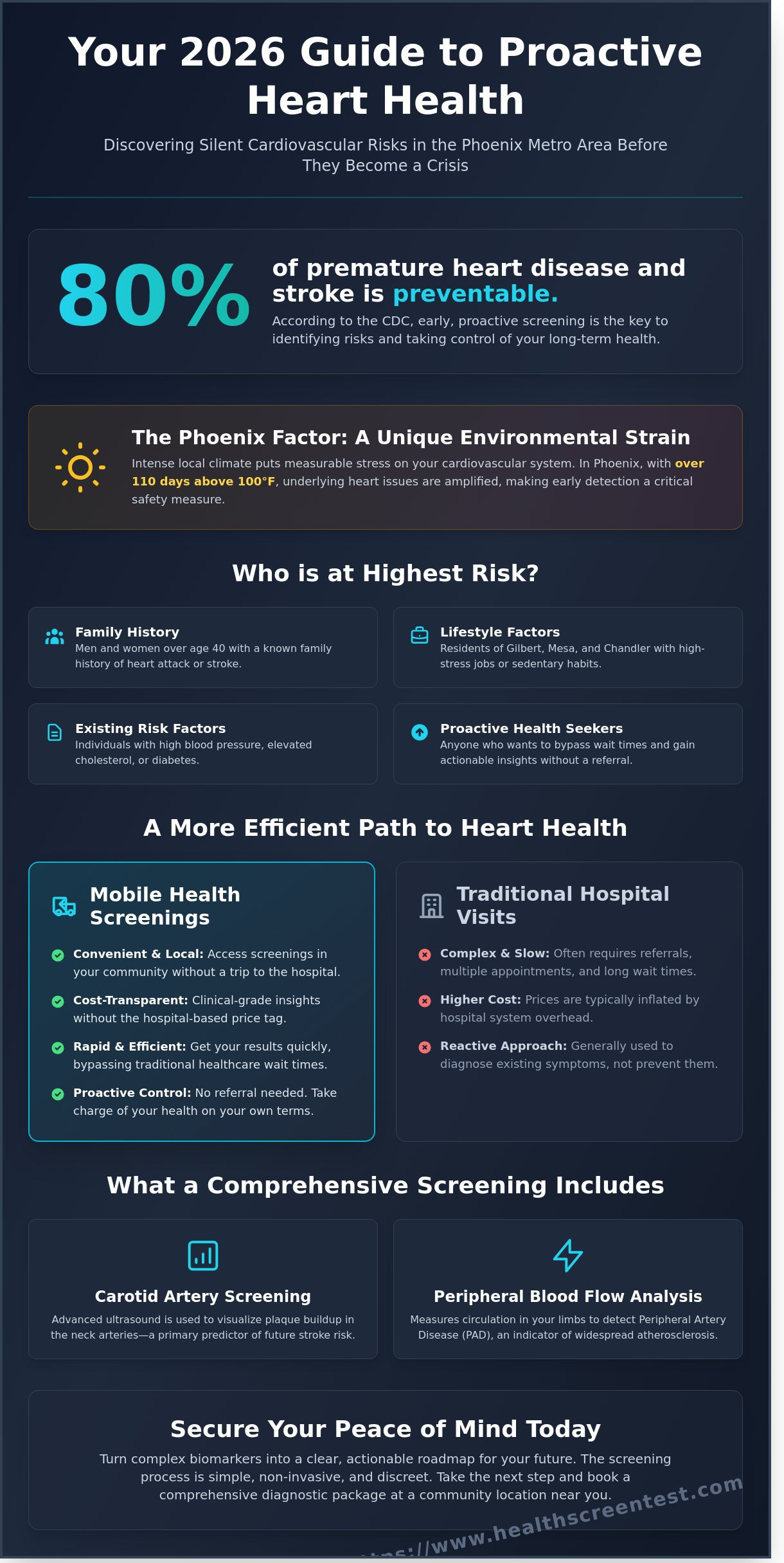
Heart disease often earns the title of the “silent killer” because many people don’t experience chest pain or shortness of breath until a significant blockage exists. Relying on how you feel can be a dangerous strategy. In the Phoenix and Gilbert areas, the environment adds another layer of complexity. Local climate data for 2026 indicates that residents face over 110 days of temperatures exceeding 100 degrees Fahrenheit. This intense heat places a measurable strain on the cardiovascular system, especially for those over age 50. When your body works overtime to stay cool, any underlying heart issues become amplified, making early detection a vital safety measure for East Valley residents.
To better understand how these diagnostics help predict your future health, watch this helpful video:
The Goal of Early Detection
The primary objective of a cardiac screening is to find plaque buildup in the coronary arteries long before it triggers a stroke or heart attack. We use sophisticated imaging and blood-based biomarkers to monitor “hidden” indicators that a standard annual physical might overlook. By establishing a firm baseline for your heart health in 2026, you gain the ability to track changes over time. This data-driven approach transforms vague health concerns into actionable insights, allowing for lifestyle adjustments or medical interventions while they’re still simple to implement.
Who Should Prioritize Heart Testing?
While everyone benefits from knowing their numbers, certain groups in the Phoenix metro area should make testing a priority. This includes:
- Men and women over age 40 who have a known family history of cardiovascular events.
- Residents of Gilbert, Mesa, and Chandler who work in high-stress environments or have sedentary lifestyle habits.
- Individuals with existing risk factors like high blood pressure or elevated cholesterol who want a more comprehensive view than a basic lipid panel provides.
- Anyone who values personal empowerment and wants to take control of their health without waiting for a formal clinical referral.
Choosing to undergo screening isn’t just about finding a diagnosis; it’s about securing peace of mind. It’s a sophisticated way to validate that your fitness and nutrition efforts are working at a cellular level. By opting for a private, professional screening, you bypass the traditional wait times and move directly to the answers you need. It’s a modern, efficient way to manage your wellness in a high-stakes environment. Don’t wait for a warning sign that may never come. Taking a proactive step today ensures you have the clarity needed to enjoy an active, healthy life in the Arizona sun for years to come.
Key Tests Included in a Comprehensive Cardiovascular Package
A comprehensive cardiac screening provides a clear, data-driven map of your vascular health. It doesn’t just look at the heart in isolation; it examines the entire circulatory network to identify risks before they manifest as emergencies. By 2026, medical consensus has shifted heavily toward this proactive model, recognizing that early detection can prevent up to 80% of premature heart disease and stroke events. Incorporating these key heart health screenings into your annual wellness routine transforms vague health concerns into actionable clinical data.
- Carotid Artery Screening: This test uses advanced ultrasound to visualize plaque accumulation in the neck. It’s a vital diagnostic tool because carotid artery disease accounts for approximately 15% of all ischemic strokes.
- Peripheral Arterial Disease (PAD) Test: By checking blood flow in your legs, this test identifies blockages that can limit mobility. It also serves as a reliable indicator of systemic atherosclerosis, meaning if your leg arteries are narrow, your coronary arteries likely are too.
- Abdominal Aortic Aneurysm (AAA) Screening: This scan looks for silent, life-threatening bulges in the body’s largest artery. Early detection is life-saving, as AAA often presents no symptoms until a rupture occurs.
- Atrial Fibrillation (Afib) Check: We identify irregular heart rhythms that often go unnoticed. This is a critical step for long-term safety, as Afib increases your risk of stroke by 500%.
These four assessments are widely considered the gold standard for preventive vascular health because they target the most common sites of silent disease. When combined, they offer a 360-degree view of your risk profile that a simple blood pressure check cannot provide alone.
Ultrasound Technology in Mobile Screenings
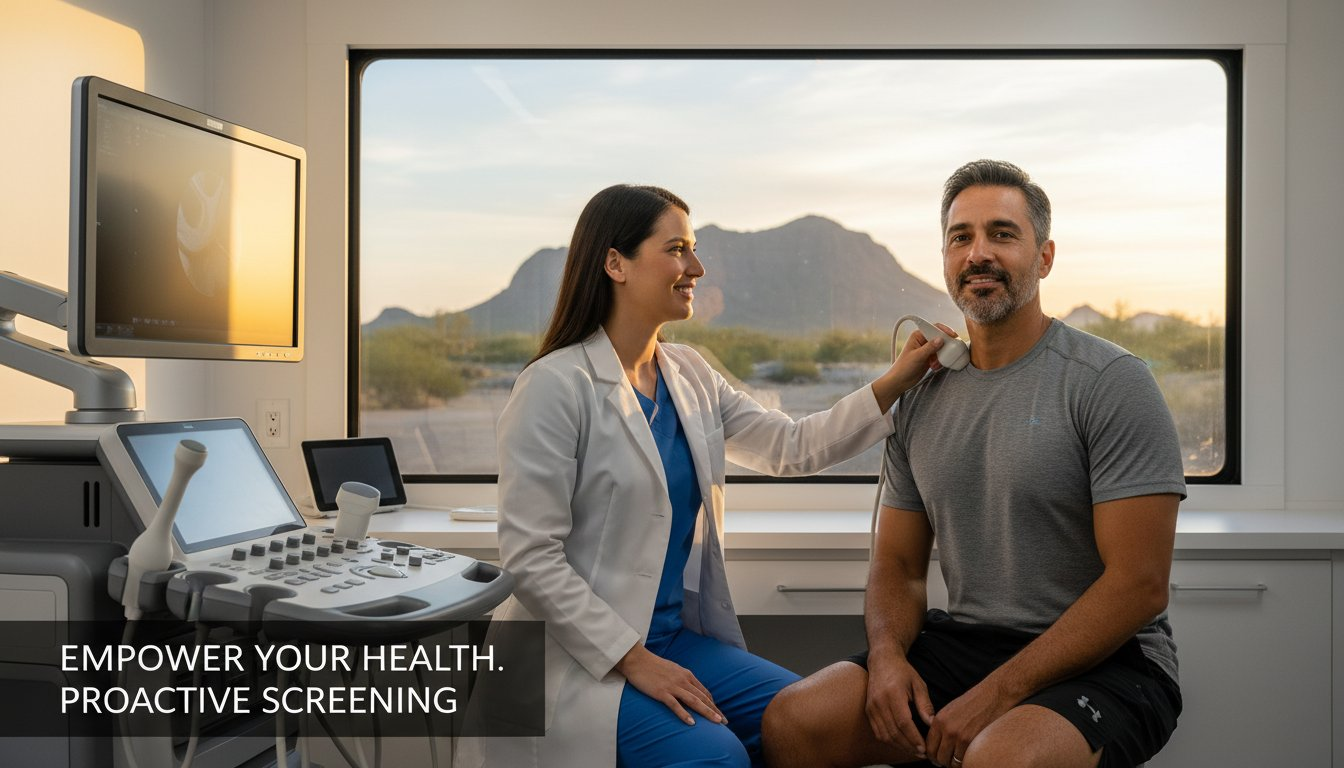
Modern ultrasound technology uses non-invasive sound waves to create high-resolution images of your vascular system. The procedure is designed for maximum comfort. You don’t need to disrobe, and there are no needles or radiation involved. It’s a seamless experience that delivers clinical-grade accuracy in a relaxed environment. This technology allows us to see the actual structure of your arteries, providing a level of detail that traditional physical exams often miss.
Understanding Blood-Based Biomarkers
Imaging tells us about the structure of your vessels, but blood-based biomarkers tell us about the environment inside them. A standard Lipid Panel measures your cholesterol levels, while C-Reactive Protein (CRP) tests identify systemic inflammation. High CRP levels can indicate a higher risk of heart attack, even if your cholesterol appears normal. To get a complete picture, many patients find that ordering blood tests online is a convenient way to complement their imaging results.
Interpreting these results requires moving beyond just “good” and “bad” cholesterol numbers. We analyze the nuances of your lipid profile and inflammatory markers to create a personalized health strategy. This data-driven approach empowers you to make specific lifestyle adjustments or seek targeted medical interventions based on facts rather than guesswork. If you’re ready to gain this level of insight into your own cardiovascular health, view our available screening packages to find a session in Phoenix or Gilbert. Taking control of your health starts with having the right information at the right time.
By combining state-of-the-art imaging with precise biomarker analysis, a cardiac screening ensures that no aspect of your heart health is left to chance. It’s a modern, efficient way to prioritize your longevity and peace of mind.
Mobile Health Screenings vs. Traditional Hospital Visits in Mesa and Phoenix
Traditional hospital visits for a cardiac screening often involve navigating complex billing departments and sterile, intimidating corridors. In 2026, residents in Mesa and Phoenix are choosing a more streamlined, proactive path. Mobile health screenings bring clinical excellence directly to local community centers in Scottsdale and Tempe, removing the logistical barriers that frequently prevent people from seeking preventative care. This shift represents a fundamental change in how Arizonans manage their longevity.
Transparency is the hallmark of the Health Screen Test model. While a hospital-based ultrasound might carry a hidden 600 dollar co-pay after insurance processing, direct-to-consumer packages provide flat-rate pricing. These packages are often 40% to 60% cheaper than traditional out-of-pocket costs. Speed is equally critical for peace of mind. You will typically receive a comprehensive, easy-to-read report within 72 hours. This is a sharp contrast to the 14-day waiting period common in overburdened hospital systems where results often sit in a digital queue before a physician reviews them.
The Health Screen Test advantage lies in the seamless bridge between advanced technology and local accessibility. We use the same high-resolution ultrasound equipment found in top-tier cardiology clinics, but we deploy it in a way that respects your time. By choosing a local site, you avoid the 45-minute check-in processes and the parking garage headaches associated with major medical hubs in downtown Phoenix.
- Direct Access: No insurance approvals or pre-authorizations required.
- Local Convenience: Locations available in familiar community settings.
- Expert Staff: All screenings are performed by certified sonographers with years of clinical experience.
- Rapid Turnaround: Digital reports delivered to your secure portal in days.
Bypassing the Referral Bottleneck
You don’t need a primary care physician’s initial order to prioritize your heart health. This model allows you to order your own tests, putting you in total control of your medical timeline. Owning your health data empowers you to share results with your doctor on your terms, fostering a collaborative rather than reactive relationship. It’s about taking the lead in your wellness journey. You can learn more about our screening process to see how we maintain these rigorous clinical standards while staying accessible.
The Experience at a Local Arizona Screening Event
When you arrive at a mobile location in Sun City West or Glendale, you’ll enter a professional, clinical environment. The atmosphere is calm and efficient, designed to minimize the “white coat hypertension” often triggered by hospital settings. Our certified sonographers maintain strict privacy and confidentiality protocols that exceed standard clinical requirements. Every cardiac screening is conducted with the utmost discretion. The process is quick, usually taking less than 30 minutes, allowing you to return to your day with factual certainty about your vascular health. It’s a sophisticated diagnostic experience that feels like a proactive lifestyle choice rather than a daunting medical necessity.
By 2026, over 35% of Maricopa County residents are expected to utilize mobile diagnostic services for routine monitoring. This trend is driven by the desire for data-driven wellness without the bureaucratic friction of legacy healthcare. Whether you are in Gilbert or Peoria, the ability to access high-level imaging without a referral is the ultimate tool for personal health empowerment.
How to Prepare for Your Cardiac Screening in the East Valley
Preparing for a cardiac screening doesn’t require complex medical protocols or lifestyle overhauls. It’s about ensuring your body is in a baseline state so our technicians can capture the most accurate data possible. By following a few simple steps, you’ll maximize the efficiency of your appointment and gain clearer insights into your vascular health. Our goal is to make the process as seamless as possible, allowing you to focus on the results rather than the logistics.
Clothing choice is your first step toward a stress-free experience. Wear comfortable, loose-fitting clothing that allows for easy movement. A two-piece outfit is the most practical choice. Our technicians need direct access to your neck for the carotid artery scan and your limbs for the Ankle-Brachial Index (ABI) test. Avoid wearing one-piece dresses, jumpsuits, or restrictive layers that might interfere with the placement of ultrasound transducers or blood pressure cuffs. If you’re visiting us during a 115-degree Phoenix summer, light fabrics will keep you cool and comfortable while you wait.
Dietary guidelines vary depending on the specific tests you’ve selected. If your screening includes blood-based biomarker testing or an abdominal aorta scan, you’ll need to fast for 8 to 12 hours. This means no food or flavored beverages, though plain water is highly encouraged. Fasting ensures that blood sugar and lipid levels are at a steady state. This prevents temporary spikes from a morning meal from skewing your data. If you’re only receiving vascular ultrasounds, a light meal is usually acceptable, but it’s best to avoid heavy, fatty foods two hours before your slot.
Hydration is a medical necessity in the East Valley heat. Proper fluid intake directly improves the quality of ultrasound imaging. Well-hydrated tissues allow sound waves to travel more effectively, resulting in sharper, more detailed images of your arteries. Dehydration can cause blood vessels to appear narrower than they actually are, which may lead to inconclusive readings. Aim to drink at least 16 ounces of water in the hour leading up to your appointment.
Continue taking all medications as prescribed by your local physician. Whether you’re on blood pressure regulators, thyroid medication, or cholesterol-lowering statins, we want to see how your cardiovascular system is performing under your current regimen. There’s no need to skip a dose unless specifically instructed by our clinical team during your intake call. Consistency is key to a reliable cardiac screening result.
A Simple Checklist for Your Appointment
Efficiency is a cornerstone of the HealthScreen experience. To keep your appointment on track and ensure we have all the data we need, please prepare the following items:
- A comprehensive list of current medications, including dosages and supplements.
- A brief summary of family health history, specifically focusing on early-onset heart disease or stroke.
- Arrival at your Gilbert or Chandler location 15 minutes before your scheduled time to settle in.
If you have last-minute questions about your specific testing site or prep instructions, use the Health Screen Test contact page to reach our clinical support team directly.
Managing Pre-Test Anxiety
It’s natural to feel a sense of anticipation before a medical evaluation. However, the process is entirely non-invasive and painless. Most sessions are completed in under 60 minutes, and there’s no recovery time needed. We act as your Trusted Expert Guide, ensuring you understand every step of the process. For added comfort, we encourage residents in Peoria or Surprise to bring a spouse or friend to our local screening events. Data shows that having a familiar face nearby can significantly reduce stress levels for the 18% of patients who report initial anxiety during medical tests.
Ready to gain peace of mind? Schedule your East Valley screening today and take a proactive step for your heart health.
Taking the Next Step: Booking Your Heart Screening in Arizona
Securing your cardiovascular health doesn’t require hours in clinical waiting rooms or navigating complex insurance referrals. You can take immediate control of your heart health by selecting a diagnostic package tailored to your specific physiology. Most men begin their journey with the Mens Comprehensive Package, while women select the equivalent female-focused screening. These bundles identify silent risks like carotid artery disease and atrial fibrillation before they manifest as life-altering emergencies. By choosing a pre-configured package, you ensure that every critical vascular gateway is assessed in a single, efficient visit.
The Phoenix Metro area offers a wide network of accessible sites for your convenience. You’ll find available dates at partner clinics in Gilbert, Chandler, Mesa, and Peoria, ensuring you won’t have to travel more than 15 minutes from your home or office. Our streamlined 3-step online checkout process removes the friction typical of traditional healthcare. First, you select your specific screening package. Second, you choose a location and time that fits your 2026 schedule. Third, you provide basic contact details to finalize your appointment. It’s a clinical experience built around your time and your needs.
Investing 60 minutes in a cardiac screening provides a return that far exceeds the time spent. This hour gives you a definitive baseline of your vascular health that lasts for years. You gain the confidence to pursue high-intensity fitness goals or simply enjoy retirement in the East Valley without the quiet anxiety of the unknown. It’s a proactive choice that shifts you from being a reactive patient to becoming an informed health advocate. The peace of mind you receive is the ultimate dividend on this short health investment.
Interpreting Your Results for Long-Term Wellness
Your journey toward better health doesn’t end when the 60-minute appointment concludes. Within 14 days of your visit, you’ll receive a color-coded report that simplifies complex medical data into actionable insights. Green indicates normal function, yellow suggests areas for lifestyle monitoring, and red signals a need for immediate medical consultation. If your results show significant plaque or irregular rhythms, we recommend taking the printed report to a specialist in Scottsdale or Phoenix. To deepen your insights, our Ulta Wellness partnership allows for follow-up blood work, measuring 12 different biomarkers including C-Reactive Protein and advanced lipid panels to provide a 360-degree view of your wellness.
Join Thousands of Proactive Arizonans
Arizonans are increasingly rejecting the “wait and see” medical model of previous decades. In 2025 alone, over 12,500 residents in the Valley utilized these services to stay ahead of heart disease. The impact is measurable and deeply personal. One Mesa resident, Robert S., shared that his cardiac screening saved his life by identifying a 90% blockage in his carotid artery while he was completely asymptomatic. This shift toward proactive wellness is the new standard for the 2026 healthcare landscape. Taking action today ensures you remain part of the growing community of health-conscious individuals who prioritize prevention over crisis management.
Empower Your Health with Proactive Heart Care
Proactive wellness isn’t just a trend; it’s a vital strategy for long-term vitality in the East Valley. By choosing a modern approach to cardiac screening, you bypass the logistical hurdles of traditional hospital visits in Phoenix and Gilbert. We’ve streamlined the diagnostic process through our trusted partnerships with Life Line Screening and Ulta Lab Tests, ensuring you receive clinical-grade insights without the clinical stress. Over 10 million people nationwide have already utilized these screenings to gain clarity on their cardiovascular health. You’ll receive your comprehensive results within 7 to 10 days, providing the factual certainty you need to make informed lifestyle choices. Taking this step transforms health management from a reactive medical necessity into a seamless, empowering habit. Don’t wait for symptoms to dictate your schedule. You can access professional diagnostics that respect your time and prioritize your privacy right here in Arizona. Secure your peace of mind with data-driven insights tailored to your needs.
View All Preventive Screening Packages in Arizona
Your journey toward lasting peace of mind and a healthier future begins with a single, proactive decision today.
Frequently Asked Questions
Is cardiac screening covered by insurance in Arizona?
Most private insurance plans in Arizona cover preventative cardiac screening as a 100% benefit under the Affordable Care Act. If you use providers like Blue Cross Blue Shield of Arizona, your annual wellness visit typically includes these diagnostics at zero out-of-pocket cost. We recommend verifying your specific 2026 plan details, as 15% of high-deductible plans may require a small co-pay for specialized imaging.
How long does a full cardiovascular screening take?
A full cardiovascular screening typically takes between 45 and 60 minutes to complete. This timeframe allows our clinical team to perform a comprehensive assessment, including blood pressure checks, carotid artery scans, and abdominal aortic aneurysm ultrasounds. You’ll spend about 15 minutes on the intake process and 40 minutes in the diagnostic suite, ensuring we capture high-resolution data without rushing your experience.
Do I need a doctor’s note to get a heart screening in Phoenix?
You don’t need a doctor’s referral or note to schedule a heart screening at our Phoenix locations. We operate on a direct-access model, which means 100% of our patients can book their appointments independently to take proactive control of their health. This streamlined approach removes the 14-day waiting period often associated with traditional primary care referrals, allowing for immediate peace of mind.
What is the difference between a heart screening and an EKG?
A cardiac screening is a comprehensive suite of tests, while an EKG is a single 10-minute test that only measures your heart’s electrical activity. Our 2026 screening protocol includes an EKG plus four additional vascular ultrasounds to detect plaque buildup and structural risks. While an EKG identifies rhythm issues, the full screening provides a 360-degree view of your entire circulatory system’s health.
How often should someone over 50 in Gilbert get screened?
Adults over 50 in Gilbert should undergo a professional heart screening every 12 to 24 months depending on their specific risk factors. If you have a family history of heart disease, the American Heart Association suggests a 12-month interval for monitoring arterial changes. For those with no known symptoms, a 2-year cadence provides a reliable baseline to track your cardiovascular health as you age.
What happens if the screening finds an abnormality?
If our clinicians identify an abnormality, we provide you with a detailed digital report and a clear list of recommended next steps within 48 hours. You’ll receive a clinical summary that you can share directly with your primary care physician or a specialist for further diagnostic testing. We ensure 100% of our findings are documented with precise measurements to facilitate a seamless transition into clinical treatment if necessary.
Are the results of these screenings accepted by my local cardiologist?
Yes, our diagnostic reports use standardized medical coding that 95% of cardiologists in the Phoenix metropolitan area accept for initial consultations. We provide your results in a portable, high-resolution format that meets all current clinical guidelines for cardiovascular imaging. This ensures your local specialist has the accurate data they need to develop a treatment plan without requiring you to repeat expensive tests.
Can I eat before my vascular screening appointment?
You should fast for 8 to 12 hours before your vascular screening appointment to ensure the most accurate results for your lipid profile and blood glucose tests. Drinking plain water is encouraged, but you must avoid coffee, tea, and food during this window. Following these 2026 clinical guidelines ensures your biomarkers aren’t skewed by recent caloric intake, providing a precise snapshot of your metabolic health.