


Thinking about your long-term blood sugar can bring a sense of uncertainty. You hear terms like prediabetes and diabetes in conversations or on the news, and it’s natural to wonder about your own metabolic health. But deciphering medical jargon and scheduling appointments can feel like a barrier to getting clear answers. That’s where understanding a key biomarker-your a1c-becomes a powerful first step toward taking control of your health narrative.
As a professional focused on making complex health data clear and actionable, I’ve created this comprehensive 2026 guide specifically for my neighbors in Gilbert and the greater Phoenix area. My goal is to demystify the A1C test completely. We will walk through what this simple blood test measures, how to interpret your results with confidence, and-most importantly-how you can access a seamless, discreet testing experience right here in our community. By the end, you’ll have the clarity and peace of mind you deserve.
Key Takeaways
- Understand what your A1C number means by learning the specific ranges for normal, prediabetes, and diabetes to assess your metabolic health.
- Discover why the a1c test provides a more complete picture of your blood sugar control over the past three months than a daily glucose check.
- Learn how to bypass the traditional hassles of scheduling doctor’s appointments, getting lab orders, and dealing with insurance for your test.
- Follow a simple, step-by-step process to order your own confidential lab test online and visit a convenient location in the Gilbert area.
What Is the A1C Test? A Key Indicator for Your Long-Term Health
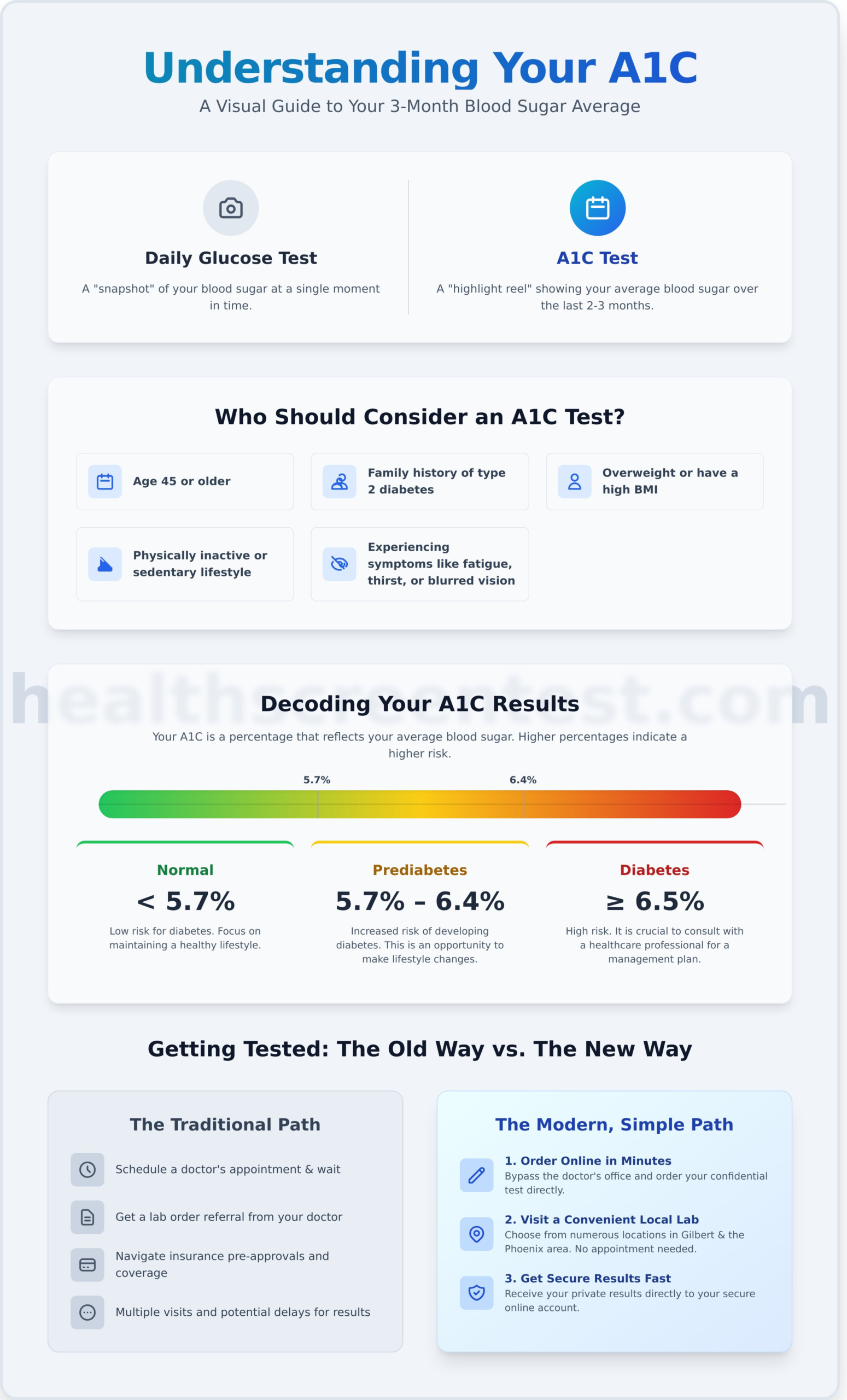
When we discuss long-term health monitoring, few biomarkers provide as clear a picture as the A1C test. Think of it this way: a daily finger-prick glucose test is like a single snapshot of your blood sugar at one specific moment. The A1C, on the other hand, is like a highlight reel, showing you the average picture over the past two to three months. This comprehensive view is crucial for understanding your body’s overall blood sugar management.
To help you visualize how this works, I find this short animation provides an excellent and clear explanation:
The science behind it is both elegant and precise. As sugar (glucose) travels through your bloodstream, it naturally attaches to hemoglobin, a protein in your red blood cells. Because red blood cells have a lifespan of about 90 days, measuring the percentage of hemoglobin that has become “glycated” or coated with sugar gives us that valuable three-month average. This measurement offers a stable, reliable indicator of your risk for prediabetes and diabetes, and it’s why medical professionals rely on it so heavily. Also known as the hemoglobin A1c, HbA1c, or glycated hemoglobin test, its insights are foundational to proactive metabolic health. For those interested in the deeper scientific principles, this resource on What is Glycated Hemoglobin (A1C) offers a comprehensive overview.
Why This Test Matters for Residents in Gilbert, AZ
For the vibrant 40+ community here in Gilbert, proactive health monitoring is key to maintaining an active lifestyle. Factors unique to our Arizona environment, from dietary choices to finding comfortable ways to stay active in the heat, can influence metabolic health over time. An A1C test serves as a foundational part of any wellness screening, providing a clear data point to help you and your doctor make informed decisions. It’s an essential tool in a comprehensive approach to your well-being. Explore our full range of preventive health screenings to see how it fits into a complete health picture.
Who Should Consider an A1C Test?
While this test is a valuable tool for anyone, certain factors increase its importance. I strongly recommend considering an A1C test if you identify with one or more of the following, as it can help establish a crucial baseline for your health:
- You are age 45 or older.
- You have a family history of type 2 diabetes.
- You are overweight or have a high BMI.
- You live a physically inactive or sedentary lifestyle.
- You are experiencing symptoms like unusual fatigue, increased thirst or urination, or blurred vision.
Even without symptoms, establishing a baseline provides peace of mind and empowers you to take control of your health journey early.
Decoding Your A1C Results: Understanding the Numbers
Receiving your lab report can feel overwhelming, but understanding your A1C number is the first, most empowering step toward managing your long-term health. This result is presented as a percentage that reflects your average blood sugar level over the past two to three months. The higher the percentage, the higher your average blood sugar has been. For a detailed clinical overview of how this works, the National Institute of Diabetes and Digestive and Kidney Diseases provides an excellent resource on The A1C Test for Diabetes. To make it even more tangible, your report may also include an eAG, or estimated Average Glucose. This converts your A1C percentage into the same units (mg/dL) you see on a daily blood sugar meter, offering a more familiar point of reference.
To help you interpret your results at a glance, I’ve put together this simple reference chart based on guidelines from the American Diabetes Association:
| A1C Level | Diagnosis | What It Means for You |
|---|---|---|
| Below 5.7% | Normal | Low risk for diabetes. Focus on maintaining a healthy lifestyle. |
| 5.7% to 6.4% | Prediabetes | Increased risk of developing diabetes. An opportunity to make preventative lifestyle changes. |
| 6.5% or Higher | Diabetes | Indicates diabetes. Requires consultation with a physician for a management plan. |
What Does a ‘Normal’ A1C Level Mean?
A result below 5.7% is excellent news. It signifies that your body is managing blood sugar effectively, placing you at a low risk for developing diabetes. To maintain this healthy status, my advice is to continue focusing on a balanced diet and consistent physical activity. As a proactive measure, it’s wise to consider re-testing every three years as part of your routine wellness checks, or as recommended by your physician.
The Prediabetes ‘Wake-Up Call’: A Chance to Change Course
Seeing a result in the prediabetes range (5.7% to 6.4%) is not a diagnosis of failure; it is a critical wake-up call and a powerful opportunity to act. This range indicates that your blood sugar levels are higher than normal but not yet high enough to be classified as diabetes. The great news is that prediabetes is often reversible. Simple, sustainable lifestyle adjustments-such as adopting a healthier diet, incorporating regular exercise, and managing your weight-can significantly lower your risk and may even return your A1C to the normal range.
Navigating a Diabetes-Range Result
If your a1c test result is 6.5% or higher, the most important next step is to schedule an appointment with your primary care physician. This result is a key indicator used to diagnose diabetes, and your doctor will confirm the diagnosis and discuss a comprehensive management plan with you. Please view this number not as a setback, but as the crucial first piece of information you need to take control, manage your health effectively, and prevent long-term complications.
Getting Tested in Gilbert: The Old way vs. The New Way
For years, monitoring your health markers meant following a very specific, and often cumbersome, path. But as we look ahead to 2026, I’ve seen a significant and empowering shift in how Gilbert residents can access vital health information. The choice is no longer just about if you get tested, but how you get tested. Understanding the difference between the old way and the new way can help you take control of your wellness journey with confidence.
The Traditional Path: Doctor’s Visits and Insurance
Many of us are familiar with the conventional process: you schedule a doctor’s appointment (often weeks out), take time off work, and navigate insurance paperwork and potential co-pays just to get a lab order. While I always stress that this route is essential if you are experiencing active symptoms and require a diagnosis from a physician, it can present a significant barrier for those who simply want to be proactive about their health through routine screening.
The Health Screen Test Advantage: Direct, Private, and Empowering
A more modern and efficient alternative has emerged: direct-access testing. This model puts you, the individual, in complete control. You can order the specific test you need online without a doctor’s order, maintaining total privacy over your health data. We’ve streamlined the process by partnering with certified local labs for sample collection, allowing you to visit a nearby Gilbert location for a quick, professional blood draw-often in just a few minutes.
This approach eliminates appointment delays and the complexities of insurance billing. You see the straightforward price upfront, with no hidden fees. Understanding the purpose and procedure of Hemoglobin A1C Testing is the first step, and having direct access to an a1c test gives you the actionable data needed to make informed lifestyle choices. It’s a seamless, discreet, and empowering way to manage your health on your own terms.
How to Order Your A1C Test Online in the Phoenix Area: A Step-by-Step Guide
Taking proactive control of your health data shouldn’t be complicated. In my experience guiding patients through this process, I’ve found that many people in the East Valley are relieved to learn how straightforward it is to monitor their blood sugar levels without a doctor’s referral. Our streamlined, private process is designed to give you clear insights quickly and conveniently. It all boils down to three simple steps.
- Step 1: Order Securely Online. Simply navigate to our test menu, select the Hemoglobin A1c test, and complete your purchase through our confidential, secure checkout. You will immediately receive an email with your lab requisition form.
- Step 2: Visit a Local Lab. We partner with thousands of certified labs nationwide, including dozens of convenient locations across Gilbert, Mesa, Chandler, and Phoenix. Find the one nearest you using our lab locator and walk in when you’re ready-no appointment is necessary.
- Step 3: Receive Your Private Results. Within just 1-2 business days, you’ll get an email notification that your results are ready. You can then log in to your secure HealthScreen portal to view your comprehensive report.
“The entire process was incredibly easy. I ordered my test online in five minutes, went to a lab in Chandler on my lunch break, and had my results the next day. It was so much faster and more private than I expected.” – Sarah M., Gilbert, AZ
Preparing for Your Lab Visit
We’ve designed the lab visit to be as seamless and stress-free as possible. One of the greatest conveniences of an a1c test is that fasting is not required. You can eat and drink normally beforehand. When you arrive, simply bring your printed lab requisition form and a valid photo ID. A professional phlebotomist will perform a quick blood draw, a routine procedure that typically takes less than five minutes.
Receiving and Interpreting Your Secure Results
Your results are delivered with both speed and clarity. The report is easy to understand, clearly showing your a1c percentage and where it falls on the spectrum from normal to prediabetic or diabetic ranges. While we provide precise data, it is crucial to discuss any results that concern you with your primary healthcare provider. They can provide a complete diagnosis and guide you on the next steps for managing your health. If you have questions about your results report, feel free to contact us.
Take the Next Step: Proactive Health Monitoring with Health Screen Test
Throughout this guide, we’ve established that the A1C test is an essential tool for anyone serious about their long-term health. It provides a clear, three-month average of your blood sugar levels, offering a crucial window into your risk for prediabetes and diabetes. The most important takeaway is that this powerful screening is not only vital but also highly accessible. At Health Screen Test, we are dedicated to being your trusted local partner, empowering residents of Gilbert with affordable, convenient, and completely confidential health screening services.
Beyond A1C: Building a Complete Health Picture
While an A1C test is a critical biomarker for blood sugar management, it tells one part of a larger story. To build a truly comprehensive picture of your metabolic health, we often recommend viewing it alongside other foundational screenings. A Lipid Panel measures cholesterol and triglycerides, which are key indicators of cardiovascular risk, while a Comprehensive Metabolic Panel (CMP) assesses kidney function, liver health, and electrolyte balance. Combining these tests provides a holistic, data-driven snapshot of your body’s performance, allowing you and your healthcare provider to make more informed decisions. For more health insights on building a proactive health strategy, we invite you to explore our Health Screen Test Blog.
Your Local Partner in Preventive Health
For residents of Gilbert, Phoenix, Scottsdale, and the surrounding communities, Health Screen Test offers a seamless and stress-free path to understanding your health. We eliminate the typical barriers of traditional lab work-no long waits, no doctor’s referral required, and no confusing bills. Our mission is to put you in the driver’s seat of your wellness journey. The power to monitor your health, detect potential issues early, and make proactive lifestyle changes is firmly in your hands.
Your health is your most valuable asset. Investing in regular monitoring is a direct investment in your future well-being and peace of mind. Take control today by scheduling your confidential screening.
Ready to gain clarity on your metabolic health? Order your A1C test online with Health Screen Test and take the first step towards a healthier tomorrow.
Your Path to Proactive Health Starts Now
As we’ve explored, understanding your long-term blood sugar is no longer a complicated or inconvenient process. The most important takeaway is that you now have the power to monitor this crucial aspect of your health on your own terms. Gone are the days of waiting for referrals or navigating complex clinic schedules in Gilbert. Modern, direct-access testing puts the power of information directly into your hands.
With Health Screen Test, the process is seamless and designed for your peace of mind. With no doctor’s order required, you can get your confidential a1c results in just 1-2 business days from thousands of convenient locations. It’s a proactive step toward understanding your body and managing your well-being with data-driven confidence.
Knowledge is the first step toward lasting health. Take control of your metabolic health and order your A1C Test in Gilbert today. Your future self will thank you for the proactive choice you make now.
Frequently Asked Questions About A1C Testing
Do I need to fast before an A1C test?
No, fasting is not required for an A1C test. This is one of its key advantages. The test measures your average blood sugar over the past two to three months by looking at glycated hemoglobin. Because it reflects a long-term average, what you have eaten on the day of the test will not significantly affect the result, offering you greater convenience and flexibility.
How often should I get my A1C checked if I don’t have diabetes?
For adults over 35 without diabetes, the American Diabetes Association recommends a baseline A1C test. If your results are in the normal range, retesting every three years is a sound proactive measure. However, if you have risk factors such as a family history of diabetes, are overweight, or have high blood pressure, your healthcare provider may suggest more frequent screenings to monitor your health closely.
Can an A1C test be wrong or inaccurate?
While the A1C test is highly accurate for most people, certain conditions can interfere with its results. Factors like severe anemia, recent blood loss, kidney failure, or liver disease can lead to a misleadingly high or low reading. It is essential to discuss your complete medical history with your provider so they can accurately interpret your results within the context of your overall health profile.
What is a normal A1C level for someone over 50?
The standards for A1C levels are consistent across most adult age groups. A normal A1C level is below 5.7%. A result between 5.7% and 6.4% is considered to be in the prediabetes range, while 6.5% or higher on two separate occasions typically indicates diabetes. For some older adults with multiple health conditions, a clinician might establish a slightly different, personalized A1C target.
How quickly can I lower my A1C number?
Because the A1C test provides a three-month average of your blood sugar, you can realistically expect to see measurable changes in that timeframe. Consistent, positive lifestyle adjustments-such as improving your diet, increasing physical activity, and managing weight-are the most effective ways to lower your A1C. The most sustainable progress comes from gradual changes that become long-term habits, leading to improved results at your next test.
Can I order an A1C test for myself without a doctor in Arizona?
Yes, Arizona is a direct access testing state, which empowers you to take control of your health monitoring. You can order an A1C test directly through our platform without needing a prior prescription from a physician. Simply select your test, book an appointment at a convenient Gilbert-area lab, and receive your confidential results securely online, allowing for a seamless and private experience.
What’s the difference between an A1C test and a glucose test?
A standard blood glucose test provides a snapshot of your sugar level at that exact moment, which is why it often requires fasting. The A1C test, on the other hand, offers a long-term view. It measures the percentage of your red blood cells that have sugar-coated hemoglobin, giving you a clear picture of your average blood sugar control over the preceding two to three months.
Will my health insurance cover a test ordered from your website?
Our service is structured to provide direct, transparent pricing, so we operate outside of traditional insurance billing. We do not accept insurance directly. This model avoids unexpected bills and puts you in control of the cost. However, many clients are able to use funds from a Health Savings Account (HSA) or Flexible Spending Account (FSA) to pay for their tests. We recommend verifying eligibility with your specific plan administrator.