


The Celiac Disease Foundation indicates that approximately 2.5 million Americans remain undiagnosed and are at risk for serious long-term health complications. You’ve likely felt the frustration of persistent bloating or sharp abdominal pain while waiting for a traditional healthcare appointment that feels months away. It’s common to feel a sense of anxiety when your body reacts poorly to food, yet you lack the clinical data to make informed lifestyle changes. You deserve a faster, more discreet way to understand your unique pathology without the typical hurdles of the modern medical system.
Securing a professional celiac disease test phoenix is the first step toward reclaiming your digestive comfort and long-term vitality. We promise to show you how advanced biomarker testing provides the clear, actionable data you need to manage your health with ease and total privacy. This guide walks you through the streamlined diagnostic process available across the Valley, including Gilbert, Scottsdale, and Chandler, ensuring you have the tools to make proactive choices for your autoimmune health today.
Key Takeaways
- Understand why early detection of celiac disease is vital for preventing long-term systemic damage to your digestive system and overall health.
- Discover how a comprehensive celiac disease test phoenix utilizes advanced biomarker analysis to provide clear diagnostic insights without needing a doctor’s referral.
- Learn to distinguish between autoimmune-driven celiac disease and non-celiac gluten sensitivity to ensure you follow the correct path for your specific biological needs.
- Master essential preparation steps, including why maintaining a gluten-containing diet is critical for ensuring your laboratory results are scientifically accurate.
- Explore the seamless process of accessing private, high-end diagnostic testing that prioritizes your confidentiality and empowers you to take proactive control of your wellness.
Understanding Celiac Disease and the Importance of Early Screening
Celiac disease isn’t a simple food allergy or a temporary dietary trend. It’s a serious genetic autoimmune disorder where the ingestion of gluten, a protein found in wheat, rye, and barley, leads to significant damage in the small intestine. When individuals with this condition eat gluten, their immune system reacts by attacking the villi. These are small, finger-like projections that line the small intestine and are responsible for nutrient absorption. For residents seeking a celiac disease test phoenix offers professional diagnostic pathways to identify this damage before it leads to chronic health issues. Understanding Celiac Disease is the first step toward reclaiming your digestive health and long-term vitality.
To better understand how medical professionals identify this condition, watch this helpful video:
- Common Symptoms: Persistent bloating, chronic diarrhea, and unexplained fatigue.
- Testing Requirement: You must continue eating gluten before your blood test for accurate results.
- Early Detection: Identifying the condition early prevents permanent intestinal scarring and secondary autoimmune disorders.
- Demographics: While it’s genetic, many adults aren’t diagnosed until after age 40.
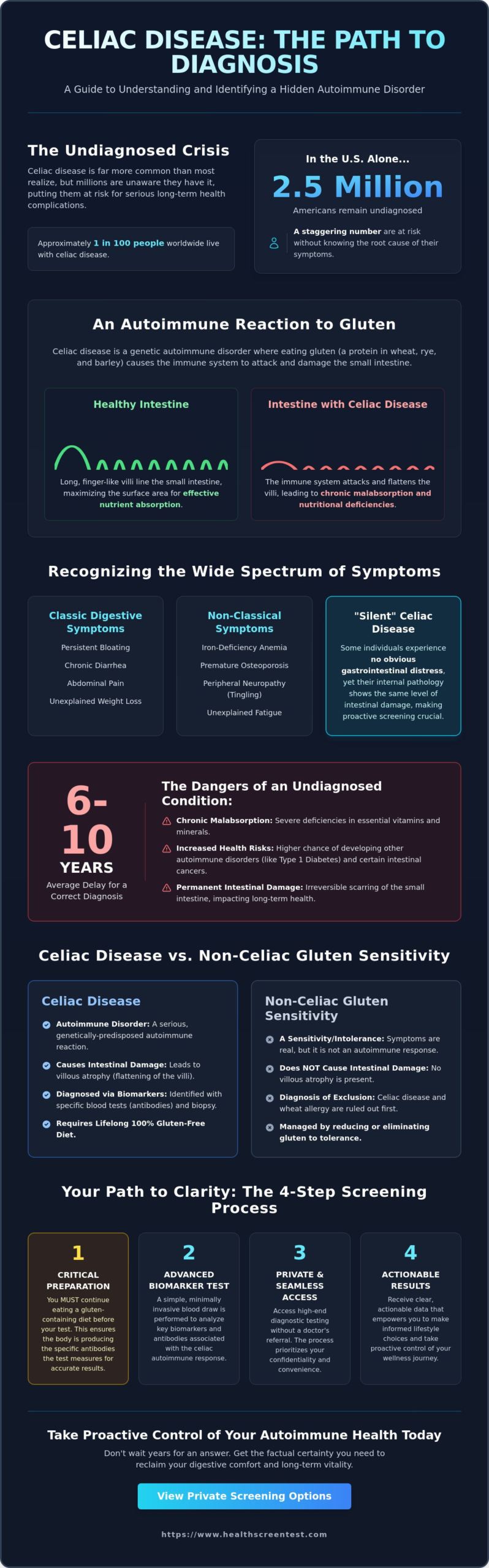
The prevalence of this condition is higher than many realize. Roughly 1 in 100 people worldwide live with celiac disease, but a staggering 2.5 million Americans remain undiagnosed. In Arizona cities like Scottsdale, Gilbert, and Chandler, many adults over 40 are discovering that their “sensitive stomach” is actually a clinical autoimmune response. Undiagnosed cases often trigger nutritional deficiencies and may lead to other serious conditions like Type 1 diabetes or microscopic colitis.
Common Symptoms and Silent Celiac Disease
Classic symptoms often include abdominal pain, bloating, and weight loss. However, many adults experience “non-classical” symptoms that don’t seem digestive at all. These include iron-deficiency anemia, premature osteoporosis, and peripheral neuropathy, which causes tingling in the hands and feet. Some individuals have “silent” celiac disease. They don’t experience obvious gastrointestinal distress, yet their internal pathology shows the same level of intestinal damage. This makes a celiac disease test phoenix essential for anyone with a family history or persistent, unexplained health changes.
The Risks of Delayed Diagnosis
Delaying a diagnosis can have severe long-term consequences. According to data from the Celiac Disease Foundation, it takes an average of 6 to 10 years for an individual to be correctly diagnosed. During these years, the body suffers from chronic malabsorption of vitamins and minerals. This increases the risk of developing certain intestinal cancers and other autoimmune complications. Choosing a proactive screening provides the peace of mind Health Screen Test is known for, allowing you to take control of your wellness journey with factual certainty.
The Science of Celiac Screening: Key Biomarkers and Lab Results
Scheduling a celiac disease test phoenix is the most proactive step you can take if you suspect gluten is impacting your health. The diagnostic journey begins with a simple blood draw, which is far less invasive than the biopsies used in later stages. These tests are designed to detect specific antibodies that the immune system releases when it perceives gluten as a threat. At Health Screen Test, we act as your trusted expert guide, helping you navigate these clinical markers with clarity and confidence. Our process is designed for your convenience; you simply order your screening online and visit one of our partner labs in Phoenix, Mesa, or Scottsdale for a professional sample collection.
- Blood tests are the primary screening tool for celiac disease.
- The tTG-IgA test offers high accuracy for those currently consuming gluten.
- Total IgA levels must be checked to prevent false negative results.
- Health Screen Test provides seamless access to local Phoenix area laboratories.
The tTG-IgA Antibody Test: The Gold Standard
The Tissue Transglutaminase (tTG) IgA test is widely recognized as the most sensitive and specific screening tool available today. This test identifies the autoimmune response by measuring specific IgA antibodies in the blood with approximately 95% accuracy. When you receive your results, a “positive” finding suggests that your immune system is reacting to gluten, often indicating that damage to the small intestine is occurring. A “negative” result generally suggests that celiac disease isn’t the cause of your symptoms, provided you haven’t already removed gluten from your diet. Understanding these markers is a foundational part of a proper celiac disease diagnosis and helps you determine the next steps in your care plan.
Understanding Total IgA and False Negatives
To ensure your results are completely reliable, we typically measure your Total IgA levels alongside specific celiac markers. This is vital because some individuals have a selective IgA deficiency, a condition where the body doesn’t produce enough of this antibody class. If your total levels are too low, it can lead to a false negative on a standard celiac panel, even if the disease is active. Research published via PubMed highlights that identifying this deficiency is crucial for screening accuracy. By examining the full picture, we provide residents from Gilbert to Glendale with the certainty they need to manage their wellness. It’s about taking control of your health through precise data rather than guesswork. If you’re ready to gain these insights, you can browse our comprehensive screenings to find the right panel for your lifestyle.
Our commitment to clinical excellence ensures that your experience is discreet, accurate, and stress-free. Whether you’re located in Chandler, Tempe, or Peoria, accessing high-end diagnostic tools has never been more straightforward. We believe that everyone deserves clear answers about their digestive health, and our streamlined system is built to deliver those answers quickly.
Celiac Disease vs. Non-Celiac Gluten Sensitivity: Identifying the Difference
If you’ve spent months feeling bloated or fatigued after a meal in Scottsdale or Mesa, you know how draining the search for answers can be. Many people assume any reaction to bread or pasta automatically means they have celiac disease. However, the biological reality is often more nuanced. While both conditions share overlapping symptoms like abdominal pain and brain fog, their impact on your body is vastly different. Celiac disease is a systemic autoimmune condition. This means your body attacks its own tissues when gluten is present. In contrast, non-celiac gluten sensitivity (NCGS) typically involves localized digestive distress without the same long-term organ damage. Getting a professional celiac disease test phoenix helps you stop guessing and start healing with certainty.
What is Non-Celiac Gluten Sensitivity (NCGS)?
NCGS is a condition where individuals experience adverse reactions to gluten but don’t show the specific antibodies or intestinal damage associated with celiac. You might feel just as sick as someone with an autoimmune diagnosis, but your laboratory results for celiac biomarkers will return negative. Currently, medical science hasn’t identified a specific biomarker for NCGS. This makes the diagnostic process a matter of exclusion. You must first rule out a wheat allergy, which is an IgE-mediated immune response, and then confirm you don’t have celiac disease. According to the Celiac Disease Screening protocols, testing while you’re still consuming gluten is vital for accuracy. If your results come back negative for celiac but you still feel unwell, your pain is still valid. It doesn’t mean your symptoms are “all in your head.” It simply means your path to wellness might involve looking at other triggers or exploring our comprehensive screenings to identify nutritional gaps.
Why Accurate Differentiation Matters
Understanding exactly what’s happening in your gut is essential for your long-term health. If you have celiac disease, you must follow a strict, lifelong gluten-free diet. Even tiny amounts of cross-contamination can lead to permanent intestinal scarring or bone density loss. If you have a sensitivity, your body might tolerate small amounts of gluten without the risk of systemic organ damage. Knowing the difference allows you to make informed lifestyle decisions rather than living in fear of every meal. We encourage you to take control of your health by getting the data you need. Whether you’re in Gilbert, Chandler, or Tempe, accessing a celiac disease test phoenix provides the clarity required to build a diet that actually works for your unique biology.
How to Prepare for Your Screening: The Role of Gluten in Test Accuracy
Preparing for a celiac disease test phoenix involves a dietary requirement that often feels counterintuitive to those already suffering from digestive distress. For the screening to be medically accurate, your immune system must be actively responding to gluten. The blood tests look for specific antibodies that your body produces only when gluten is present in your digestive tract. If you’ve already transitioned to a gluten-free lifestyle, your antibody levels may return to a normal range, which can lead to a misleading negative result even if you have the condition.
We recognize that the prospect of consuming foods that make you feel unwell is daunting. This phase is often the most challenging part of the diagnostic journey, but capturing these biomarkers while they’re active is the only way to provide the clinical certainty required for a formal diagnosis. If you’re searching for Health Screenings Near Me in Phoenix or Scottsdale, understanding this preparation phase is your first step toward taking control of your health.
The Gluten Challenge: Duration and Quantity
If you’ve been following a gluten-free diet, you’ll need to undergo what clinicians call a “Gluten Challenge.” According to guidelines from the Mayo Clinic, this involves consuming approximately two servings of gluten every day for six to eight weeks prior to your blood draw. A serving is generally defined as one slice of wheat bread, a half-cup of cooked pasta, or a standard flour tortilla. You can also use crackers or barley-based cereals to meet this requirement.
- Don’t stop eating gluten until the blood sample is collected by the phlebotomist.
- Consistency is key; skipping days can lower the antibody concentration in your blood.
- Focus on simple, easily tracked portions to ensure you’re meeting the daily threshold.
This process ensures that the pathology team has a clear window into how your immune system reacts. For residents in Mesa, Chandler, or Gilbert, completing this challenge properly prevents the need for repeat testing later. It’s about getting the right data the first time.
Timing Your Test and Sample Collection
The actual collection process is designed to be a seamless part of your proactive lifestyle. You don’t usually need to fast for a standard celiac antibody panel. However, if your celiac disease test phoenix is part of a comprehensive wellness check that includes cholesterol or blood sugar, you might need to avoid food for 12 hours. It’s best to confirm this when you book your appointment. A helpful tip for a quick and comfortable experience is to stay well-hydrated. Drinking plenty of water 24 hours before your test makes your veins more accessible, ensuring the blood draw is fast and discreet.
Ready to gain clarity on your digestive health? Schedule your celiac screening today and get the professional insights you deserve.
Accessing Private Lab Testing: A Seamless Path to Peace of Mind
For residents across the Phoenix metropolitan area, from the quiet suburbs of Sun City West to the bustling streets of Scottsdale and Mesa, taking control of your health shouldn’t be a complicated ordeal. The traditional healthcare system often requires multiple appointments, long wait times, and specific insurance approvals just to get a simple blood draw. Our model at Health Screen Test changes that. We provide a direct route to clinical data without the typical roadblocks. You simply choose your panel online, visit a local lab in cities like Chandler or Gilbert, and access your results through a private, secure portal.
This streamlined process is especially valuable if you’re in the 40 plus demographic. At this stage of life, many people prioritize efficiency and privacy. You don’t need a doctor’s order or a specific insurance plan to secure a celiac disease test phoenix. This independence allows you to screen for gluten sensitivity on your own terms. It removes the anxiety of explaining symptoms to a provider before you even have data in hand. By bypassing the red tape, you save time and gain clarity faster.
“I’d been feeling sluggish for months but didn’t want to spend weeks waiting for a specialist in Tempe. I ordered my own celiac panel, went to a lab in Goodyear the next morning, and had my answers by Friday. It was the easiest medical experience I’ve had in years.” — Verified Customer, Phoenix, AZ
Confidentiality is the cornerstone of our service. We understand that your health data is sensitive. We utilize advanced encryption and strict privacy protocols to ensure your information remains between you and the lab. We never share your results with insurance companies or employers, giving you total ownership of your medical journey.
Ordering Your Celiac Disease Test Online
Getting started is simple and takes less than five minutes. You can browse our comprehensive selection by visiting the Ulta Wellness section of our site. We believe in total transparency, so the price you see is the price you pay. There aren’t any hidden laboratory fees or surprise invoices sent to your home later. Whether you’re in Avondale, Buckeye, or Paradise Valley, the process remains consistent and affordable. Once you complete your purchase, you’ll receive a lab requisition form immediately.
Interpreting Your Results and Next Steps
After your blood draw at a local Phoenix facility, your results are delivered digitally to your secure account. We don’t just give you raw numbers; we present your biomarkers alongside clear reference ranges. This helps you understand where your levels sit compared to clinical standards. According to the National Institute of Diabetes and Digestive and Kidney Diseases, blood tests are a vital screening tool, but they’re often the first step in a larger diagnostic picture.
If your results show elevated antibodies, it’s a signal to take action. While these tests are highly accurate, a positive celiac disease test phoenix should be discussed with a healthcare professional. They may recommend a biopsy to confirm a formal diagnosis. We provide the data you need to have an informed, empowered conversation with a specialist in Glendale or Peoria. Taking this proactive step is a major move toward a healthier, gluten-free lifestyle.
Take the Next Step Toward Lasting Digestive Wellness
Understanding your body’s reaction to gluten is more than just a dietary choice; it’s a vital part of your long-term health strategy. Research from the Celiac Disease Foundation shows that approximately 2.5 million Americans are living undiagnosed, which increases the risk of long-term damage to the small intestine. By securing a celiac disease test phoenix residents can gain immediate clarity on their symptoms through precise biomarker analysis. You don’t need a doctor’s appointment or insurance to access these professional insights in Arizona cities like Mesa, Chandler, or Scottsdale.
HealthScreen simplifies this process by providing access to 3,000+ certified lab locations nationwide. You’ll receive secure, HIPAA-compliant digital results in just 24 to 48 hours, allowing you to bypass the typical clinical delays. This modern approach ensures your privacy while delivering the scientific accuracy you deserve. Taking control of your diagnostic journey is a powerful way to prioritize your well-being and find the answers you’ve been seeking. It’s a proactive choice that puts your health back in your own hands.
Take Control of Your Health—Order Your Celiac Screening Panel Now
You deserve a life free from the uncertainty of digestive distress. Start your journey toward feeling your best today.
Frequently Asked Questions
Can I test for celiac disease if I am already gluten-free?
You cannot accurately test for celiac disease if you’re already following a strict gluten-free diet. The blood tests look for specific antibodies that your body only produces when you consume gluten. According to the Celiac Disease Foundation, you must consume approximately 3 to 10 grams of gluten daily for 6 to 8 weeks before the test to ensure reliable results. If you’ve already stopped eating gluten, your antibody levels may have dropped below detectable limits, leading to a false negative result.
How accurate is the celiac disease blood test compared to a biopsy?
The Tissue Transglutaminase IgA (tTG-IgA) blood test is highly effective, showing about 95% sensitivity and specificity for detecting celiac disease in adults. While this blood panel is an excellent initial screening tool, a biopsy of the small intestine remains the gold standard for a definitive diagnosis. Medical professionals at the Mayo Clinic use biopsies to confirm the physical damage to the intestinal villi, which provides the clinical certainty required for a long-term treatment plan.
What is the difference between a gluten allergy and celiac disease?
Celiac disease is a serious autoimmune condition where gluten ingestion causes the immune system to attack the small intestine. In contrast, a wheat or gluten allergy is an immediate IgE-mediated immune response, similar to a peanut allergy, which doesn’t cause long-term intestinal damage. While celiac disease affects about 1% of the global population, wheat allergies are often outgrown by adulthood. Both conditions require different management strategies, making a precise celiac disease test phoenix essential for your health journey.
Do I need a doctors referral to get a celiac test through Health Screen Test?
You don’t need a doctor’s referral to schedule a celiac disease test phoenix through Health Screen Test. We believe in empowering you to take control of your wellness by providing direct access to clinical-grade diagnostics. This streamlined process removes the traditional barriers of long wait times for specialist appointments in cities like Scottsdale or Gilbert. You can simply book your screening online, visit a local lab, and receive your confidential data directly through our secure platform.
What should I do if my celiac test is negative but I still have symptoms?
If your test results are negative but you still experience digestive distress, you may have Non-Celiac Gluten Sensitivity (NCGS). Research from the National Institutes of Health suggests that many individuals experience symptoms like bloating and fatigue without the autoimmune markers of celiac disease. You should consult with a healthcare professional to rule out other conditions such as Small Intestinal Bacterial Overgrowth (SIBO) or Irritable Bowel Syndrome (IBS). Tracking your food intake for 14 days can help identify specific triggers.
How long does it take to get celiac blood test results back?
Most patients receive their comprehensive blood test results within 2 to 5 business days after their blood draw. We prioritize speed and accuracy because we understand that waiting for health information can be stressful. Your data is processed in certified laboratories to ensure the highest clinical standards. Once your results are ready, you’ll receive an email notification to view your report, allowing you to move forward with clarity and confidence in your next health steps.
Is celiac disease hereditary, and should my family members be tested?
Celiac disease is a strongly hereditary condition, and first-degree relatives have a 1 in 10 risk of developing the disease themselves. The risk is significantly higher if family members carry the HLA-DQ2 or HLA-DQ8 gene variants. If you receive a positive diagnosis in Mesa or Chandler, it’s vital to encourage your parents, siblings, and children to undergo screening. Early detection in family members can prevent years of silent intestinal damage and associated complications like osteoporosis or anemia.
Does insurance cover direct-to-consumer celiac testing?
Most insurance providers don’t cover direct-to-consumer screenings because they’re often considered elective rather than diagnostic. However, many people successfully use their Health Savings Account (HSA) or Flexible Spending Account (FSA) funds to pay for these services. You should check with your specific plan administrator to verify eligibility for reimbursement. Choosing a private test provides a discreet way to monitor your health without waiting for insurance approvals or impact on your permanent medical record.

Article by
Alexander Aquino, RN
With over 35 years of dedicated service within the healthcare industry, I've witnessed firsthand the profound difference early detection can make in saving lives. This experience has ignited my mission to empower individuals to take control of their healthcare before challenges arise.
Throughout my career in both nursing and medicine, I have worked in inpatient hospitals and outpatient clinical settings. I've dedicated myself to one unwavering principle: prevention saves lives. Every day in healthcare reinforces this truth—the earlier we detect potential health issues, the better the outcomes for patients.
Disclaimer
Health Screen Test does not provide medical advice, diagnosis, treatment, or prescription services, nor does it bill insurance. The content presented in this blog is intended solely for educational purposes to help you make informed decisions before purchasing any screening tests. By clicking on an affiliate link, you will be redirected to the respective screening company’s website. Please consult your physician for personalized medical advice. Kindly note that I may receive a small commission from purchases made through affiliate links.