

Even in regions with abundant sunshine, many assume they receive all the nutrients their body needs, yet data from the National Institutes of Health indicates that nearly 42% of Americans still struggle with clinical deficiency. You’ve likely felt that nagging, unexplained fatigue or a dull ache in your joints that just won’t go away, even after a restful weekend. It’s frustrating to feel physically drained when you’re doing everything right for your wellness. A precise vitamin D test, often sought after as ‘vitamin d test chandler’ or similar queries, is the most effective way to replace guesswork with scientific certainty, ensuring your bone density and immune system remain resilient as you age.
We understand that managing your health requires more than just general advice; it requires precise data about your unique biomarkers. You deserve peace of mind regarding your long term bone health without the confusion of hit or miss supplement dosages. This 2026 guide will walk you through the hidden reasons many individuals face these nutritional gaps and show you how a seamless, professional screening from Health Screen Test can provide the actionable insights you need for a vibrant, proactive lifestyle.
Key Takeaways
- Understand why living in the East Valley doesn’t guarantee optimal hormone levels and how the “Arizona Paradox” impacts your immune regulation and calcium absorption.
- Discover how a professional vitamin d test chandler utilizes the 25-Hydroxy clinical gold standard to provide precise measurements of your D2 and D3 biomarkers.
- Learn to protect your long-term vitality by identifying the critical links between Vitamin D deficiency, bone density, and cognitive health for individuals aged 40 and above.
- Explore a seamless, three-step testing process that offers discreet, medical-grade results and total personal empowerment without the need for a doctor’s order or insurance.
The Arizona Paradox: Why You May Need a Vitamin D Test in Chandler
Living in the Valley of the Sun suggests we’re all naturally saturated with Vitamin D. It’s a common misconception that often leads to overlooked health gaps. Vitamin D isn’t just a simple nutrient; it functions as a critical pro-hormone that your body converts into a hormone to regulate over 200 different genes. It serves as the primary engine for calcium absorption and remains a cornerstone of robust immune regulation. For residents in the East Valley, maintaining these levels is more complex than just stepping outside.
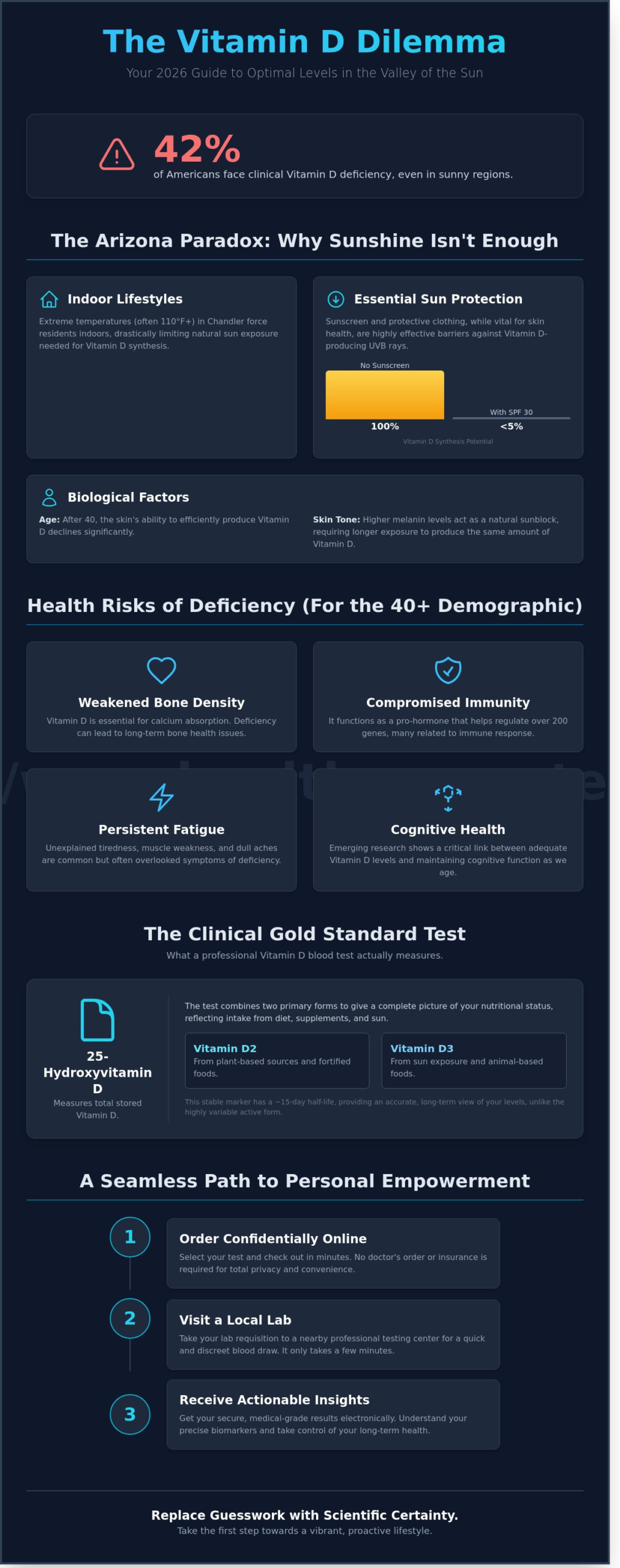
The reality of the Arizona climate often works against our biology. When temperatures in Chandler regularly climb above 110°F, our behavior shifts toward survival and comfort. We retreat to air-conditioned offices or stay inside our homes to avoid the intense heat. This “indoor lifestyle” creates a significant deficit in nutrient production. Even when we do venture out, we’re diligent about skin protection. Applying SPF 30 sunscreen can reduce Vitamin D synthesis by more than 95 percent. While protective clothing is essential for preventing skin damage, it also acts as a total barrier to the UVB rays required for natural production. This creates a situation where a vitamin d test chandler becomes a necessary tool for proactive health management.
Because this “indoor lifestyle” often leads to more sedentary time at a desk, it is equally important to prioritize ergonomic support for your joints and spine; you can discover TopGamingChair.com to explore detailed reviews on seating that promotes better posture and comfort.
Similarly, for those whose indoor interests include technical hobbies or photography, dronedoctor.com offers specialized repair services and parts to keep your equipment in peak condition for when you do venture back into the sun.
Understanding Sun Exposure vs. Synthesis
Vitamin D synthesis occurs when UVB radiation strikes the skin, triggering a chemical reaction that creates Vitamin D3. This process isn’t uniform for everyone. Individuals over age 40 often experience a decline in their skin’s ability to produce the hormone efficiently. Additionally, higher levels of melanin act as a natural filter, which means people with darker skin tones require longer sun exposure to reach the same levels as those with lighter skin. At HealthScreen, we’re dedicated to making clinical data accessible to help you understand these personal biological markers. You can learn more about our mission on our about page.
Common Myths About Vitamin D in the Desert
A prevalent myth is that a quick walk to the mailbox or a short commute provides sufficient sun exposure. In truth, the angle of the sun and the specific time of day significantly dictate how much Vitamin D your body can actually manufacture. Relying solely on dietary sources like fortified milk or fatty fish often proves insufficient, as these rarely provide the daily units required for optimal health. Ignoring potential Vitamin D deficiency symptoms such as persistent fatigue or muscle weakness can lead to long-term wellness challenges. Establishing a baseline through a professional vitamin d test chandler is the most accurate way for residents in Phoenix, Mesa, and Gilbert to take control of their nutritional status.
- Vitamin D acts as a pro-hormone essential for bone health and immune function.
- Extreme Arizona heat leads to indoor lifestyles that limit natural sun exposure.
- Sunscreen and protective clothing significantly block the UVB rays needed for synthesis.
- Age and skin pigmentation affect how efficiently your body produces Vitamin D.
- Clinical testing is the only certain way to determine if your levels are adequate.
What Does a Vitamin D Blood Test Actually Measure?
When you schedule a vitamin d test chandler, the laboratory focuses on a specific substance in your blood called 25-hydroxyvitamin D. Medical professionals recognize this as the clinical gold standard because it reflects the total amount of vitamin D your body has stored from food, supplements, and sun exposure. It’s the most accurate way to determine if your levels are sufficient, as this marker has a circulating half-life of approximately 15 days. This provides a clear picture of your long-term status rather than a brief snapshot of your recent intake.
The test measures two primary forms of the vitamin. Vitamin D2, or ergocalciferol, typically comes from plant-based sources and fortified foods. Vitamin D3, known as cholecalciferol, is the form your skin produces when exposed to sunlight and is also found in animal-based foods. A comprehensive panel reports “Total Vitamin D,” which combines both forms to give you a complete view of your nutritional health. While some specialized tests look at 1,25-dihydroxy vitamin D, this active form is rarely used for routine screening because it has a very short half-life of less than 15 hours and can appear normal even when a person is severely deficient.
To ensure you’re getting the most out of your wellness journey, it’s helpful to look at comprehensive blood panels that assess multiple health markers at once.
The Role of Biomarkers in Preventive Health
A biomarker is simply a biological molecule found in blood or tissues that acts as a sign of a normal or abnormal process. Vitamin D is a critical biomarker because it functions more like a hormone than a simple vitamin. It maintains a delicate balance with other markers like Calcium and Parathyroid Hormone (PTH). When your serum 25-hydroxyvitamin D [25(OH)D] levels drop, your body may struggle to absorb calcium, leading the parathyroid glands to work harder to maintain bone density. For those looking to optimize their cognitive function and energy, reviewing our Vitamin B12 Test in Gilbert guide can provide additional context on how different nutrients work together to support aging adults.
Clinical Accuracy and Lab Standards
Accuracy is the foundation of medical trust. Every vitamin d test chandler we provide is processed in CLIA-certified laboratories. These facilities meet rigorous federal standards for quality and reliability, ensuring that the data you receive is as precise as what you’d get through a traditional hospital system. We prioritize your privacy and convenience by offering seamless access to local lab locations across Chandler and Tempe. This modern approach allows you to take control of your health data without the typical clinical delays.
Health Risks of Deficiency for the 40+ Demographic
Aging changes how the body interacts with the environment. Once you pass the age of 40, your skin becomes less efficient at producing Vitamin D from sunlight, even in high-UV areas like Chandler or Mesa. This decline matters because low Vitamin D levels are directly linked to osteomalacia and osteoporosis. These conditions weaken the skeletal frame, making daily activities more hazardous as bone density decreases. It’s a physiological shift that requires active management to maintain your quality of life.
Research is also uncovering how this “sunshine vitamin” affects the brain. A 2022 study published in Alzheimer’s & Dementia highlighted that higher Vitamin D levels in brain tissue were associated with 33% lower odds of dementia and cognitive decline. Vitamin D helps regulate mood and prevents seasonal affective issues that can strike during the shorter days of winter. Cardiovascular health is another area of concern; clinical data shows that insufficient levels can negatively impact blood pressure and arterial health. Scheduling a vitamin d test chandler provides the data you need to address these risks before they become chronic issues.
Immune System Support and Longevity
Your immune system relies on Vitamin D to function as a precise defense mechanism. The NIH reports that Vitamin D modulates the innate immune response, which acts as the body’s first line of defense against pathogens. If you’re deficient, you face a higher risk of respiratory infections and prolonged recovery times. Understanding what a vitamin D blood test measures gives you a clear view of your immune readiness. Choosing proactive screening is a powerful way to take charge of your longevity and ensure your body is prepared for seasonal health challenges.
Bone Density and Fracture Prevention
Bone health isn’t just about calcium intake; it’s about how your body uses it. Vitamin D facilitates calcium absorption in the gut, ensuring your skeletal system stays dense and strong. In adults over 40, bone loss is often a silent process with no obvious symptoms until a sudden break or fall happens. This makes early detection vital for maintaining independence as you age. We encourage you to look at the comprehensive screenings available to evaluate your bone health and overall wellness. Using a vitamin d test chandler helps you build a proactive plan for your future, giving you the certainty that your foundation is secure.
How to Prepare for Your Test and Interpret Results
Getting a vitamin d test chandler is a straightforward process that requires very little preparation. For those scheduling a vitamin d test chandler, the lack of dietary restrictions makes it one of the easiest health checks to complete. You don’t need to fast before this specific screening; you can maintain your usual diet and hydration levels right up until your appointment. For the most seamless experience at labs across the Scottsdale and Chandler area, try to schedule your visit mid-morning. Data suggests that wait times are typically shortest between 9:30 AM and 10:30 AM on midweek days like Tuesday or Wednesday.
Your results will arrive as a numerical value measured in nanograms per milliliter, abbreviated as ng/mL. It’s helpful to understand where your numbers fall based on clinical standards established by professional medical organizations. These tiers provide a clear map of your current status:
- Deficient: Below 20 ng/mL. This level carries risks for bone health and immune function.
- Insufficient: 20 to 30 ng/mL. While not critically low, this range often indicates a need for lifestyle adjustments.
- Optimal: 30 to 100 ng/mL. This is the target zone for maintaining peak physical and mental performance.
Understanding Your Lab Report
When you receive your digital results, your eyes will likely gravitate toward the “Reference Range” column. It’s vital to recognize that a “Normal” result on a standard lab report often just means you’re above the threshold for severe deficiency. For individuals over age 40, simply being “normal” might not be enough to support active aging or cardiovascular health. You should discuss your specific numbers with a professional to determine if a targeted supplement dose is necessary to reach the higher end of the optimal spectrum.
Next Steps After Testing
Consistency is the secret to long-term wellness. If your results indicate a need for supplementation or significant lifestyle changes, plan to re-test every 3 to 6 months. This timeframe allows your body to stabilize and ensures your dosage is both effective and safe. Living in the Phoenix valley presents a unique situation. Despite our abundant sunshine, many residents spend 90 percent of their time indoors to avoid the heat, which can lead to surprising drops in levels. If persistent digestive discomfort or unexplained fatigue accompanies your low Vitamin D levels, it may also be worth exploring a celiac disease test phoenix to rule out malabsorption issues that can interfere with nutrient uptake. If you need assistance finding a local screening event or have questions about the process, visit our contact page for personalized support.
Seamless Vitamin D Testing with Health Screen Test
Accessing clinical insights shouldn’t feel like a hurdle. Health Screen Test provides a direct-to-consumer model that removes the traditional barriers of the healthcare system. You don’t need a doctor’s order, and you don’t need to navigate the complexities of insurance approvals to get a vitamin d test chandler. This streamlined approach empowers you to bypass long wait times at primary care offices while maintaining full control over your health data.
The process is designed for maximum efficiency through three simple steps. First, you select and order your test online from our secure platform. Second, you visit a local, professional lab for a quick blood draw. Finally, you receive your private results through a secure digital portal. This system ensures that your medical information remains confidential; it’s a priority for Arizona residents who value their privacy. For those looking for a broader view of their health, Health Screen Test also offers a range of comprehensive wellness panels that allow you to check Vitamin D levels alongside other critical biomarkers like cholesterol and metabolic function.
Why Choose Our National Lab Network?
Our partnership with a vast national lab network means you have access to thousands of locations. If you’re looking for a vitamin d test chandler, you’ll find convenient collection sites right in your neighborhood, as well as in nearby Gilbert or Mesa. Efficiency is a core part of our service. Results are typically available within 24 to 48 hours, providing the fast answers you need to make informed lifestyle adjustments. For individuals aged 40 and older, this speed provides immense peace of mind. Knowing your status quickly allows you to address potential deficiencies before they impact your bone density or immune health. According to the National Institutes of Health (NIH), nearly 25% of U.S. adults have vitamin D levels that are considered too low for optimal health, making regular screening a vital tool for longevity.
Taking Control of Your Wellness Journey
Proactive health management is about more than just reacting to symptoms; it’s about optimizing your body’s potential at every stage of life. Whether you live in Phoenix, Scottsdale, or Queen Creek, you deserve access to accurate diagnostic tools without the red tape. Taking charge of your wellness journey starts with data. By monitoring your Vitamin D levels, you can tailor your diet and supplementation to meet your specific biological needs. This isn’t just a medical necessity; it’s a proactive lifestyle choice that supports long-term vitality and strength.
We encourage you to stay informed by exploring the Health Screen Test blog. It’s filled with detailed guides tailored for East Valley residents, covering everything from heart health to seasonal wellness tips. Your health is your most valuable asset, and we’re here to help you protect it with clarity and confidence.
Take Charge of Your Wellness Journey
Living in the Valley of the Sun doesn’t guarantee your body absorbs enough nutrients. A 2023 report from the National Institutes of Health (NIH) indicates that nearly 42% of adults in the United States struggle with insufficiency. For residents over 40, these levels are even more critical for maintaining bone strength and immune resilience. You deserve to know exactly where you stand without the stress of typical medical hurdles. Scheduling a vitamin d test chandler provides the clinical data you need to make informed lifestyle choices. We’ve streamlined the process by offering access to 3,000+ CLIA-certified lab locations across the country. You’ll receive secure, encrypted digital results that protect your privacy throughout the process. There’s no physician referral required and you won’t encounter hidden fees at any stage. It’s a seamless way to prioritize your long term health with confidence. Take the next step toward proactive self-care and gain the peace of mind you’ve been looking for.
Order Your Private Vitamin D Test Online Today
Your future self will thank you for making your health a priority today.
Frequently Asked Questions
Is a Vitamin D test in Chandler covered by insurance if I order it myself?
Most private insurance providers require a physician’s order and a specific diagnosis code to cover the cost of clinical screenings. If you choose to order a vitamin d test chandler independently, it’s typically considered an out-of-pocket expense. However, you can often use Health Savings Account (HSA) or Flexible Spending Account (FSA) funds to pay for these services, providing a discreet way to monitor your health biomarkers.
How much sun do I actually need in Arizona to maintain healthy Vitamin D levels?
For most adults over 40 living in the East Valley, 10 to 15 minutes of midday sun exposure twice a week is often sufficient for synthesis. However, as we age, the skin’s ability to produce Vitamin D drops by about 50 percent compared to younger individuals. Clinical research notes that factors like skin melanin and sunscreen use also impact how much of the “sunshine vitamin” your body actually absorbs.
Do I need to fast before my Vitamin D blood draw?
You don’t need to fast before this specific blood test. Unlike a lipid panel or a glucose screening, your 25-hydroxy vitamin D levels aren’t significantly altered by your most recent meal. You can eat and drink normally throughout the day before visiting a lab in Chandler or Gilbert, making the process a seamless addition to your routine without the stress of morning hunger.
Can I take my Vitamin D supplement on the morning of my test?
It’s best to wait until after your blood draw to take your daily supplement. Taking a high-dose D3 pill right before your Health Screen Test can cause a temporary, artificial spike in your blood concentration levels. To get the most accurate baseline of your sustained levels, skip your vitamins on the morning of the appointment and resume your normal schedule once the phlebotomy technician is finished.
What is the difference between Vitamin D2 and D3 on my lab results?
Vitamin D2 comes primarily from plant sources, while D3 is the form your body produces from sunlight and finds in animal products. Your lab report will usually show a “Total Vitamin D” count that combines both forms. According to the National Institutes of Health (NIH), D3 is more effective at raising and maintaining blood levels over long periods, which is why it’s the preferred form for most wellness strategies.
How long does it take to get Vitamin D test results back in the East Valley?
Most residents in Chandler, Mesa, and Tempe receive their results within 24 to 48 hours after the blood draw. Local pathology labs prioritize a quick turnaround to ensure you can take actionable steps toward optimization quickly. You’ll typically receive a notification to view your data through a secure, private online portal, allowing you to review your biomarkers from the comfort of your home.
What are the most common symptoms of Vitamin D deficiency in adults over 40?
Common signs of a deficiency include persistent fatigue, bone pain, and subtle mood changes. For individuals over 40, these symptoms are often mistaken for normal aging, but the Cleveland Clinic reports that 35 percent of adults have a genuine deficiency. Scheduling a vitamin d test chandler can provide the data needed to determine if muscle weakness or lower back pain is linked to your nutritional status. If you also experience chronic digestive issues alongside these symptoms, consider whether a celiac disease test phoenix could help identify whether gluten sensitivity is contributing to poor nutrient absorption.
Is it possible to have too much Vitamin D (Vitamin D toxicity)?
Yes, taking excessive doses of supplements over time can lead to a condition called hypercalcemia. This occurs when too much calcium builds up in the blood, potentially causing nausea or kidney stones. By monitoring your levels with a regular Health Screen Test, you can ensure you stay within the safe reference range of 30 to 100 ng/mL and avoid the risks associated with over-supplementation.

Article by
Alexander Aquino, RN
With over 35 years of dedicated service within the healthcare industry, I've witnessed firsthand the profound difference early detection can make in saving lives. This experience has ignited my mission to empower individuals to take control of their healthcare before challenges arise.
Throughout my career in both nursing and medicine, I have worked in inpatient hospitals and outpatient clinical settings. I've dedicated myself to one unwavering principle: prevention saves lives. Every day in healthcare reinforces this truth—the earlier we detect potential health issues, the better the outcomes for patients.
Disclaimer
Health Screen Test does not provide medical advice, diagnosis, treatment, or prescription services, nor does it bill insurance. The content presented in this blog is intended solely for educational purposes to help you make informed decisions before purchasing any screening tests. By clicking on an affiliate link, you will be redirected to the respective screening company’s website. Please consult your physician for personalized medical advice. Kindly note that I may receive a small commission from purchases made through affiliate links.