

Receiving a lab report with unfamiliar terms can be unsettling, especially when you see a value flagged as "high" or "low." If you’ve recently had a blood test in the Phoenix area and the word "eosinophils" caught your eye, you’re in the right place. These specialized immune cells are particularly sensitive to our unique Arizona environment, and understanding their role is a key step in taking control of your health.
This guide will demystify your eosinophil levels, explaining what they are, why they matter for residents from Gilbert to Glendale, and how you can easily monitor them. We’ll translate the clinical jargon into clear, actionable information, giving you the peace of mind that comes from understanding your body.
Key Takeaways
- What They Are: Eosinophils are a type of white blood cell that fights off certain infections and plays a central role in allergic reactions and asthma.
- Why They’re High in AZ: The Sonoran Desert environment, with its unique pollens (like Palo Verde), dust storms (haboobs), and the prevalence of Valley Fever, are common triggers for elevated eosinophils in residents of Maricopa County.
- Normal Range: A normal absolute eosinophil count is typically below 500 cells per microliter (cells/mcL), but this can vary slightly between labs in Mesa, Scottsdale, or Phoenix.
- How to Test: You can check your eosinophil levels with a simple Complete Blood Count (CBC) with Differential test, which you can order online without a doctor’s referral.
What Are Eosinophils and Why Do They Matter for Arizona Residents?
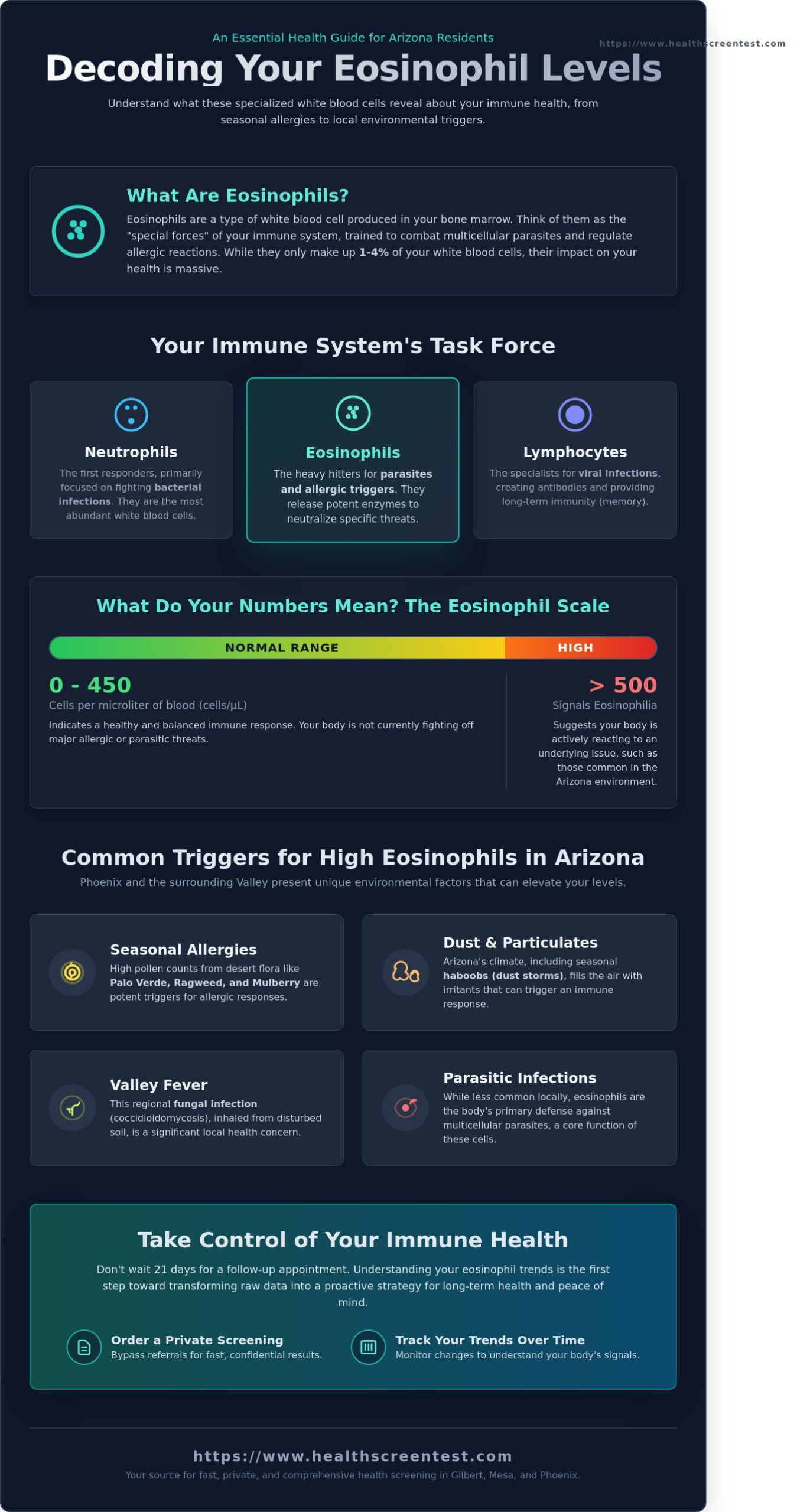
Eosinophils are a specialized type of white blood cell, or leukocyte, produced in your bone marrow. Think of them as the special forces of your immune system. While other white blood cells handle more common invaders like bacteria and viruses, eosinophils are called in for specific missions, primarily fighting multicellular parasites and mediating allergic and inflammatory responses.
For those of us living in dusty or high-pollen areas like Queen Creek, San Tan Valley, or Buckeye, tracking these levels can be particularly insightful. Your eosinophil count can act as a biomarker, reflecting how your body is interacting with the local environment. A sudden spike might be your body’s first signal that it’s reacting to a seasonal allergen or another trigger.
[AI-generated image showing a microscopic view of eosinophils, identifiable by their bi-lobed nucleus and red-staining granules.]
The Immune System’s Specialist: How Eosinophils Work
When your body identifies a threat like an allergen or a parasite, it signals for eosinophils to travel from the bloodstream into the affected tissue, whether it’s your lungs, skin, or digestive tract. Once they arrive at the scene, they perform a process called degranulation. This means they release tiny, powerful granules filled with toxic proteins and enzymes that destroy the foreign invaders. Beyond this, they also play a complex role in modulating inflammation and helping with tissue repair after the threat is neutralized.
Eosinophils vs. Other White Blood Cells
Your immune system has several types of white blood cells, each with a different job. It’s helpful to know the main players:
- Neutrophils: The most abundant type, these are the first responders to bacterial infections.
- Lymphocytes: These include B-cells and T-cells, which create antibodies and fight off viruses.
- Eosinophils: The specialists for allergies and parasites.
[Colorful icon representing the different "special forces" of the immune system: neutrophils, lymphocytes, and eosinophils.]
Typically, eosinophils make up a small fraction—only about 1% to 4%—of your total white blood cell count. Seeing how these different cell types balance each other provides a more complete picture of your immune health. Understanding your full immune profile is key, which is why Health Screen Test offers comprehensive panels that give you a detailed breakdown of these important biomarkers.
Interpreting Your Results: What is a Normal Eosinophil Range?
When you look at your Complete Blood Count (CBC) report, you’ll see your eosinophil level presented in two ways: as a percentage of your total white blood cells and as an absolute count. The absolute eosinophil count (AEC) is the most accurate measure of immune activity.
The standard reference range for an absolute eosinophil count is typically between 0 and 500 cells per microliter (cells/mcL). However, it’s important to note that "normal" ranges can vary slightly between different labs in Phoenix, Scottsdale, or Tempe.
Understanding the Absolute Eosinophil Count (AEC)
The AEC gives you the precise number of eosinophils in a specific volume of blood. It’s calculated by multiplying the total white blood cell count by the percentage of eosinophils. For example, if your total white blood cell count is 8,000 and your eosinophils are 3%, your AEC is 240 cells/mcL (8,000 x 0.03), which falls within the normal range. The AEC is considered more clinically significant than the percentage alone because it isn’t affected by changes in other white blood cell populations.
When to Be Concerned About Your Numbers
A high eosinophil count is called eosinophilia. According to the National Institutes of Health (NIH), it’s generally categorized by severity:
- Mild: 500 – 1,500 cells/mcL
- Moderate: 1,500 – 5,000 cells/mcL
- Severe: Greater than 5,000 cells/mcL
It’s natural to feel concerned if your numbers are elevated, but it’s important to remember that a slight or temporary increase is often linked to common, manageable triggers. If your results are significantly high or persistently elevated, it warrants a closer look. A follow-up screening through one of our comprehensive health packages can help you and your doctor understand the bigger picture.
Common Causes of High Eosinophils (Eosinophilia) in the Phoenix Metro Area
While there are many potential causes of eosinophilia, residents of Maricopa County face a unique set of environmental triggers.
- Seasonal Allergies: This is the #1 trigger in Arizona. Our desert landscape is full of potent allergens, including pollen from Palo Verde, Ragweed, and Mesquite trees, which can cause a significant immune response.
- Valley Fever (Coccidioidomycosis): This fungal infection, endemic to the soil of the Sonoran Desert, is a well-known cause of elevated eosinophils. The CDC notes that Arizona is one of the states with the highest reported rates of this infection.
- Other Factors: Common medications (like certain antibiotics or NSAIDs), skin conditions such as eczema, and asthma can also drive your levels up.
It’s a common fear that high eosinophils automatically point to cancer. While certain blood disorders and cancers can cause eosinophilia, this is rare and is almost never the only symptom.
[YouTube video explaining the CBC with Differential process, showing how different blood cells are counted.]
Arizona Allergies and Respiratory Triggers
The dry, windy climate of the Sonoran Desert is perfect for spreading allergens. The infamous "haboobs," or dust storms, can carry dust, fungi, and pollen across the valley, triggering immune spikes in sensitive individuals. This constant exposure can lead to chronic allergic rhinitis (hay fever) and asthma, conditions where eosinophils play a key role by accumulating in the lungs and airways.
Digestive and Autoimmune Factors
High eosinophils aren’t just about what you breathe in. They can also signal issues in your digestive tract. Conditions like Eosinophilic Esophagitis (EoE), an allergic inflammation of the esophagus, are becoming more commonly diagnosed in adults. Food sensitivities or, less commonly, parasitic infections can also activate eosinophils in the gut. For those looking to investigate digestive health, targeted blood panels available through our Ulta Wellness services can provide valuable insights.
How to Test Your Eosinophil Levels in Gilbert, Mesa, and Phoenix
Taking control of your health data has never been easier. You can monitor your eosinophil levels and get a complete picture of your blood health without a doctor’s order or insurance.
- Choose the Right Test: Select a Complete Blood Count (CBC) with Differential. This test not only gives you a total white and red blood cell count but also breaks down the different types of white cells, including your absolute eosinophil count.
- Order Online: Order your test securely online through Health Screen Test. There’s no need for a doctor’s referral or insurance paperwork.
- Visit a Local Lab: Choose a convenient partner lab location in cities like Chandler, Tempe, Scottsdale, or Avondale. We have thousands of locations nationwide.
- Get Your Results: Visit the lab for a quick and professional blood draw (phlebotomy). Your confidential results will be delivered directly to your private online portal, usually within 24-48 hours.
The Convenience of Direct-to-Consumer Lab Work
Ordering your own lab work offers unparalleled privacy, speed, and transparency. You know the exact cost upfront, with no surprise bills. It’s an empowering way to gather important health information on your own schedule, providing a vital baseline that you can use to track your health over time.
Preparing for Your Blood Test
For a standard CBC test, fasting is generally not required. However, if your CBC is part of a larger panel like a Comprehensive Metabolic Panel (CMP), you may be asked to fast. It’s always a good idea to drink plenty of water before your test to stay hydrated, as this can make the blood draw easier. Check the local lab hours in the East Valley to find a time that works for you.
Taking Control: Next Steps After Your Eosinophil Screening
Your lab results are more than just numbers; they are a proactive tool for longevity and peace of mind. The key is to look for trends over time rather than reacting to a single data point. A one-time high reading after a dust storm is less concerning than a count that remains elevated over several months.
For men over 40 in the Phoenix area, the Men’s Comprehensive Package is the gold standard for getting a holistic view of your health, including a CBC with Differential. Most fluctuations in eosinophil levels are manageable with simple lifestyle or allergy adjustments, and having this data is the first step.
Discussing Results with a Professional
We always encourage you to share your results with your primary care physician in Gilbert or Scottsdale. Having baseline data from when you feel well can help your doctor make a faster, more accurate diagnosis if you ever feel sick. Our mission, as detailed on our About Us page, is to empower you with the information you need to have more productive conversations with your healthcare providers.
Related Screenings for a Complete Health Picture
Eosinophils are just one piece of the puzzle. Checking them alongside other key biomarkers provides a much better view of your systemic health. For example, since chronic inflammation can affect both eosinophil levels and cardiovascular health, running a Lipid Panel to check your cholesterol or a CMP at the same time can be highly informative. For more Arizona-specific health guides, be sure to visit our blog.
What Our Customers Are Saying
"I was really worried when my doctor’s report flagged my eosinophils as high, but didn’t explain why. This guide helped me connect the dots to my spring allergies here in Mesa. I ordered a follow-up CBC through Health Screen Test to monitor it, and the process was incredibly easy and fast. Gave me total peace of mind."
- David R., Mesa, AZ
"As someone who is proactive about my health, I appreciate being able to order my own labs. The process was seamless, and getting the results back in a day let me have an informed conversation with my doctor. It’s a great service for anyone in the Phoenix area who wants to stay on top of their health."
- Susan L., Gilbert, AZ
Frequently Asked Questions (FAQs)
Can allergies in Phoenix cause high eosinophils?
Absolutely. Allergic reactions are the most common cause of mildly elevated eosinophils. The unique and potent pollens from desert plants like Palo Verde and Mesquite are frequent triggers for residents in the Phoenix metro area.
What is the most common cause of high eosinophils in adults over 40?
In adults over 40, the most common causes are allergic conditions, such as asthma and seasonal allergies (hay fever), and certain skin disorders like eczema.
Is a low eosinophil count (eosinopenia) dangerous?
A low eosinophil count is not typically a cause for medical concern. It can sometimes be seen during acute infections or with the use of certain medications like corticosteroids, but it is rarely considered clinically significant on its own.
Do I need to fast before an eosinophil blood test?
No, you do not need to fast for a standalone Complete Blood Count (CBC) with Differential, which is the test used to measure eosinophils.
How much does a CBC test cost in Gilbert or Mesa without insurance?
The cost of direct-to-consumer lab tests is transparent and affordable. A CBC with Differential typically costs much less than you would pay through traditional channels. Please check our screening pages for the most current pricing.
Can stress or exercise affect my eosinophil levels?
While severe physical stress or strenuous exercise can cause temporary fluctuations in various white blood cells, they are not considered a primary cause of clinically significant or sustained eosinophilia.
What level of eosinophils is considered a medical emergency?
Extremely high levels (hypereosinophilia), particularly when accompanied by symptoms of organ damage (like shortness of breath or neurological symptoms), require immediate medical attention. However, this is very rare.
How often should I screen my white blood cell count?
For a healthy adult, getting a CBC as part of a comprehensive annual or biennial health screening is a good proactive measure. If you have a known condition that affects your blood cells, your doctor will recommend a more frequent monitoring schedule.
Related Posts
- Comprehensive Health Exam Guide for Phoenix & Gilbert Residents (2026)
- How to Order Blood Tests Online in Gilbert: A Local’s Guide to Private Lab Work (2026)
- Order a Comprehensive Metabolic Panel (CMP) in Gilbert: Your East Valley Guide

Article by
Alexander Aquino, RN
With over 35 years of dedicated service within the healthcare industry, I've witnessed firsthand the profound difference early detection can make in saving lives. This experience has ignited my mission to empower individuals to take control of their healthcare before challenges arise.
Throughout my career in both nursing and medicine, I have worked in inpatient hospitals and outpatient clinical settings. I've dedicated myself to one unwavering principle: prevention saves lives. Every day in healthcare reinforces this truth—the earlier we detect potential health issues, the better the outcomes for patients.
Disclaimer
Health Screen Test does not provide medical advice, diagnosis, treatment, or prescription services, nor does it bill insurance. The content presented in this blog is intended solely for educational purposes to help you make informed decisions before purchasing any screening tests. By clicking on an affiliate link, you will be redirected to the respective screening company’s website. Please consult your physician for personalized medical advice. Kindly note that I may receive a small commission from purchases made through affiliate links.