

Approximately 25% of adults in the Phoenix metro area are currently living with elevated triglycerides, yet a 2025 health survey suggests that nearly half of them can’t explain why these specific fats matter. You’ve likely felt that same knot of anxiety while staring at a confusing lab report from a clinic in Mesa or Gilbert. It’s completely normal to feel overwhelmed when your results show high numbers but don’t offer a clear path forward. You shouldn’t have to wait 21 days for a brief consultation just to understand if your heart health is truly at risk.
This guide changes that by providing the clinical clarity you deserve. You’ll learn exactly how these lipids differ from cholesterol and discover actionable ways to manage your levels while enjoying life in the Arizona heat. We’ll explore how to interpret your biomarkers with confidence and highlight how you can access comprehensive testing across Scottsdale, Chandler, and Tempe without the typical bureaucratic red tape. By the end of this article, you’ll have a seamless plan to take control of your cardiovascular future today.
Key Takeaways
-
Learn how your body converts excess calories into triglycerides and why monitoring these lipids is essential for maintaining long-term heart health.
-
Understand the unique "Summer Sedentary" risks facing Phoenix and Mesa residents and how the Arizona heat impacts your daily activity levels.
-
Discover effective, natural strategies to lower your levels through simple dietary adjustments and weight management tailored for the Southwest lifestyle.
-
Master the requirements for accurate lipid testing and how to obtain fast, private results in Chandler or Tempe without the hassle of a traditional doctor’s visit.
-
Gain peace of mind by learning how to interpret your lab results-from normal to very high ranges-with professional clarity and clinical certainty.
Table of Contents
-
Interpreting Your Results: Normal vs. High Triglyceride Levels
-
The Arizona Connection: Why Residents in Gilbert and Scottsdale Face Unique Risks
-
How to Lower Triglycerides Naturally: A Guide for the Phoenix Metro Area
-
Fast, Private Triglyceride Testing in Mesa, Tempe, and Beyond
What Are Triglycerides and Why Do They Matter in Arizona?
Key Takeaway: Triglycerides are the primary form of fat stored in your body for energy. While essential for daily function, high levels often go unnoticed and significantly increase your risk for heart disease and stroke, which are leading health concerns for residents in Maricopa County.
If you’ve recently looked at your blood test results, you likely saw a number for triglycerides. These are the most common type of fat, or lipids, found in the human body. When you consume a meal, your body doesn’t use all those calories immediately. Instead, it converts any excess calories into these fats, which are then stored in your fat cells. Understanding what is a triglyceride is the first step in managing your metabolic health. Scientifically, they consist of a glycerol backbone and three fatty acid chains, serving as a dense source of fuel for your muscles and organs.
For those of us living in Gilbert or surrounding areas like Chandler and Mesa, paying attention to these numbers is vital. Heart disease is not a distant threat; it is the leading cause of death in Maricopa County. According to the Arizona Department of Health Services, heart disease accounted for approximately 22 percent of all deaths in the state in 2021. This data highlights why local residents should prioritize regular screenings to stay ahead of potential complications.
To better understand this concept and how it affects your health, watch this helpful video from the Cleveland Clinic:
The Role of Triglycerides in Your Body
Your body is incredibly efficient at managing resources. Between meals, your hormones release these fats to provide the energy needed to keep your heart beating and your lungs moving. They travel through your bloodstream attached to Very Low-Density Lipoproteins (VLDL). It’s easy to confuse them with cholesterol, but they serve different purposes. While cholesterol is a building block for cells and hormones, triglycerides are strictly for energy storage. ‘Triglycerides are essentially your body’s energy reserve, but an overfilled tank can lead to vascular inflammation.’ When you have a surplus, it can lead to a condition called hypertriglyceridemia, which stresses your circulatory system.
Taking a proactive approach with a Health Screen Test can help you identify these levels before they impact your daily life. Our clinical team focuses on providing fast, accurate data so you can make informed lifestyle choices in cities like Tempe, Queen Creek, and San Tan Valley.
Why High Levels Are a ‘Silent’ Risk Factor
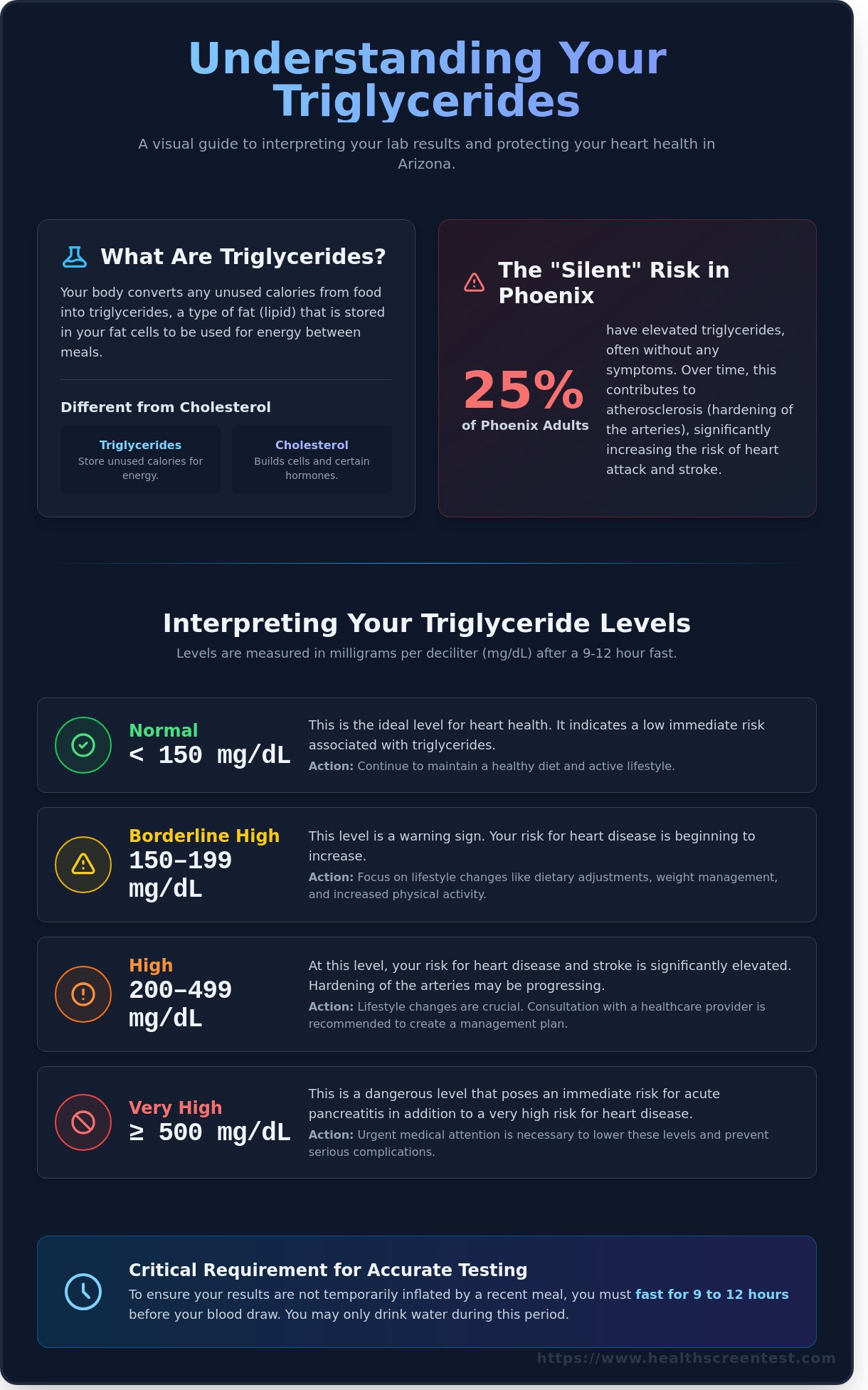
One of the most challenging aspects of high lipids is that they rarely cause physical symptoms. You won’t feel "high" triglycerides like you might feel a fever or a headache. This "silent" nature means many residents in Sun City West and Scottsdale, who are often focused on longevity and active aging, may be at risk without knowing it. Over time, elevated levels contribute to the hardening of the arteries, a process known as atherosclerosis. This condition thickens the artery walls, which drastically increases the likelihood of suffering a stroke or heart attack. Regular diagnostic testing is the only certain way to monitor these biomarkers and ensure your vascular system remains clear and healthy.
Interpreting Your Results: Normal vs. High Triglyceride Levels
Receiving your lab results can feel overwhelming, but understanding these numbers is the first step toward proactive wellness. When you look at your report, you’ll see a measurement in milligrams per deciliter (mg/dL). This number represents the amount of triglycerides circulating in your blood. For the most accurate reading, you must fast for 9 to 12 hours before your blood draw. Consuming food or drink other than water can cause a temporary spike in these fats, leading to results that don’t reflect your baseline health.
The medical community categorizes these levels into four distinct zones. A level below 150 mg/dL is considered normal. If your results fall between 150 and 199 mg/dL, you’re in the borderline high range. Once the number hits 200 to 499 mg/dL, it’s classified as high. Anything 500 mg/dL or above is very high. At these upper levels, the risk of acute issues like pancreatitis increases significantly. When interpreting your triglyceride results, remember that even a "normal" reading requires context. If your HDL (good) cholesterol is low, even a triglyceride level of 140 mg/dL might indicate an underlying metabolic concern.
🔴 Danger Zones:
-
High (200-499 mg/dL): This range indicates a heightened risk for heart disease and requires immediate lifestyle adjustments.
-
Very High (500+ mg/dL): This is a critical marker that demands clinical intervention to prevent severe complications like organ inflammation.
What Your Lipid Panel is Telling You
A standard lipid panel measures several biomarkers to provide a comprehensive view of your cardiovascular health. Beyond the raw numbers, the relationship between these fats matters. Specifically, the triglyceride to HDL ratio serves as a powerful indicator of insulin resistance. A high ratio often suggests that your body’s cells aren’t responding effectively to insulin, which is a precursor to type 2 diabetes. For those living in Gilbert, Chandler, or Mesa, you can order a Lipid Panel with Ratios directly to gain this level of insight without a long wait. This data allows you to move from uncertainty to a clear, actionable plan for your heart health.
Common Causes of Elevated Levels
Several factors contribute to a rise in triglycerides. Primary drivers include obesity and poorly controlled type 2 diabetes, where the body struggles to process fats and sugars efficiently. Chronic kidney disease also interferes with how your body clears these lipids from the bloodstream. Certain medications, such as diuretics or beta-blockers, can inadvertently raise your levels as a side effect. It’s also possible that your genetics play a role. Conditions like familial hypertriglyceridemia mean your body is predisposed to high levels, requiring more frequent monitoring from age 40 and beyond. Whether you’re in Scottsdale, Tempe, or Queen Creek, staying informed about these causes helps you take control of your health through personalized screening and lifestyle choices.
The Arizona Connection: Why Residents in Gilbert and Scottsdale Face Unique Risks
Living in the East Valley means navigating a climate that directly impacts your cardiovascular health in ways residents in cooler states don’t experience. In Phoenix and Gilbert, the thermometer often stays above 110 degrees for 30 or more consecutive days during the summer months. This creates what we call the Summer Sedentary trap. When the heat index reaches dangerous levels, even a short walk in Freestone Park feels impossible. Recent health surveys suggest that physical activity levels for Maricopa County residents drop by as much as 42% between June and September. This seasonal slump isn’t just a matter of comfort; it’s a metabolic risk that can cause triglycerides to climb.
A frequent objection we hear at our clinics in Scottsdale and Mesa is the belief that winter activity compensates for summer stagnation. You might be active on the trails in San Tan Valley or Queen Creek from November to March, but your body requires year-round consistency to manage lipid levels effectively. Metabolic health doesn’t have an off-season. When you stop moving for four months of the year, your body stores excess calories as fat more readily. To stay proactive, utilize local resources like the climate-controlled walking paths at Chandler Fashion Center or the high-end, air-conditioned fitness centers in Tempe and downtown Phoenix. Maintaining movement when the pavement is scorching is a vital part of taking control of your health.
Heat, Hydration, and Metabolic Health
Dehydration is a constant threat in the Sonoran Desert, and it does more than just make you thirsty. It can actually skew your pathology results. When you’re dehydrated, your blood volume decreases, which may cause the concentration of triglycerides and other biomarkers to appear higher than they are in a fully hydrated state. This is particularly concerning because 10.7% of Arizona adults currently live with diagnosed Type 2 diabetes, a condition closely linked to lipid mismanagement. We recommend scheduling your blood work at one of our locations in Paradise Valley or Sun City West during the cooler morning hours, ideally before 9:00 AM. This ensures you’re properly hydrated and provides the most accurate data for your personalized health plan.
Ensuring the quality of your drinking water is another crucial aspect of this proactive approach. Many residents find that using a dedicated home system, like those offered by Tradewinds Water Filtration, helps encourage consistent hydration by removing contaminants and improving taste.
The Impact of Local Dietary Habits
Our Southwest food culture is vibrant, but it’s often heavy on refined carbohydrates and hidden sugars that spike lipid levels. From the large, sugary iced coffees popular in Scottsdale cafes to the oversized flour tortillas that serve as staples in Mesa and Avondale, these high-glycemic choices are major triggers. You don’t have to abandon the flavors of the region to protect your heart. Simple swaps, like choosing corn tortillas over flour or opting for a lettuce wrap at your favorite spot in Goodyear or Buckeye, can make a measurable difference. Learning how to lower triglycerides naturally through these small, local adjustments allows you to enjoy Arizona living while prioritizing your longevity.
"I used to think my hiking trips in San Tan Valley every January were enough to keep me healthy," says Robert, a 52-year-old Gilbert resident. "But my July blood work showed my levels were climbing. Switching to indoor swimming in Chandler and cutting back on the tortillas at my favorite Mesa spot brought my numbers down by 65 points in just three months. It gave me the peace of mind I was looking for."
Whether you’re in Glendale or Paradise Valley, understanding these regional factors is the first step toward a healthier lifestyle. By making informed choices about when you test and how you eat, you’re not just reacting to a lab report; you’re actively designing a life of wellness.
How to Lower Triglycerides Naturally: A Guide for the Phoenix Metro Area
Managing your heart health in the East Valley doesn’t have to feel like a clinical chore. It’s about making sustainable shifts that yield real results. Data from the American Heart Association indicates that losing just 5% to 10% of your body weight can lead to a 20% reduction in triglycerides. This is a powerful starting point for residents in Gilbert, Chandler, or Mesa. You should focus on eliminating simple sugars and fructose, which the liver converts into fat almost immediately. Swapping white bread and refined grains for whole-grain alternatives helps stabilize your blood sugar and lowers the production of these lipids.
Incorporate Omega-3 fatty acids into your weekly routine. These healthy fats, found in walnuts and fatty fish like salmon or mackerel, directly interfere with the liver’s ability to synthesize fats. While enjoying the vibrant dining scenes in Scottsdale or downtown Phoenix, be mindful of alcohol intake. Even moderate drinking can cause a significant spike in lipid levels because alcohol has a potent effect on the liver’s chemical processes. In fact, for some individuals, a single drink can trigger a 15% increase in lipid production. Limiting your intake is one of the fastest ways to see a measurable difference in your next pathology report.
Active Living in the Valley of the Sun
Aim for 150 minutes of moderate-intensity exercise every week. We’re lucky to have incredible outdoor resources here. Try an early morning hike at Camelback Mountain or a sunset walk through the Riparian Preserve in Gilbert. Aerobic exercise stimulates enzymes that move these fats out of your bloodstream and into your muscles for energy, helping your body burn stored triglycerides for fuel.
Smart Swaps for Your Grocery List
Your grocery list is a powerful tool. Visit the Gilbert Farmers Market to find fresh, fiber-rich produce. Fiber is essential because it slows the absorption of fats and sugars. Focus on leafy greens, berries, and legumes available at local Arizona stands. You can find more inspiration and heart-healthy recipes on the Health Screen Test blog to keep your lifestyle changes sustainable and effective.
Taking these steps provides a sense of empowerment over your long-term wellness. Whether you’re in Queen Creek, San Tan Valley, or Sun City West, these lifestyle adjustments form the foundation of proactive health management. Small, consistent choices in your diet and activity levels create a cumulative effect that protects your arteries and supports overall metabolic health. By focusing on these natural methods, you’re not just moving a number on a page; you’re investing in a more vibrant future.
Take the guesswork out of your health journey. If you want to see how these lifestyle changes are impacting your biomarkers, schedule a comprehensive blood panel today to get clear, actionable data.
Fast, Private Triglyceride Testing in Mesa, Tempe, and Beyond
Managing your heart health shouldn’t feel like a second job. For residents in Mesa and Tempe, getting a clear picture of your lipid health is now a streamlined, professional process. Health Screen Test provides a modern alternative to the traditional doctor office experience. You don’t need to spend hours in a clinical waiting room or negotiate with insurance providers just to see your essential health data. We’ve simplified the journey so you can focus on what matters most: your longevity.
The process is designed for maximum efficiency. You start by selecting your tests online from the comfort of your home in Gilbert or Scottsdale. Once ordered, you visit one of our professional partner labs in Chandler or Phoenix. The actual blood draw usually takes less than 15 minutes. Within 24 to 48 hours, your results arrive securely in your private portal. This rapid turnaround allows you to identify high triglycerides early, giving you the chance to make lifestyle adjustments before medical intervention becomes a necessity.
For men over 40 who want a deep dive into their cardiovascular status, the Mens Comprehensive Package is the gold standard. This panel includes a full lipid profile, assessing not just your fats but your overall metabolic health. Taking this step offers a level of peace of mind that guessing simply can’t provide. It’s a proactive lifestyle choice that puts you in the driver’s seat of your own wellness journey.
No Insurance, No Referral, No Problem
Direct-to-consumer lab testing is a game changer for those without insurance or individuals facing high deductibles. You pay a transparent, flat rate upfront with no hidden fees or surprise bills later. Your privacy is our priority; results are delivered only to you through a secure, encrypted platform. Whether you are in Sun City West, San Tan Valley, or Queen Creek, you can access thousands of convenient mobile and brick-and-mortar locations. This accessibility ensures that high-quality diagnostic data is available to everyone, regardless of their insurance status or location in the Valley.
Next Steps After Your Screening
If your results indicate elevated levels, we strongly encourage you to share the report with your primary care physician in Glendale or Paradise Valley. Having hard data makes your consultation more productive and helps your doctor create a targeted plan. Don’t wait for a physical warning sign to take action. Heart disease often progresses silently, making regular screening your best line of defense. Residents in Avondale, Goodyear, and Buckeye can now take charge of their future with just a few clicks. Book your heart health screening in Phoenix today and gain the clarity you deserve.
Key Takeaways:
-
Fast results are delivered securely within 48 hours of your lab visit.
-
No doctor referral or insurance is required for any screening.
-
The Mens Comprehensive Package provides a detailed look at heart and metabolic markers.
-
Proactive testing is available across all major Arizona cities, including Gilbert and Mesa.
Frequently Asked Questions
Do I need to fast before my test?
Yes, for the most accurate measurement of triglycerides, you should fast for 9 to 12 hours before your blood draw. You can still drink water during this time.
Are the labs certified?
All screenings are performed at CLIA-certified laboratories, ensuring the same level of accuracy you would receive at a major hospital or specialist clinic.
"I was worried about my heart health but didn’t want the hassle of a long clinic wait. Health Screen Test was incredibly easy. I went to a lab in Chandler on my lunch break and had my results the next day. It gave me the kickstart I needed to change my diet." – Robert M., 52, Phoenix Resident
Empower Your Heart Health Journey in the Valley
Managing your cardiovascular wellness in the Phoenix Metro area shouldn’t feel like a guessing game. Whether you’re enjoying the active lifestyle in Gilbert or the vibrant dining scene in Scottsdale, understanding your triglycerides is a critical first step in preventing long-term heart issues. Data from the American Heart Association indicates that nearly 25% of adults struggle with elevated levels, making regular monitoring essential for residents over 40. You don’t need a doctor’s referral or insurance to get the clear, clinical answers you deserve.
With over 30 years of preventive screening experience, Health Screen Test offers a seamless way to track your biomarkers. We’ve established convenient, discreet locations across Tempe, Mesa, Chandler, and Queen Creek to ensure professional care is always accessible. Residents in Sun City West, Buckeye, and Goodyear can also benefit from our fast, private testing process that puts you in the driver’s seat of your own health. Taking a proactive step today ensures you’re ready for many more healthy years in the Arizona sun.
Take Control of Your Heart Health – Order Your Lipid Panel Today
Your future self will thank you for making your health a priority right now.
Frequently Asked Questions
Can I drink water before a triglyceride blood test?
Yes, you’re encouraged to drink plain water before your blood draw. While you’ll need to fast from all other food and beverages for 9 to 12 hours, staying hydrated makes the phlebotomy process much easier and more comfortable for the technician. Avoid coffee, tea, or sugar-free drinks, as these can interfere with your results and lead to an inaccurate reading of your triglycerides.
How quickly can triglycerides be lowered with diet and exercise?
You can often see your triglyceride levels drop by 20% to 50% within just 2 to 4 weeks of consistent lifestyle changes. According to the American Heart Association, reducing your intake of simple sugars and adding 30 minutes of brisk walking daily produces rapid results. It’s an empowering way to take control of your cardiovascular health without immediate reliance on heavy medication or complex clinical interventions.
Is 200 mg/dL a dangerously high triglyceride level?
A level of 200 mg/dL is clinically classified as high, which covers the range between 200 and 499 mg/dL. While it isn’t an immediate medical emergency, it does increase your long-term risk for heart disease and stroke. Ideally, Gilbert residents should aim for a healthy level below 150 mg/dL to ensure optimal arterial health and the peace of mind that comes with a clean screening.
What is the difference between triglycerides and ‘bad’ cholesterol (LDL)?
Triglycerides are a type of fat that stores unused calories to provide your body with energy; LDL is a protein that carries cholesterol through your bloodstream. While both are lipids, they serve different functions. High levels of triglycerides can cause the walls of your arteries to thicken, which increases the risk of a heart attack or stroke when combined with high LDL cholesterol levels.
Do high triglycerides cause any physical symptoms like pain?
High triglycerides are typically a silent condition and don’t cause physical pain or obvious symptoms in most patients. Most people in Arizona won’t know their levels are elevated until they receive results from a comprehensive blood panel. However, if levels exceed 500 mg/dL, you might experience acute abdominal pain or skin bumps called xanthomas due to the extreme fat concentration in your blood.
Can stress cause my triglyceride levels to spike?
Yes, chronic stress can cause a measurable increase in your lipid levels. When you’re stressed, your body releases hormones like cortisol and adrenaline that trigger the release of triglycerides into the bloodstream for quick energy. Research indicates that individuals under high psychological stress can see their levels rise by 10% to 15% compared to their baseline, making stress management a key part of your health strategy.
How often should Phoenix residents over 50 get their lipids checked?
Phoenix residents aged 50 and older should ideally have their lipid levels checked every 12 months. While standard guidelines for healthy adults suggest testing every 4 to 6 years, the risk of cardiovascular issues increases significantly after 50. Annual screening provides the data-driven insights needed to make proactive adjustments to your wellness routine, ensuring you stay ahead of potential health concerns before they become serious.
Are there specific foods that lower triglycerides fast?
Eating fatty fish like salmon or mackerel twice a week can lower your levels by up to 25% due to high omega-3 fatty acid content. You should also focus on high-fiber foods like oats and beans, which help clear fats from your system. Avoiding alcohol and refined sugars is equally important, as these substances can cause your levels to jump by 30% within a single 24-hour period.

Article by
Alexander Aquino, RN
With over 35 years of dedicated service within the healthcare industry, I've witnessed firsthand the profound difference early detection can make in saving lives. This experience has ignited my mission to empower individuals to take control of their healthcare before challenges arise.
Throughout my career in both nursing and medicine, I have worked in inpatient hospitals and outpatient clinical settings. I've dedicated myself to one unwavering principle: prevention saves lives. Every day in healthcare reinforces this truth—the earlier we detect potential health issues, the better the outcomes for patients.
Disclaimer
Health Screen Test does not provide medical advice, diagnosis, treatment, or prescription services, nor does it bill insurance. The content presented in this blog is intended solely for educational purposes to help you make informed decisions before purchasing any screening tests. By clicking on an affiliate link, you will be redirected to the respective screening company’s website. Please consult your physician for personalized medical advice. Kindly note that I may receive a small commission from purchases made through affiliate links.