I will show you how to access professional, life-saving health screenings in Mesa and the East Valley without an insurance card or a doctor’s referral.
Table of Contents
Key Takeaways
-
✅ No Insurance or Referral Needed: You can book vital health screenings in Mesa, Gilbert, and across the Phoenix metro area directly, bypassing the need for a doctor’s order or insurance pre-approval.
-
✅ Focus on Prevention: The goal is to identify potential risks like plaque buildup, aneurysms, or irregular heartbeats before they cause a life-altering event like a stroke or heart attack.
-
✅ Affordable & Transparent Pricing: Direct-to-consumer screening packages often cost 50-70% less than the same tests ordered a la carte through traditional hospital systems, with no hidden facility fees.
-
✅ Convenient & Local: Mobile screening events are held in community centers and partner labs throughout the East Valley, making proactive healthcare accessible right in your neighborhood.
Navigating Health Screening Without Insurance in Mesa: Why Proactive Care is for Everyone
Over the years, I’ve spoken with countless people in Arizona who feel that the traditional healthcare system can be a maze, especially if you’re uninsured or have a high-deductible plan. The wait for a doctor’s referral, the uncertainty of costs, and the feeling that you can only get care when you’re already sick—it’s a frustrating cycle.
But I’m here to tell you there’s a different path. It’s a shift from reactive "sick care" to proactive "wellness care." This is where preventive health screening comes in. It’s not about diagnosing a problem you already have; it’s about using advanced technology to look for hidden risks, like cardiovascular disease or stroke potential, so you can address them early.
More and more residents in Mesa, Chandler, and Tempe are embracing this direct-to-consumer (DTC) model. It empowers you to take control of your health on your own terms.
The Barrier of Referrals and Insurance in the East Valley
In the traditional system, getting a preventive ultrasound of your carotid artery often requires a doctor’s order, which may not be given unless you have clear symptoms. Similarly, many high-deductible plans common in the Phoenix area mean that even "insured" care comes with significant out-of-pocket costs. The DTC model removes these barriers, giving you the freedom to order the tests you want, when you want them.
This approach is built on a powerful truth: prevention is the most effective medicine. According to the CDC, as many as 80% of premature heart attacks and strokes are preventable. Waiting for symptoms is a risky strategy; owning your health data is an empowering one.
The Science of Early Detection: Understanding Your Screening Options in Arizona
I want to walk you through the specific tests that provide the most "bang for your buck" in terms of life-saving information. Using hospital-grade diagnostic equipment, mobile screening events bring these powerful tools to convenient locations in Mesa, Scottsdale, and Queen Creek. You get the same quality of care without the hospital bureaucracy.
The two main pillars of a comprehensive screening are vascular imaging and in-depth blood work.
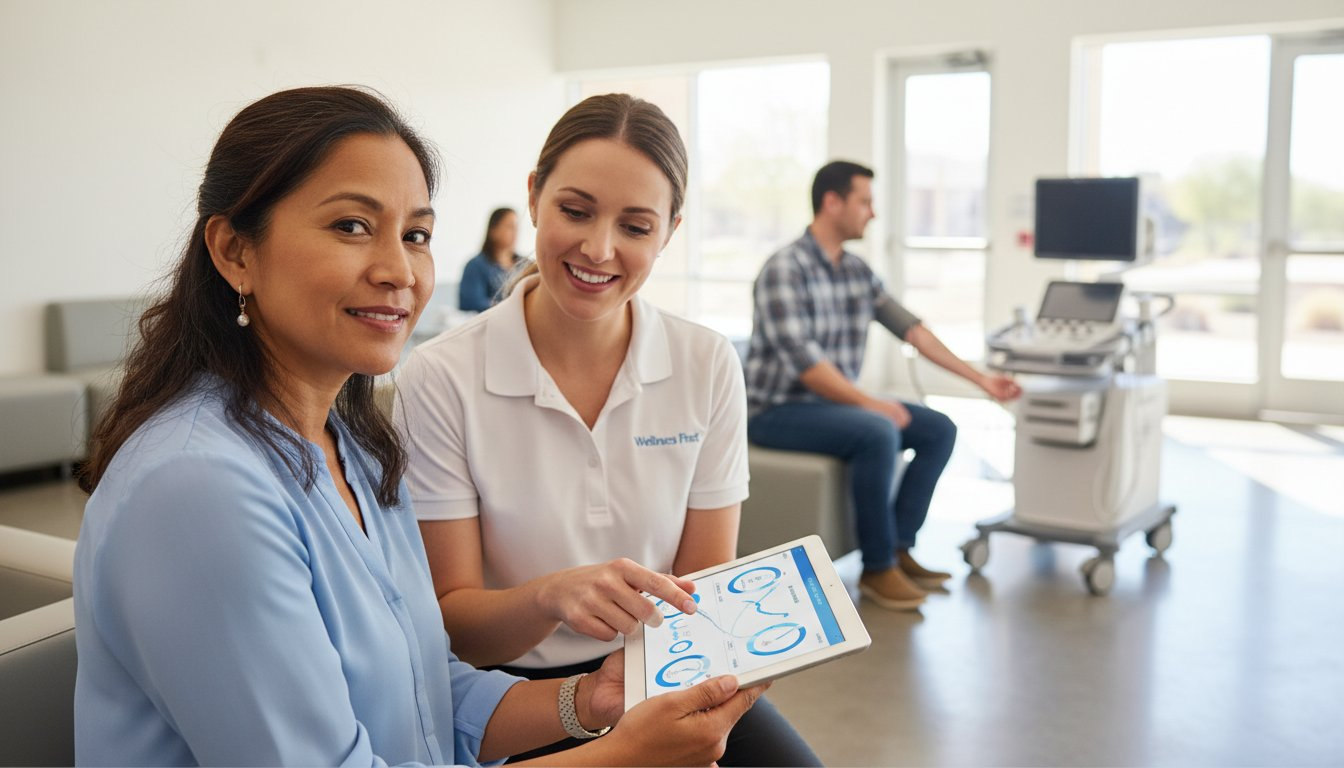
[AI Image: A professional, friendly healthcare setting in Mesa, Arizona, showing a non-invasive ultrasound screening]
Vascular and Heart Screenings for Mesa Residents
These non-invasive tests use ultrasound and EKG technology to get a direct look at your cardiovascular health.
-
Carotid Artery Screening: This is the gold standard for stroke prevention. A simple ultrasound scan of your neck measures plaque buildup in the arteries that supply blood to your brain. Identifying significant blockage early can be life-saving.
-
Abdominal Aortic Aneurysm (AAA) Screening: This test checks for a dangerous bulge in the main artery in your abdomen. A ruptured AAA is a medical emergency, but an early ultrasound can detect it when it’s safely manageable.
-
Atrial Fibrillation (AFib) Screening: A quick 6-lead EKG can detect this common type of irregular heartbeat, which significantly increases the risk of stroke.
Essential Blood Work and Biomarkers
A comprehensive blood panel provides a deep dive into your metabolic health, giving you crucial data points about your risk for chronic disease.
-
Lipid Panels and A1c: These are fundamental for residents in Tempe and Chandler. A lipid panel tracks your cholesterol levels (HDL, LDL), while an A1c test provides a 3-month average of your blood sugar, giving a clear picture of your diabetes risk.
-
TSH and CMP: A Thyroid Stimulating Hormone (TSH) test checks your thyroid function, which regulates your metabolism. A Comprehensive Metabolic Panel (CMP) assesses your kidney and liver function, electrolytes, and more.
-
Complete Panels: For a full overview, I often recommend the Advanced Baseline Biomarkers Panel. It combines these key tests to give you a complete, actionable picture of your current health status.
Cost-Effective Preventive Care: Comparing Private Screenings to Traditional Costs
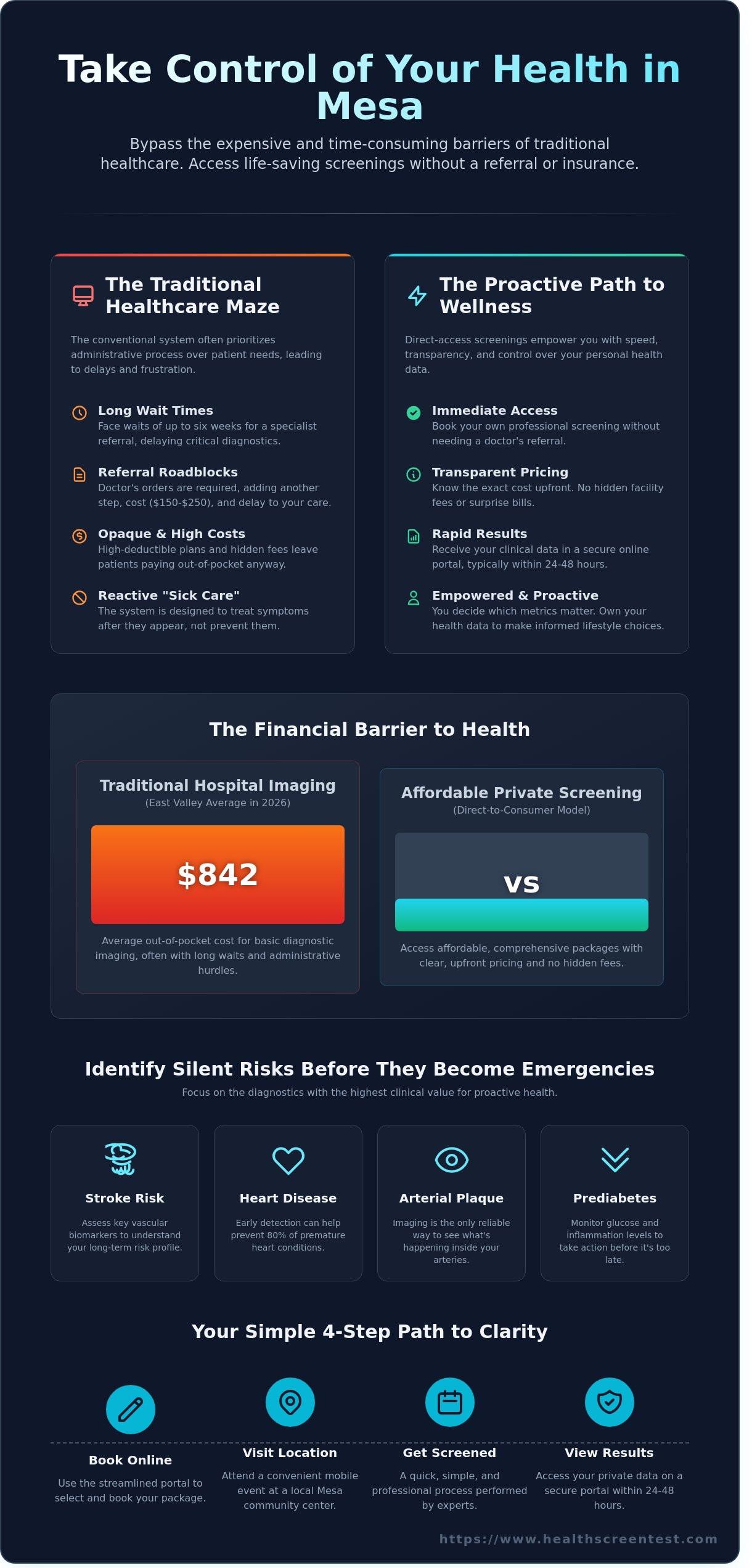
Now, let’s talk numbers. The number one objection I hear is, "Will this be too expensive without insurance?" The reality is that proactive, private screening is often far more affordable than going through a hospital, especially when you’re paying out of pocket.
Traditional care often includes "hidden costs"—facility fees, co-pays for specialist consultations, and inflated a la carte pricing for each test. Direct screening offers transparent, bundled pricing. Think about the return on investment (ROI): a screening package costing a few hundred dollars versus a potential $50,000 emergency room bill for a stroke.
Understanding the Pricing Landscape in Mesa
Here’s a general comparison to illustrate the value:
| Service | Typical Out-of-Pocket Hospital Cost (per test) | Average Direct Screening Package (includes multiple tests) |
|---|---|---|
| Carotid Artery Ultrasound | $300 – $700+ | multirow{3}{*}{$150 – $250} |
| AAA Ultrasound | $250 – $600+ | |
| AFib Screening (EKG) | $100 – $300+ | |
| Total A La Carte | $650 – $1,600+ | Significant Savings |
By bundling these essential tests, private screening providers can offer savings of 50-70%. It makes comprehensive wellness checks accessible to everyone in our community, from Goodyear to Paradise Valley.
Real Testimonials: Mesa Residents Taking Control
We regularly hear stories that reinforce the value of this approach. One gentleman from Gilbert, a retired teacher, decided to get a screening on a whim. He felt perfectly fine but discovered he had a significant 75% blockage in his carotid artery. His results allowed him to work with his doctor on a treatment plan that very likely prevented a major stroke.
This is the power of early detection. It’s not just about finding problems; it’s about the profound emotional relief of getting a clean bill of health without the financial stress. As cited by numerous health organizations, the cost-effectiveness of early detection and prevention is well-established, saving both lives and money in the long run.
What to Expect at Your Mesa Health Screening: A Step-by-Step Walkthrough
I know that any kind of clinical test can feel intimidating, so I want to give you a clear, step-by-step guide to what happens. The entire process is designed to be simple, professional, and reassuring.
Preparing for Your Appointment
-
Fasting: For screenings that include blood work for cholesterol and blood sugar, a 12-hour fast is typically required. This means nothing to eat or drink except water.
-
Hydration: Be sure to drink plenty of water before your appointment. Being well-hydrated makes the blood draw process much smoother.
-
What to Bring: All you’ll need is your confirmation information and a photo ID. The events are conveniently located in community centers and partner labs in places like Sun City West, Avondale, and Mesa.
The Screening Experience and Results
The video below from Life Line Screening, one of our trusted partners, gives you a great visual of what the experience is like.
-
Duration: A typical package, like the Primary Stroke & Cardiovascular Disease Package, usually takes under 90 minutes from check-in to completion.
-
The Environment: The technicians are highly trained professionals who create a clinical yet comforting atmosphere. The ultrasounds are non-invasive and painless. The blood draw is quick and efficient.
-
Your Results: You will receive your results in a secure, easy-to-read digital format, typically within a few weeks. This report gives you the data you need to have informed conversations with your doctor.
Taking Control: How to Book Your Comprehensive Screening Package Today
You don’t need to wait for a symptom or a doctor’s permission to check on your health. Taking a proactive step today is the best investment you can make in your future. The process is simple: use an online portal to find a screening event near you, choose the package that fits your needs, and book your appointment.
Finding a Location Near You
With thousands of mobile partner locations, finding a convenient spot is easy. You can search by zip code to see upcoming events in Mesa, Gilbert, Chandler, Scottsdale, and other nearby cities.
Next Steps After Your Results
Once you have your report, you are in the driver’s seat.
-
Share Your Report: If any results are out of the normal range, you can easily share the report with a local Arizona physician for follow-up.
-
Make Lifestyle Changes: Use your data to motivate positive changes in your diet and exercise habits.
-
Gain Peace of Mind: Knowing your numbers provides invaluable peace of mind and a clear baseline for your health moving forward.
Frequently Asked Questions
How much does a health screening cost without insurance in Mesa?
Costs vary by package, but comprehensive vascular and blood work packages typically range from $150 to $250, offering significant savings compared to paying for each test individually at a hospital.
Do I need a doctor’s referral to get blood work done in Arizona?
No. With direct-to-consumer services like Health Screen Test, you can order your own blood work and screening packages without a referral from a physician.
Are these screenings as accurate as those done in a hospital?
Yes. The screenings use the same hospital-grade technology and are performed by highly trained healthcare professionals. The results are reviewed by board-certified physicians.
Where can I find mobile health screening events in the East Valley?
Events are held regularly in community centers, churches, and partner labs across the East Valley, including Mesa, Gilbert, Chandler, Tempe, and Scottsdale. You can find a location by searching with your zip code.
What is included in the Primary Stroke & Cardiovascular Disease Package?
This popular package typically includes four key screenings: Carotid Artery (Plaque), Peripheral Arterial Disease (PAD), Abdominal Aortic Aneurysm (AAA), and Atrial Fibrillation (AFib).
How should I prepare for my vascular screening appointment?
For vascular-only screenings, no special preparation is needed. If your package includes blood work, you will likely need to fast for 12 hours beforehand. Wear comfortable, loose-fitting clothing.
Can I use my HSA or FSA to pay for these health screenings?
In many cases, yes. Health Savings Accounts (HSA) and Flexible Spending Accounts (FSA) can often be used to pay for preventive health screenings. It’s best to confirm with your plan administrator.
What happens if my screening results show an abnormality?
Your results are reviewed by a board-certified physician. If a significant issue is detected, you will be notified, and it is strongly recommended that you share the detailed report with your primary care doctor for follow-up and potential treatment.
Related Posts
-
The Ultimate Guide to Understanding Your Cholesterol Levels
-
5 Warning Signs of a Stroke You Can’t Afford to Ignore
-
How Blood Pressure and Cardiovascular Health are Linked