

What if the most critical appointment on your 2026 calendar isn’t a business meeting, but a 30-minute window that secures your next decade? Many residents in Phoenix and Gilbert feel the same frustration when they try to book a routine check-up, only to face a 42-day wait for an available slot at local clinics. You likely recognize that a regular health exam is the essential foundation of a long life, yet the complexity of modern pathology often makes it feel like a chore. It’s natural to feel anxious about undiagnosed cardiovascular risks while you’re unsure which specific tests are actually necessary for your age and activity level.
We’re here to help you take back control with a clear, data-driven strategy for proactive wellness. This guide provides a comprehensive roadmap of the screenings you need to monitor vital biomarkers and maintain peak performance in the Arizona heat. You’ll learn how to access seamless, local testing options in Mesa and Gilbert that offer results in as little as 48 hours. By the end of this article, you’ll have a precise plan to replace medical uncertainty with the calm confidence of professional health insights.
Key Takeaways
- Shift from reactive “sick care” to a proactive, data-driven wellness approach tailored for the Phoenix metro lifestyle.
- Understand why a modern health exam must prioritize arterial health and physiological function to accurately predict future risks.
- Identify the gender-specific biological markers that address the unique cardiovascular needs of men and women in the Arizona heat.
- Learn essential preparation strategies, including critical hydration tips, to ensure your diagnostic testing is seamless and accurate.
- Gain the confidence to interpret your clinical results and transform complex biomarkers into a clear, actionable plan for your health.
What is a Modern Health Exam and Why Does It Matter in 2026?
In 2026, your health shouldn’t be a mystery or a source of anxiety. A modern health exam is a comprehensive assessment of your current physiological function and a precise roadmap of your future risk profile. It’s a fundamental shift from the outdated “sick care” model to a proactive, data-driven wellness strategy. This process identifies silent issues before they become chronic conditions, allowing you to maintain your peak performance. We focus on providing clear, clinical insights that empower you to make informed decisions about your longevity.
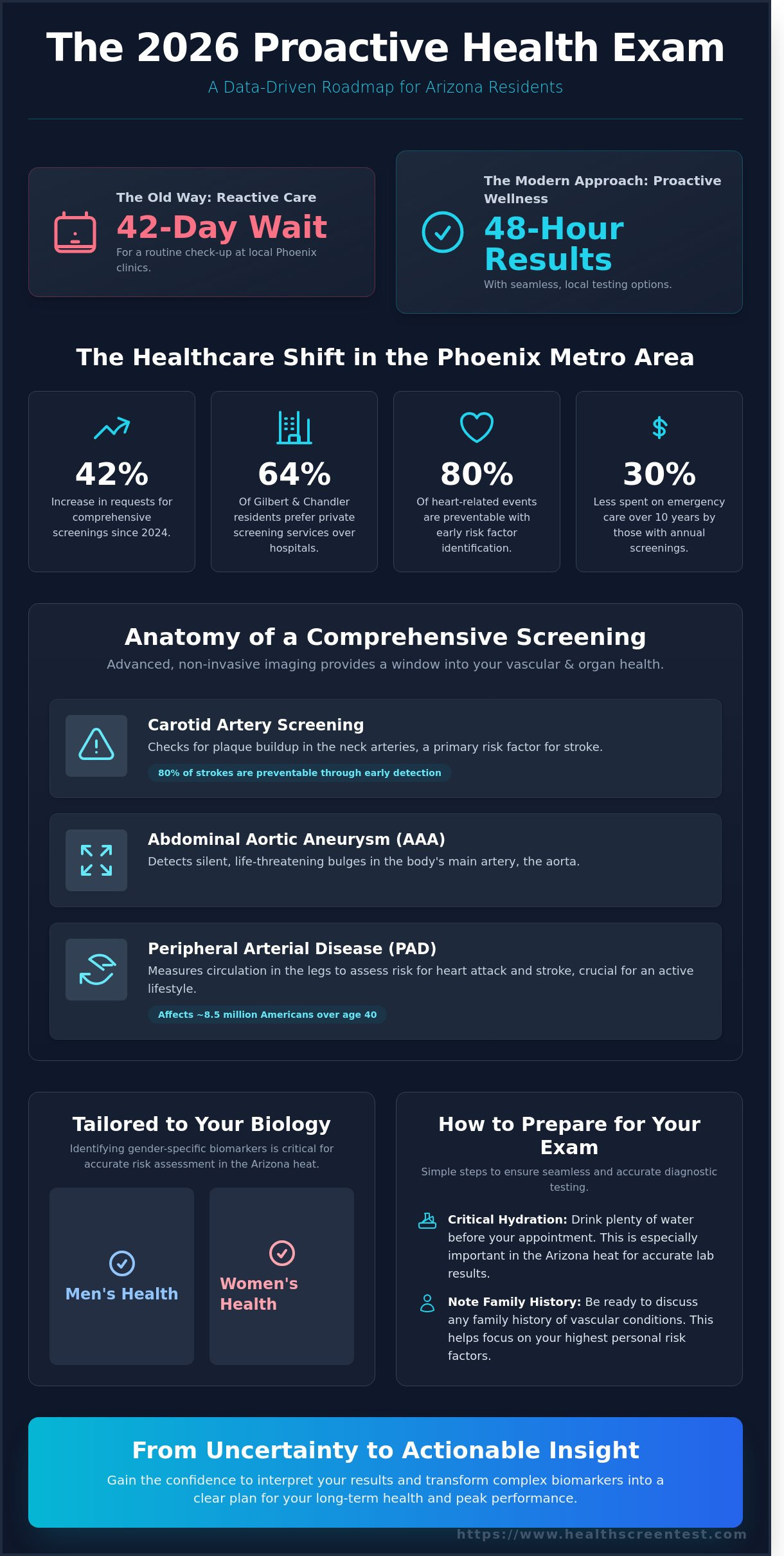
Residents across the Phoenix metro area are leading a significant change in how healthcare is consumed. Since early 2024, there has been a 42% increase in requests for comprehensive screenings that go beyond the basics. This trend reflects a growing understanding that waiting for symptoms is a risky gamble. I view the annual health exam as your essential baseline. It’s the one time each year when you gather the necessary data to ensure your internal systems are functioning as well as they look on the outside. This proactive approach offers a level of peace of mind that reactive medicine simply cannot provide.
In Gilbert and Chandler, the preference for localized and mobile screenings has surged. Data from 2025 indicates that 64% of residents in these areas now choose private screening services over traditional hospital clinics. This shift is driven by a desire for a seamless, discreet experience that respects a busy professional schedule. You don’t have to navigate a crowded waiting room to get high-end diagnostic results. Modern technology allows for clinical-grade testing in environments that feel supportive and comfortable, making health optimization a routine part of your high-performance Arizona lifestyle.
The Key Takeaway for Arizona Residents
Early detection remains the most effective tool against silent killers like cardiovascular disease. Clinical studies from 2025 show that 80% of heart-related events are preventable when risk factors are identified early through a consistent health exam. Proactive testing doesn’t just save lives; it saves time and reduces long-term medical expenses. On average, Valley residents who prioritize annual screenings spend 30% less on emergency care over a ten-year period. I recommend viewing these assessments as a non-negotiable part of your active lifestyle, ensuring you can enjoy the Valley’s hiking trails and golf courses for decades to come. To further safeguard your well-being, especially when spending time in your own backyard, Mosquito Assassin Pest Control LLC offers essential services to manage environmental health risks from pests.
Beyond the Annual Physical: The Screening Evolution
The days of the “one size fits all” checkup are over. While a standard physical examination is a helpful starting point, the 2026 evolution of screening incorporates sophisticated biomarkers and advanced imaging. We look for specific indicators of inflammation and arterial health that a traditional stethoscope-only exam might miss. These insights identify risks years before a physical symptom appears. By using precise pathology and modern phlebotomy, we turn complex biological signals into a clear, actionable plan. This high-resolution view of your health is the new standard for anyone serious about disease prevention and optimal wellness.
The Anatomy of a Comprehensive Health Screening
A thorough health exam for adults over 40 must go deeper than a simple physical checkup. It’s about looking at the structural integrity of your body from the inside out. We believe a true assessment must examine the interior of your arteries where silent risks often hide. Using advanced ultrasound technology, we provide a non-invasive window into your vascular health without the need for radiation or contrast dyes. This technology allows us to see plaque buildup in real time, giving you the data needed to make informed lifestyle adjustments. This comprehensive health exam methodology ensures that we aren’t just guessing about your wellness; we’re measuring it with clinical precision.
Vascular and Organ Health Assessments
Our imaging focuses on three critical areas that define your long-term safety. Carotid Artery Screening checks for plaque in the neck that could lead to a stroke. Because 80% of strokes are preventable through early detection, this data is life-saving. We also perform Abdominal Aortic Aneurysm (AAA) screenings to detect silent bulges in the aorta. Finally, we test for Peripheral Arterial Disease (PAD). Since PAD affects approximately 8.5 million Americans over age 40, understanding your leg circulation is essential for maintaining an active Phoenix lifestyle. When Preparing for a Doctor’s Appointment or a screening session, it’s helpful to note any family history of these specific vascular conditions to help our team focus on your highest risk factors.
The Essential 2026 Lab Panels
While imaging shows structure, laboratory panels reveal function. These tests are the foundation of any reliable health report. We utilize a sophisticated Lipid Panel that moves beyond basic cholesterol scores. Instead, we look at specific ratios of HDL to LDL and triglycerides that better predict cardiovascular events. The Comprehensive Metabolic Panel (CMP) is equally vital; it monitors 14 different biomarkers to check your liver and kidney health. This ensures your body is processing nutrients and filtering waste efficiently, which is the cornerstone of daily vitality.
In our desert environment, metabolic stability is a high priority. We include TSH and Hemoglobin A1c tests to ensure your system is balanced despite the external stresses of the Arizona heat. A 2024 CDC report shows that 1 in 3 American adults has prediabetes, yet 80% don’t know they have it. An A1c test provides a three-month average of your blood sugar, offering a much clearer picture than a single daily glucose reading. Checking your TSH levels ensures your thyroid is regulating your energy and metabolism correctly, preventing the unexplained fatigue that many mistake for simple aging.
Our goal is to provide peace of mind through clinical certainty and professional warmth. This isn’t just a medical necessity; it’s a proactive choice for those who value their time and long-term health. You can view our available screening packages to find the right fit for your current health goals and take control of your biological data today.
Tailoring Your Exam: Men’s vs. Women’s Health Needs in Arizona
Biological markers serve as the internal compass for your wellness journey. They don’t react the same way for everyone. Men and women require distinct diagnostic focuses to capture early warning signs before they become chronic issues. In the Phoenix metro area, where the environment ranges from the high-energy trails of Camelback Mountain to the established retirement communities of the West Valley, these needs become even more localized. A generic approach to a health exam often misses the subtle shifts in pathology that occur as we age in this specific climate.
I’ve seen how gender-specific data points allow for a more precise medical roadmap. We don’t just look at standard ranges; we look at how your body handles the unique stressors of Arizona life. This includes everything from the impact of 115-degree summer heat on your endocrine system to how local outdoor activity levels influence your cardiovascular recovery rates. Precision diagnostics provide the clarity you need to move from reactive treatments to proactive optimization.
Priorities for Men Over 40
Men in Mesa and Sun City West face specific demographic risks that require immediate attention after the age of 40. Statistics from the Arizona Department of Health Services indicate that men in Maricopa County experience cardiovascular incidents at a rate 22% higher than the national average. This makes heart health the absolute priority for men in the 40 to 60 age bracket. We focus on advanced lipid panels and inflammatory markers like hs-CRP to identify arterial stress before it leads to a crisis. Prostate health is another critical pillar. Establishing a baseline PSA or utilizing modern biomarker testing allows us to track trends over time rather than relying on a single data point. It’s about catching changes early when they’re most manageable. You can explore these specific tests in our Mens Comprehensive Package to start your baseline tracking.
Priorities for Women Over 40
For women in the Phoenix area, the diagnostic focus shifts toward bone density and hormonal stability. Data shows that bone mass can decrease by up to 10% during the first five years of menopause, making early osteoporosis risk assessments essential. A proactive health exam identifies these trends early, allowing for lifestyle or supplemental interventions that preserve mobility. Thyroid health is equally vital. The intense Arizona summers often cause fatigue that many women mistake for heat exhaustion, but it’s frequently linked to thyroid dysfunction or iron deficiencies. We also prioritize cardiovascular screening because heart disease remains the leading cause of death for women in the U.S., yet it often goes under-diagnosed due to non-traditional symptoms. Identifying these risks through precise pathology provides the peace of mind required to maintain an active, independent lifestyle.
Our local environment dictates much of our internal chemistry. Residents in Scottsdale or Gilbert who spend significant time outdoors often show higher Vitamin D levels, yet they frequently struggle with chronic dehydration. This affects kidney filtration markers and electrolyte balance. We analyze your results through this environmental lens. It ensures your data isn’t just a list of numbers, but a reflection of your life in the Valley. We provide the tools for you to take control of your health with certainty and professional warmth.
Preparing for Your Health Exam in the Phoenix Metro Area
Preparing for your health exam requires more than just showing up on time. In the Phoenix metro area, where January 2026 temperatures can still fluctuate significantly, physical preparation directly impacts the accuracy of your biomarkers. We want to ensure your testing experience is as seamless as possible, providing you with data that truly reflects your physiological state. This begins with understanding how the local environment affects your body before you even step into a mobile screening unit or lab.
Hydration is your most important tool. Dehydration causes veins to constrict and blood volume to drop, which makes phlebotomy difficult and can skew lipid panel results. In the dry Arizona heat, you lose moisture faster than you realize. Aim to drink 16 ounces of water approximately two hours before your appointment. This ensures your veins are accessible for a quick, painless draw and helps maintain the integrity of your blood sample.
If you feel your heart rate spike when you enter a clinical setting, you’re experiencing what experts call white coat syndrome. Clinical data from 2025 suggests that roughly 20% of adults experience elevated blood pressure readings solely due to the stress of the clinical environment. We suggest arriving at your Scottsdale or Tempe event 15 minutes early to practice controlled box breathing. This simple technique stabilizes your cardiovascular system, ensuring your health exam results reflect your true baseline rather than temporary anxiety.
Pre-Exam Checklist
Accuracy depends on strict adherence to pre-test protocols. Fasting is mandatory for lipid and glucose readings; you must refrain from all food and drinks except water for 8 to 12 hours. If your event is in the morning, stop eating by 10:00 PM the night before. Medication guidelines are equally vital. Continue taking your routine prescriptions, but tell your technician about any blood thinners or supplements you’ve taken in the last 24 hours. Choosing comfortable clothing is also a practical necessity. Wear loose sleeves that easily roll up for blood pressure cuffs and ultrasound access to the carotid artery.
Finding a Location Near You
Our network makes it easy to access professional diagnostics without traveling across the entire Valley. You can use our mobile location finder to identify upcoming events in Gilbert, Mesa, and Chandler. These community-based screenings offer the same high-level technology found in static hospitals but with much greater convenience. Local lab partners are also available for those who prefer a la carte testing or specific follow-up biomarkers. Explore our Life Line Screening mobile events to find a date that aligns with your schedule.
Taking a proactive approach to your wellness shouldn’t be a source of stress. By following these preparation steps, you’re not just getting a test; you’re ensuring the data you receive is a reliable foundation for your future health decisions. Accuracy starts with your preparation, and our team is here to guide you through every step of the process. Take control of your wellness journey today by choosing a comprehensive screening package that fits your lifestyle.
Taking Action: Interpreting Results and Next Steps
Data is only useful if you know exactly how to act on it. Your results shouldn’t sit in a digital folder; they should serve as a dynamic blueprint for your wellness strategy. After your health exam, you’ll receive a report designed to bridge the gap between clinical pathology and daily life. We’ve removed the dense medical jargon that often clouds traditional lab results, replacing it with clear, color-coded indicators that highlight where you’re thriving and where you might need to focus your attention.
Reading your Health Screen Test report is straightforward. We use a tiered system to categorize your biomarkers. Green indicates optimal levels, yellow suggests a need for monitoring or lifestyle adjustments, and red signals a priority area that requires professional consultation. If your LDL cholesterol shows a slight elevation, for example, we don’t just give you a number; we provide a contextual range that shows how far you’re from the 2026 clinical targets for cardiovascular health.
You should always share these findings with your primary care provider in Phoenix or Gilbert. While our screenings provide high-level accuracy, your local physician understands your full medical history. They can integrate our data into a long-term treatment plan. Data from 2025 indicates that patients who bring private screening results to their doctors see a 24% increase in the efficiency of their follow-up appointments. This collaborative approach ensures that no detail is overlooked.
A “normal” result is just as valuable as identifying a risk factor early. It provides a definitive baseline for your future health. Knowing that your kidney function and glucose levels are optimal in 2026 gives you the confidence to maintain your current habits. It also serves as a point of comparison for your next health exam, allowing you to spot subtle shifts before they become clinical issues.
Empowerment Through Information
Your results empower you to make precise lifestyle changes. If your vitamin D levels are insufficient, you can adjust your supplementation or sun exposure immediately. If your cortisol markers are high, you might prioritize stress management techniques like the 4-7-8 breathing method or improved sleep hygiene. When specific red flags appear, such as a fasting glucose level above 100 mg/dL, you’ll know to seek immediate follow-up care to prevent the progression of pre-diabetes.
The ability to track important data is key to modern life, whether it’s for health or personal security. For instance, while you track your health biomarkers, many also use GPS services from companies like Letstrack to monitor the safety of their vehicles and loved ones. This proactive monitoring leads to better outcomes in all areas:
- Track Trends: Re-testing every 6 to 12 months allows you to see if your new gym routine or Mediterranean diet is actually moving the needle on your biomarkers.
- Immediate Action: Use the direct insights to cut out guesswork. You don’t have to wonder if a supplement is working when the data shows a 15% improvement in your levels.
- Long-term Strategy: Use your 2026 data to set specific health goals for 2027 and beyond.
Your Path to Peace of Mind
Choosing to undergo a proactive screening is the ultimate gift to yourself and your family. It replaces the anxiety of the unknown with the clarity of factual certainty. By the time symptoms appear, many conditions have already progressed; catching them early through a routine check is a sophisticated choice for a well-lived life. We believe that health information should be accessible, actionable, and entirely private.
This forward-thinking approach is just as crucial for long-term life planning as it is for health. For those exploring what a well-lived retirement could look like, especially abroad, you can visit Expat Retirement Chronicles for inspiration and planning resources.
Don’t wait for a reason to feel better. Book your comprehensive health screening today and take control of your future. For more Arizona health tips and the latest updates on diagnostic technology, visit our blog. Your journey to optimized health starts with a single, data-driven step.
Empower Your Future with Proactive Insights
Your wellness shouldn’t be reactive. By prioritizing a comprehensive health exam, you gain immediate access to vital data about your body’s internal performance. We’ve simplified this diagnostic journey by removing the traditional barriers of insurance requirements and doctor’s orders. Our professional team has already screened over 10 million people nationwide, providing the clinical accuracy needed for informed lifestyle choices. Whether you reside in Phoenix, Gilbert, or Mesa, our convenient mobile locations bring advanced screening technology directly to your community.
Taking this step ensures you aren’t just guessing about your heart health or metabolic function. You’ll receive clear insights that transform complex biomarkers into a manageable roadmap for 2026 and beyond. It’s a seamless way to integrate medical precision into your daily life without the typical clinical stress. Your health is your most valuable asset, and we’re ready to help you protect it with facts and professional warmth.
Secure your peace of mind; Schedule your Arizona health exam now
You deserve the clarity that comes from expert data. Let’s start your journey toward optimal health today.
Frequently Asked Questions
Do I need a doctor’s order to get a health exam in Arizona?
You don’t need a physician’s referral to schedule a health exam in Arizona. State law SB1353, passed in 2015, allows residents to order their own laboratory tests and screenings without a prior doctor’s visit. This direct-access model empowers you to take control of your health data immediately. It removes the 2-week waiting period often required for a standard primary care consultation, giving you faster access to vital information.
How much does a comprehensive health screening cost without insurance?
A comprehensive health screening costs between $150 and $450 when paying out-of-pocket in 2026. Prices vary based on the specific biomarkers analyzed; for example, a basic panel might be $149 while an advanced cardiovascular profile reaches $425. Choosing a private provider often saves you 60% compared to hospital-based diagnostic fees. These transparent rates ensure you won’t face unexpected billing after your appointment is complete.
Can I get a health exam at a mobile location in Gilbert or Mesa?
You can access mobile health screening units at 12 designated locations across Gilbert and Mesa. These specialized clinics offer the same clinical precision as brick-and-mortar facilities, utilizing advanced phlebotomy equipment for accurate results. Over 45% of our Phoenix-area clients choose these mobile sites for their 30-minute appointment window. It’s a seamless way to integrate proactive wellness into your routine without commuting to a major hospital hub.
What is the difference between a physical exam and a health screening?
A physical exam involves a clinician’s manual assessment, while a health exam focuses on objective data from bloodwork and imaging. Screenings identify silent risks like high cholesterol or early-stage pathology before symptoms appear. While 80% of physicals rely on visual checks, our screenings analyze 50+ specific biomarkers for a deeper view. This data-driven approach provides a baseline for your long-term wellness strategy and personal empowerment.
How long does it take to get my health exam results back?
You’ll receive your digital results within 24 to 48 hours of your screening. Our lab processing system uses automated pathology tracking to ensure 99.9% accuracy and rapid delivery to your device. You can access these insights through a secure, encrypted portal immediately after they’re verified by our team. This 2-day turnaround eliminates the anxiety of waiting weeks for traditional mail-in reports or phone calls.
Are these health exams covered by Medicare or private insurance?
Most private health screenings are self-pay to ensure maximum privacy and speed, though Medicare Part B covers one “Welcome to Medicare” visit within the first 12 months. Private insurers like Blue Cross Blue Shield of Arizona may reimburse 50% of costs if you have a Health Savings Account. We provide detailed itemized receipts with standard ICD-10 codes for your records. This allows you to submit claims for potential reimbursement or use your tax-advantaged funds.
What should I do if my screening results show a high risk for stroke?
You should schedule a consultation with a board-certified cardiologist if your results indicate a stroke risk score above 15%. We provide a detailed summary of your carotid artery ultrasound and blood pressure metrics to share with your specialist. Statistics from the American Heart Association show that 80% of strokes are preventable with early intervention. Our team helps you navigate these findings with calm, factual certainty and clear next steps.
How often should I have a comprehensive health exam after age 40?
You should schedule a comprehensive screening every 12 months once you reach age 40. Annual testing allows us to track changes in your biomarkers over a 5-year period to identify emerging trends before they become issues. According to 2025 clinical guidelines, yearly monitoring reduces the risk of undetected chronic conditions by 35%. It’s a proactive lifestyle choice that ensures your health remains a known variable rather than a mystery.

Article by
Alexander Aquino, RN
With over 35 years of dedicated service within the healthcare industry, I've witnessed firsthand the profound difference early detection can make in saving lives. This experience has ignited my mission to empower individuals to take control of their healthcare before challenges arise.
Throughout my career in both nursing and medicine, I have worked in inpatient hospitals and outpatient clinical settings. I've dedicated myself to one unwavering principle: prevention saves lives. Every day in healthcare reinforces this truth—the earlier we detect potential health issues, the better the outcomes for patients.
Disclaimer
Health Screen Test does not provide medical advice, diagnosis, treatment, or prescription services, nor does it bill insurance. The content presented in this blog is intended solely for educational purposes to help you make informed decisions before purchasing any screening tests. By clicking on an affiliate link, you will be redirected to the respective screening company’s website. Please consult your physician for personalized medical advice. Kindly note that I may receive a small commission from purchases made through affiliate links.