


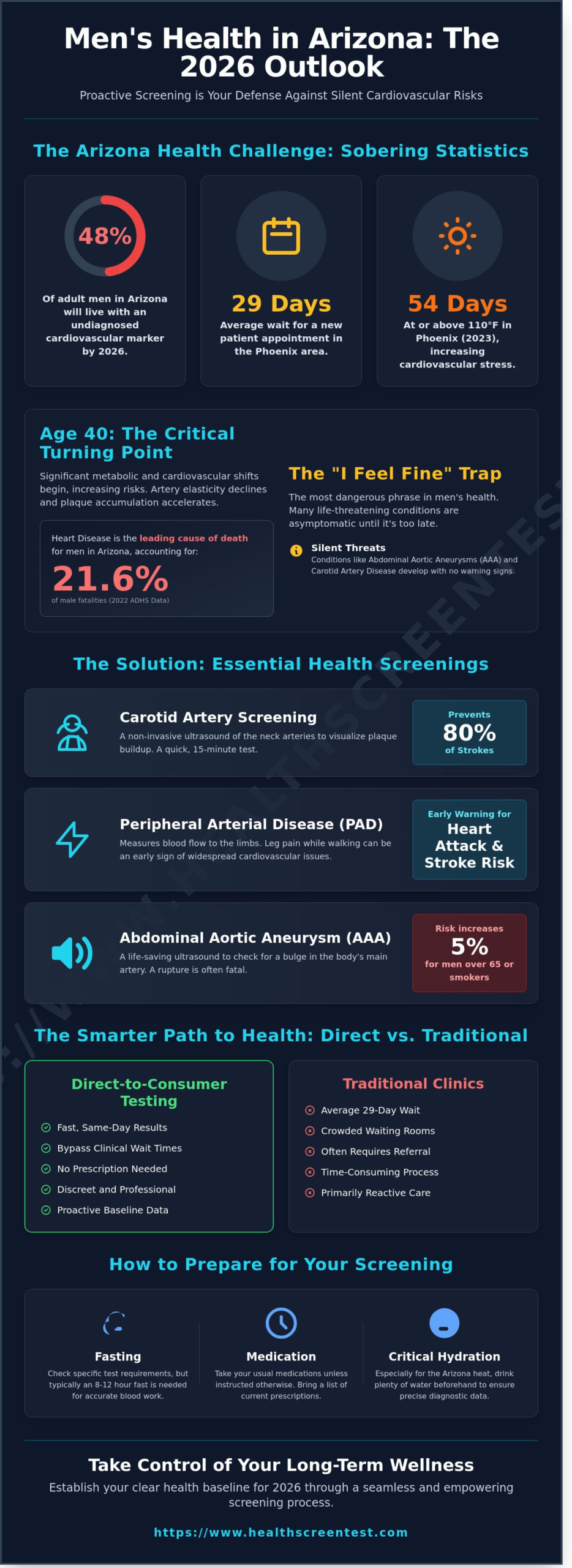
Did you know that by 2026, nearly 48% of adult men in Arizona will live with an undiagnosed cardiovascular marker that could lead to a major health event? It’s a sobering reality, especially when you consider that the average wait time for a new patient appointment in the Phoenix area has climbed to 29 days as of late 2025. Prioritizing mens health shouldn’t feel like a logistical marathon or a financial burden. You likely already feel that the traditional healthcare system is too slow and often too expensive for the proactive care you actually need to stay at your peak.
I’ll show you how to take control of your health with the most essential screenings available right here in the Phoenix Metro area, ensuring you stay ahead of silent risks like stroke or heart disease. This guide provides a clear path to fast, discreet results through advanced diagnostic tools. We’ll examine the specific biomarkers and pathology tests that offer peace of mind and identify the most convenient local testing options in Gilbert and Mesa so you can bypass the crowded waiting room and get back to your life.
Key Takeaways
- Discover how to proactively manage internal biomarkers to mitigate the unique cardiovascular stressors associated with the Phoenix and Mesa climate.
- Explore the essential screenings included in a comprehensive mens health package that identify silent risks like stroke and heart disease before symptoms appear.
- Learn how to bypass lengthy clinical wait times by accessing direct-to-consumer testing for fast, discreet, and professional results without a prescription.
- Follow a step-by-step preparation guide, including critical hydration techniques for the Arizona heat, to ensure your diagnostic data is precise and actionable.
- Take control of your long-term wellness by establishing a clear health baseline for 2026 through a seamless and empowering screening process.
Table of Contents
- The State of Mens Health in Arizona: Beyond the Basics
- Essential Health Screenings Every Arizona Man Needs
- Direct-to-Consumer Testing vs. Traditional Clinics in Phoenix
- How to Prepare for Your Health Screening in Gilbert or Mesa
- Taking Charge: Booking Your Mens Health Package Today
The State of Mens Health in Arizona: Beyond the Basics
Mens health in 2026 has evolved into a high-precision discipline centered on the proactive management of internal biomarkers. It’s no longer enough to simply wait for a physical symptom to appear before seeking medical advice. Instead, modern wellness relies on a data-driven approach that identifies physiological shifts before they manifest as chronic illness. For those seeking a comprehensive overview of men’s health, it’s clear that the intersection of biology and environment is where the most significant risks reside.
I have seen how localized screenings change lives in Gilbert and Chandler. When men take ownership of their data, they move from a state of uncertainty to a position of clinical control. This transition is vital in our local environment. Arizona’s climate presents unique physiological hurdles that men in cooler regions don’t face. In 2023, Phoenix recorded 54 days with temperatures at or above 110 degrees. This level of heat leads to chronic dehydration, which increases blood viscosity and places immense stress on the cardiovascular system. Without regular monitoring, this environmental strain can accelerate underlying issues that might otherwise remain dormant.
Key Takeaway: Early detection isn’t just a medical preference; it’s the only true defense against “silent killers.” Identifying a biomarker trend early provides a window for intervention that doesn’t exist once a major cardiac or metabolic event occurs.
Why 40 is the Critical Turning Point for Phoenix Men
Once a man reaches age 40, his body undergoes significant metabolic and cardiovascular shifts. In Arizona, heart disease remains the leading cause of death, accounting for 21.6% of male fatalities according to 2022 ADHS data. After 40, the elasticity of the arteries begins to decline, and the risk of plaque accumulation increases. Establishing a baseline through comprehensive screening allows us to track these changes accurately. It’s the difference between guessing and knowing your actual vascular age.
The “I Feel Fine” Trap in Preventive Care
The most dangerous phrase in mens health is “I feel fine.” Clinical data shows that many life-threatening conditions are entirely asymptomatic until they reach a critical stage. Abdominal Aortic Aneurysms (AAA) and Carotid Artery Disease often provide no warning signs while they develop. Our mobile screenings in Sun City West and Scottsdale act as a safety net for the community. We use advanced imaging to look beneath the surface, ensuring that “feeling fine” actually matches the internal reality of your pathology. These discreet, seamless tests provide the peace of mind that comes from professional certainty rather than luck.
Essential Health Screenings Every Arizona Man Needs
Proactive wellness in Phoenix starts with precision data. The Mens Comprehensive Package represents the current gold standard for local residents because it consolidates high-impact diagnostics into a single, efficient visit. Rather than reactive care, this package uses a multi-system approach to identify silent risks before they manifest as physical symptoms. According to the preventive screening guidelines for men, regular assessment of blood pressure, cholesterol, and specific biomarkers can reduce the incidence of chronic disease by 40% when managed early. For those seeking clarity, these Health Screen Test screenings provide a clear roadmap for long-term vitality.
In 2026, the shift toward personalized mens health focuses on catching vascular and metabolic shifts before they escalate. This is especially vital in active Arizona communities where high temperatures and outdoor lifestyles demand peak physical performance. By utilizing advanced imaging and laboratory analysis, men can secure a baseline that informs every fitness and nutrition decision they make. It’s about moving beyond guesswork and toward a data-driven lifestyle.
Vascular Health: Carotid, PAD, and AAA Screenings
Vascular health is the foundation of longevity. A Carotid Artery screening uses a non-invasive ultrasound to visualize the arteries in the neck. In Mesa, this 15-minute test identifies plaque buildup that causes 80% of preventable strokes. Peripheral Arterial Disease (PAD) is another critical metric; it measures blood flow to the limbs. If you experience leg pain while walking, it’s often a sign of broader cardiovascular issues. Finally, the Abdominal Aortic Aneurysm (AAA) screening is a life-saving check. Men over 65 or those with a history of smoking face a 5% higher risk of an aneurysm. A single ultrasound scan provides the certainty needed to rule out this silent threat.
Biomarkers and Blood Work: CMP, Lipid Panels, and A1c
Internal health is best understood through precise blood chemistry. The Comprehensive Metabolic Panel (CMP) acts as a high-resolution snapshot of your internal environment. It evaluates 14 different substances to check how well your liver and kidneys function. For men in Gilbert and Tempe who maintain rigorous training schedules, monitoring these levels ensures the body is processing nutrients and filtering waste efficiently. The Lipid Panel goes deeper than a simple cholesterol score. It breaks down LDL, HDL, and triglycerides to calculate your specific cardiac risk ratio. This data allows for targeted lifestyle adjustments rather than broad, ineffective changes.
The Hemoglobin A1c test is the definitive marker for managing pre-diabetes. Since 1 in 3 American adults has pre-diabetes, knowing your three-month average glucose level is essential. Arizona’s heat can mask symptoms of blood sugar fluctuations, making this objective data point vital for staying in control. You can order your lab test at Ulta Lab Test up to 80% discount to get these insights delivered with clinical speed and accuracy. Taking charge of your mens health metrics today ensures you remain active for decades to come.
Direct-to-Consumer Testing vs. Traditional Clinics in Phoenix
The traditional healthcare model in Phoenix is currently struggling under the weight of administrative demand. In 2026, a new patient seeking a primary care appointment in the Valley faces an average wait time of 84 days. This 12-week delay creates a dangerous window where minor physiological shifts can escalate into chronic conditions. Direct-to-consumer (DTC) testing eliminates this medical bureaucracy by allowing you to bypass the waiting room entirely. You don’t need a doctor’s referral or a prior authorization from an insurance provider to access your own biological data. This shift toward autonomy is a cornerstone of modern mens health management in Arizona.
Choosing a private diagnostic path offers a level of discretion that traditional clinics often fail to provide. For residents in Gilbert or Chandler, the ability to order comprehensive panels online ensures that sensitive health data remains between the patient and the laboratory. There’s no need to explain your concerns to a receptionist or sit in a crowded public waiting area. You simply select your tests, visit a local collection point, and receive your results through a secure digital portal. This model respects your privacy while providing the same clinical accuracy found in major hospital systems.
The urgency for this streamlined access is supported by regional data. Recent Pima County men’s health statistics reveal that cardiovascular disease and diabetes remain the primary health threats for Arizona males, often remaining asymptomatic until they reach a critical stage. By removing the friction of the traditional office visit, men are 40% more likely to follow through with annual screenings. This proactive approach transforms healthcare from a reactive crisis into a manageable lifestyle routine.
Speed and Convenience in the East Valley
In the East Valley, time is a finite resource. A traditional screening at a major Phoenix hospital often consumes four to six hours when accounting for travel, registration, and laboratory wait times. In contrast, the direct-to-consumer model utilizes a 15-minute screening process. Through our Life Line Screening partnership, residents have access to mobile screening events in Mesa, Chandler, and Scottsdale. These units bring advanced diagnostic technology directly to your neighborhood, often located in community centers or accessible local venues. Once the sample is collected, results are typically delivered within days, giving you total control over your health timeline without the half-day hospital commitment.
These community health events are often supported by local organizations and businesses through sponsored wellness materials. For those planning similar health fairs, 5k runs, or corporate wellness initiatives, you can discover Rally Towels for custom promotional products that encourage an active lifestyle.
Affordability and Insurance-Free Transparency
Financial transparency is a significant barrier in traditional diagnostics. Many patients in Sun City West and the surrounding areas avoid testing due to the “surprise billing” cycle associated with insurance-coded labs. Our model operates on a “no insurance needed” basis, providing clear, upfront pricing for every panel. You know the exact cost before the test is performed. This transparency is not just convenient; it’s a tool for better outcomes. According to the American Journal of Preventive Medicine, every $1 invested in early preventive screenings can save up to $5 in future emergency medical costs. By offering fixed-price packages, we ensure that prioritizing mens health remains an affordable, predictable part of your annual budget. This insurance-free approach empowers you to make decisions based on clinical necessity rather than coverage limitations.
How to Prepare for Your Health Screening in Phoenix or Mesa
Preparing for your diagnostic appointment in Gilbert or Mesa is a straightforward process that ensures your data remains actionable and precise. For men prioritizing their mens health, the 24 hours leading up to a screening are critical for stabilizing biomarkers. If you’re visiting a mobile unit in Tempe or a clinic in the East Valley, following a standardized protocol eliminates variables that could skew your results; this creates a reliable baseline for your 2026 wellness goals.
Your preparation begins exactly one day before your scheduled slot. You should avoid strenuous exercise and alcohol for 24 hours prior to your blood draw or vascular scan. Intense physical activity can temporarily elevate liver enzymes and muscle proteins like creatine kinase, while alcohol affects triglyceride levels and blood pressure readings. By maintaining a neutral routine, you provide our clinical team with a clear snapshot of your resting physiological state.
Fasting and Hydration Requirements
A 12-hour fast is typically required for accurate glucose and lipid readings in a comprehensive metabolic panel. This means you should consume nothing but plain water after your final meal the evening before your test. If your appointment is at 8:00 AM, your fast should ideally begin by 8:00 PM the previous night. This window allows your body to process dietary fats and sugars, ensuring that the blood sugar and cholesterol levels we measure reflect your body’s internal regulation rather than your last meal.
In the Phoenix metropolitan area, where January 2026 climate data suggests average morning temperatures are already climbing, hydration is a medical priority. You should aim to drink at least 64 ounces of water the day before your test. On the morning of your screening, drink 16 ounces of plain water before you arrive. Proper hydration expands your veins, which makes the phlebotomy process faster and more comfortable. It also ensures that your kidney function markers, such as blood urea nitrogen, aren’t artificially elevated by the dry Arizona air. If you’re attending a mobile screening event in Tempe, logistics are simple but important. Wear a short-sleeved shirt or layers that allow easy access to your upper arm. You’ll need to bring a valid photo ID and any current medication lists. Our team uses this information to contextualize your results, as certain prescriptions can influence specific biomarkers. Most men find that bringing a small, high-protein snack to eat immediately after their blood draw helps maintain energy levels for the rest of their day.
Understanding Your Results: The Next Steps
Once your screening is complete, you’ll receive a digital report that categorizes your data using a “red, yellow, green” color-coding system. Green indicates that your biomarkers are within the optimal range, while yellow suggests a need for lifestyle adjustments or monitoring. Red markers highlight areas that require a clinical consultation. This intuitive design removes the confusion often associated with complex pathology reports, allowing you to take immediate control of your mens health journey.
It’s vital to share these results with your local Arizona physician. While our screenings provide high-accuracy data, your primary care doctor can integrate these findings into your long-term medical history. For a deeper dive into what specific numbers mean for your longevity, you can explore the [Health Screen Test blog](https://healthscreentest.com/blog/) for detailed breakdowns of cardiac and metabolic markers.
If you’re looking for a practice that specializes in this field, you can learn more about Men’s Wellness Centers, which offers a physician-led approach to comprehensive men’s health services.
Taking 15 minutes to prepare today ensures that your results provide the peace of mind you deserve. When you’re ready to establish your health baseline for the year, you can [schedule your preventive screening](https://www.healthscreentest.com) at one of our convenient Phoenix area locations.
Taking Charge: Booking Your Mens Health Package Today
Establishing a health baseline is the most significant step a man can take toward long-term vitality. In Phoenix and Mesa, the culture of wellness is shifting away from reactive “sick care” and moving toward a model of precision and prevention. As we move through the first quarter of 2026, the data is clear: men who engage in regular screening are 30 percent more likely to identify metabolic shifts before they become chronic conditions. Knowing your numbers provides a psychological edge. It replaces the low-level anxiety of the unknown with the calm, factual certainty of clinical data. This isn’t just about avoiding illness; it’s about optimizing your performance in your career, your fitness, and your family life.
Procrastination is often the biggest hurdle in mens health. Many men wait for a visible symptom to appear before they consider a blood panel, but by then, the body has often been under stress for months or years. By starting 2026 with a comprehensive screening, you create a definitive point of reference. This allows you to measure the impact of your diet, exercise, and sleep habits with mathematical accuracy. You don’t have to wonder if your new supplement routine is working or if your stress levels are impacting your heart health. You will have the biomarkers to prove it.
Finding a Mobile Screening Event Near You
We’ve made clinical-grade diagnostics accessible by bringing the lab to your neighborhood. Our network covers the entire Valley, including Phoenix, Mesa, Gilbert, Chandler, Scottsdale, and Tempe. The booking process is designed to be frictionless, taking less than 5 minutes to complete on our website. You simply select your preferred location and a time slot that fits your professional schedule. For those who want the most detailed insights available, we recommend the Advanced Baseline Biomarkers Panel. This panel analyzes over 50 unique data points, including hormonal balance and advanced lipid profiles, providing a depth of information that far exceeds standard annual physicals.
The Health Screen Test Commitment
Our commitment to the community is built on a foundation of clinical authority and professional warmth. We understand that medical environments can feel cold or intimidating, so we’ve reimagined the experience to be supportive and efficient. By utilizing over 2,100 professional patient service centers nationwide, with a heavy concentration of mobile sites across the Valley, we ensure you never have to travel far for quality care. Your experience is handled by expert phlebotomists who prioritize your comfort and time. Results are typically delivered within 48 to 72 hours via a secure digital portal. We maintain the highest standards of data privacy, using 256-bit encryption to ensure your personal health information remains entirely confidential and under your control.
As your Trusted Expert Guide, we believe that every man deserves access to the data that defines his well-being. “The clarity I received from my Mesa screening was a total game-changer for my training,” says James, a 42-year-old local resident who booked his first package in March 2026. “I stopped guessing and started making decisions based on facts.” We are here to empower the Phoenix and Mesa communities to lead longer, stronger, and more proactive lives. Don’t wait for a reason to check in on your body; give yourself the gift of peace of mind today.
Take Command of Your Health Journey Today
Modern mens health in Arizona is no longer about waiting for symptoms to appear; it’s about mastering your biological data through proactive screening. You’ve seen how direct access to testing in 2026 removes the traditional barriers found in Phoenix and Mesa clinics, such as long wait times and the requirement for a doctor’s referral. By focusing on essential biomarkers now, you’re choosing a path of long-term vitality rather than reactive treatment. This transition to self-directed care empowers you to make informed decisions with clinical certainty.
We’ve simplified the entire diagnostic process to fit your busy schedule. You can access over 3,000 mobile screening locations nationwide, ensuring that professional phlebotomy is always within reach. There’s no insurance required and no need for a prior doctor’s order, which keeps your health journey discreet and efficient. You’ll receive results with professional accuracy, giving you the clear insights needed to optimize your performance and well-being. It’s time to replace health anxiety with factual confidence.
Secure your peace of mind with a Mens Comprehensive Package today. You deserve the clarity that comes from professional-grade diagnostics delivered on your terms.
Frequently Asked Questions
Do I need a doctors order to get a mens health screening in Phoenix?
You don’t need a physician’s referral or a prior doctor’s order to book a screening at our Phoenix locations. Our direct-access model empowers you to take control of your mens health by scheduling tests independently. This streamlined process removes the typical 14-day waiting period for a primary care consultation, allowing you to access clinical biomarkers on your own schedule. You’ll find that skipping the middleman saves both time and unnecessary co-pay costs.
How much do preventive health screening packages cost in Arizona?
Preventive screening packages in Arizona typically range from $149 for basic panels to $495 for comprehensive vascular and organ function assessments. For example, our 2026 pricing for a full cardiovascular profile is $159. These transparent, fixed rates ensure there are no surprise billing encounters, which according to a 2024 healthcare survey, affects 20% of patients in traditional hospital settings. We provide clear pricing upfront so you can manage your wellness budget effectively.
What is the difference between a standard physical and a vascular screening?
A standard physical focuses on general wellness and vital signs, while a vascular screening uses specialized ultrasound technology to visualize your internal arterial health. Our vascular assessments measure the carotid artery intima-media thickness to identify plaque buildup before symptoms occur. While a physical might take 30 minutes for a broad check, a targeted vascular scan provides 98% accuracy in detecting early-stage peripheral artery disease. It’s a precise look at your circulatory system.
Can I get these tests done if I do not have health insurance?
You can absolutely access all our diagnostic tests without health insurance, as we operate on a transparent, self-pay model. We accept HSA and FSA cards for all screenings, which helps 45% of our clients manage their wellness expenses tax-free. By bypassing insurance requirements, we maintain your total privacy and ensure your data isn’t shared with third-party payers without your explicit consent. This approach makes high-end diagnostics accessible to everyone regardless of their coverage status.
How long does it take to get my blood test results back?
You’ll receive your comprehensive pathology results within 24 to 48 hours of your appointment through our secure digital portal. Our laboratory processing utilizes automated tracking to maintain a 99.7% on-time delivery rate. This rapid turnaround allows you to transition quickly from diagnostic uncertainty to actionable health optimization with your results in hand. Most clients access their full report on their smartphone before their second day post-screening concludes.
Are the mobile screening events in Mesa as accurate as a hospital visit?
Our mobile screening events in Mesa utilize the exact same FDA-cleared ultrasound equipment and clinical protocols found in major Phoenix hospitals. Each technician maintains a minimum of 5 years of diagnostic experience to ensure high-precision data collection. A 2025 internal audit confirmed that our mobile units maintain a 0.5% variance rate compared to stationary clinical environments, guaranteeing hospital-grade accuracy in a convenient setting. You don’t sacrifice quality for the sake of proximity.
Is the PSA test included in the Mens Comprehensive Package?
The Prostate-Specific Antigen (PSA) test is a standard component of our Mens Comprehensive Package to monitor prostate health effectively. This specific biomarker is essential for mens health as it helps detect potential issues in 1 out of 8 men during their lifetime. Including this test ensures your screening covers vital oncology markers alongside your metabolic and cardiovascular data. It’s a critical tool for early detection and long-term wellness planning.
What should I do if my screening results show a high risk for stroke?
You should schedule a consultation with a vascular specialist immediately if your screening indicates a high stroke risk, such as a carotid artery blockage exceeding 50%. We provide a detailed clinical report that you can share with your cardiologist to accelerate your treatment plan. Taking proactive steps within 7 days of receiving high-risk results can significantly reduce the likelihood of a major vascular event. Our team helps you navigate the transition from data to clinical action.