
If you’ve ever felt a knot of anxiety when considering your heart health or found yourself lost in the confusing maze of ‘good’ versus ‘bad’ cholesterol, you are certainly not alone. For many of us in Gilbert and the greater East Valley, the long wait times for a simple consultation can turn that quiet concern into real frustration. This is precisely why having direct, actionable information about your body is so critical for your peace of mind and proactive wellness.
In this guide, I will help you take back control. We’ll explore the lipid panel, one of the most fundamental tests for assessing cardiovascular risk, and I will break down exactly what your results mean-from LDL and HDL to triglycerides. My promise to you is to provide a clear, supportive path forward, helping you not only interpret this vital health data but also find the most convenient, private, and seamless testing options available right here in our community. Let’s get you the clear answers you deserve.
Key Takeaways
- Learn to decode your cholesterol results, moving beyond the labels of “good” and “bad” to truly understand your personal cardiovascular risk.
- Discover the essential preparation steps, including precise fasting rules, to ensure your blood work provides the most accurate data.
- I’ll walk you through how to privately order a lipid panel online in Gilbert, giving you a faster, more discreet way to monitor your heart health.
- Gain a clear understanding of what biomarkers like LDL, HDL, and triglycerides are and the direct impact they have on your arteries.
What is a Lipid Panel and Why is it Essential for Gilbert Residents?
A lipid panel is a straightforward but powerful blood test that measures the amount of specific fats, or lipids, in your bloodstream. Its primary purpose is to provide a clear, data-driven assessment of your risk for cardiovascular disease. For those of us living in the fast-paced, high-stress environment of the greater Phoenix area, including Gilbert, this kind of proactive monitoring isn’t just a good idea-it’s an essential part of a modern wellness strategy. The daily pressures of urban life can directly impact factors like diet, exercise, and stress levels, all of which influence your cholesterol.
To see a clear breakdown of what this test measures, I find this video explanation from a medical professional very helpful:
Think of this test as your body’s early warning system. Conditions like atherosclerosis-the hardening and narrowing of arteries due to plaque buildup-develop silently over many years. A lipid panel can detect the warning signs long before you would ever feel symptoms, giving you the power to make lifestyle or medical interventions that can prevent a major cardiac event like a heart attack or stroke. In Arizona, we’re seeing a significant shift toward this kind of proactive health management, with more people choosing direct-to-consumer testing to take control of their health information conveniently and confidentially.
The Key Takeaway: Why This Test Matters After 40
As we age, our metabolism naturally changes, and lifestyle factors can cause cholesterol levels to rise, increasing cardiovascular risk. Preventive screening after the age of 40 is critical for catching these changes early. Because it provides such a foundational snapshot of your heart health, I personally recommend a baseline lipid panel as the starting point for any serious wellness journey. It establishes a benchmark you can use to track your progress and make informed decisions.
Common Names for the Test You Might See
To avoid confusion, it’s helpful to know that this test goes by several names. You might see it called a cholesterol panel, a coronary risk panel, or, more formally, a lipid profile. While it can be ordered as a standalone test, it’s often included as part of a more extensive check-up, such as a full metabolic panel. For a complete overview of your health biomarkers, we include it in many of our comprehensive screenings.
Breaking Down the Biomarkers: LDL, HDL, and Triglycerides Explained
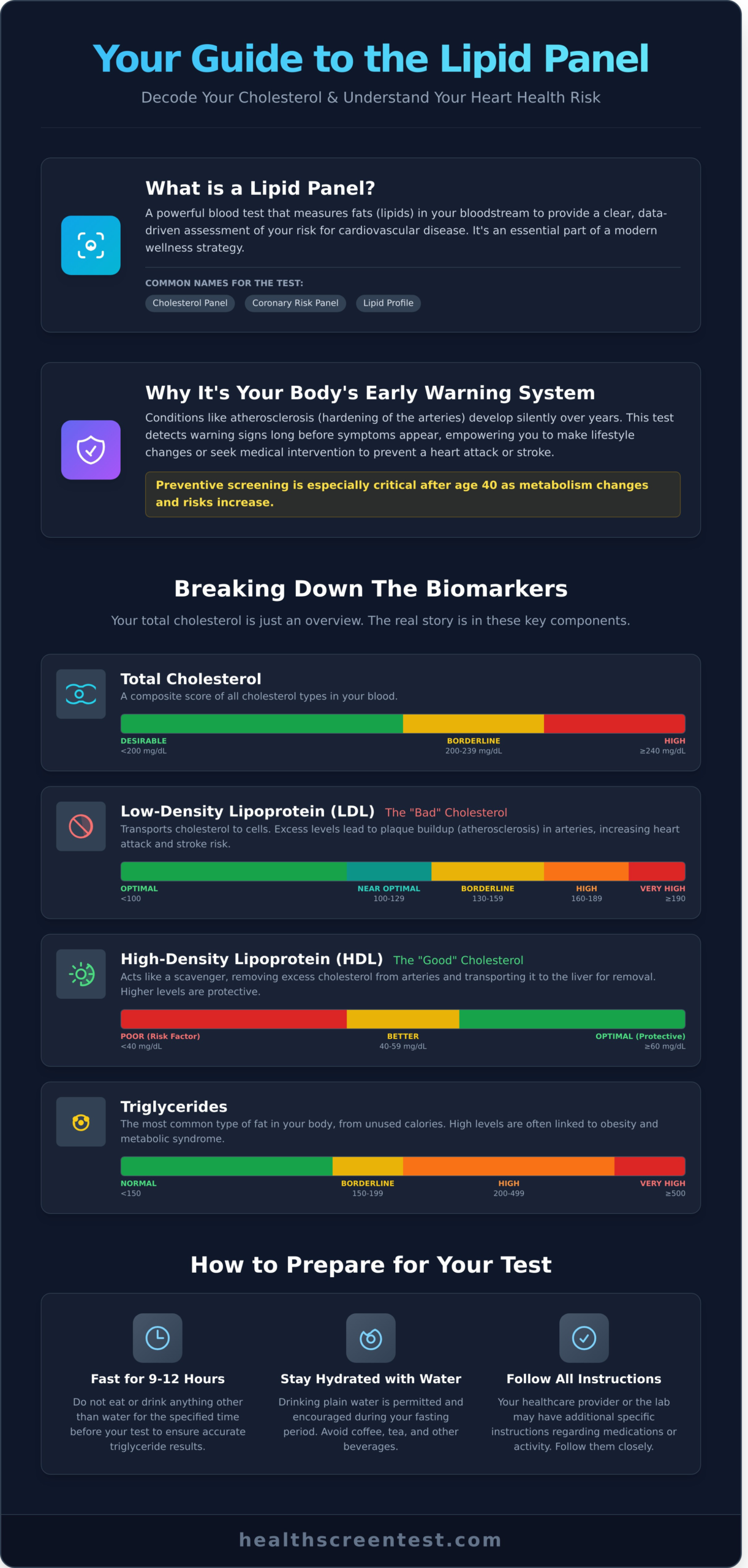
When you receive your lipid panel results, you’ll see more than just one number. Total Cholesterol is a composite score, and understanding its individual components is crucial for accurately assessing your heart health. According to the National Library of Medicine, interpreting your Cholesterol Levels is a key step in managing cardiovascular risk. Think of the total score as an overview; the real story lies in the details of each biomarker.
Let’s break down the four key measurements:
- Low-Density Lipoprotein (LDL): Often called “bad” cholesterol, LDL’s primary job is to transport cholesterol to cells. However, when levels are too high, excess LDL can build up in your artery walls, forming hard deposits called plaque. This process, known as atherosclerosis, narrows the arteries and increases your risk of heart attack and stroke.
- High-Density Lipoprotein (HDL): Known as “good” cholesterol, HDL acts like a scavenger. It collects excess cholesterol from your arteries and transports it back to the liver, where it’s broken down and removed from the body. Higher HDL levels are protective against heart disease.
- Triglycerides: This is the most common type of fat in your body, derived from calories you consume but don’t immediately need for energy. High triglyceride levels can be a sign of other conditions that increase the risk of heart disease, such as obesity and metabolic syndrome.
The Science of Lipids and Heart Health
Because lipids (fats) like cholesterol and triglycerides can’t dissolve in blood, they are transported through your bloodstream by particles called lipoproteins. Persistently high triglyceride levels are often linked with metabolic syndrome, a cluster of conditions that significantly elevates your risk for heart disease. Very Low-Density Lipoprotein (VLDL) is a key triglyceride-carrying particle that eventually becomes LDL, making it a direct precursor to arterial plaque.
Why Ratios Matter More Than Individual Numbers
While individual numbers are important, the relationship between them often tells a more complete story. The Total Cholesterol/HDL ratio is a powerful predictor of cardiovascular risk. When I interpret a lipid panel, I find this ratio provides a clearer picture than any single number. For a deeper analysis, our Advanced Baseline Biomarkers Panel provides even more granular data for a truly proactive approach to your health.
Interpreting Your Cholesterol Results: What the Ranges Really Mean
Receiving your lab report can feel like trying to decipher a secret code. Numbers and acronyms fill the page, but what do they signify for your health? As a clinical professional, my goal is to provide clarity and peace of mind. Your lipid panel results are not a final judgment but a powerful tool-a data-driven snapshot that empowers you to take control of your cardiovascular wellness. Let’s break down these crucial biomarkers together.
Understanding the Numbers
Your report focuses on four key measurements. According to leading institutions like Johns Hopkins Medicine, understanding what is a lipid panel is the first step toward proactive health management. Here are the optimal targets for most adults:
- LDL Cholesterol (Low-Density Lipoprotein): Often called “bad” cholesterol, the optimal level is less than 100 mg/dL. This target can be lower if you have other risk factors for heart disease.
- HDL Cholesterol (High-Density Lipoprotein): Known as “good” cholesterol, higher is better. Aim for 60 mg/dL or above to be considered protective.
- Triglycerides: These are fats from the food we eat. An ideal level is below 150 mg/dL. It’s important to note that a recent meal can temporarily elevate this number.
Myths vs. Reality in Cholesterol Testing
Misconceptions about cholesterol are common. A prevalent myth is that all cholesterol is harmful, but your body needs it to build cells. The key is balance. Another dangerous misconception is that only overweight individuals need to worry. In reality, genetics play a significant role, and slender people can have dangerously high cholesterol. Here in Arizona, an active, outdoor lifestyle is a major benefit to heart health, but it doesn’t grant immunity from underlying genetic predispositions.
When your levels fall into borderline or high-risk categories, it’s not a cause for alarm but a signal to take action. Use your results as the foundation for a productive conversation with your healthcare provider. Together, you can create a personalized plan that may include diet, exercise, or other interventions, putting you firmly in charge of your long-term health journey.
Preparing for Your Blood Work: Fasting and Local Lab Logistics
Understanding the steps before your blood test can significantly reduce any anxiety and ensure your results are as accurate as possible. From knowing what to drink to finding a convenient lab, a little preparation goes a long way. Here, I’ll walk you through the simple logistics for a smooth and stress-free experience when getting your lipid panel.
The Ultimate Fasting Checklist
Fasting is the most critical step in preparing for an accurate lipid profile. When you eat or drink, fats and sugars enter your bloodstream, which can temporarily elevate certain lipid levels and skew your results. To get a true baseline reading, following a clear protocol is essential.
- Stay Hydrated with Water: Drinking plenty of plain water is encouraged. It helps keep your veins full, making the blood draw easier for the phlebotomist.
- Avoid Other Beverages: Black coffee, tea, and even sugar-free drinks should be avoided during your fasting period as they can stimulate your digestive system and impact results.
- Medication Protocols: Never stop taking prescribed medications unless you are specifically instructed to do so by your healthcare provider. Discuss your upcoming test with them to confirm your routine.
For the most precise triglyceride measurement, a strict 12-hour fasting window before your blood draw is the clinical gold standard.
Finding a Convenient Lab in the East Valley
We believe that taking control of your health should be seamless, not a logistical challenge. That’s why we partner with thousands of certified patient service centers nationwide. For residents in the East Valley, this means you can easily find a location near Gilbert, Mesa, or Chandler that fits your schedule. A convenient option is always nearby, ensuring your health journey is hassle-free. Our team is ready to help you schedule your appointment at the most suitable location; simply visit our contact-us page for assistance.
What to Expect During the Blood Draw
The blood draw itself, known as phlebotomy, is a quick and routine procedure that typically takes less than five minutes. A trained professional will clean a small area on your arm, gently insert a needle, and collect a small sample of blood into a vial. You might feel a brief pinch, but the discomfort is minimal and passes quickly. Knowing what to expect can help make the process feel routine and straightforward, allowing you to focus on the valuable health insights your lipid panel will provide.
Taking Control: How to Order Your Lipid Panel Online in Gilbert
In today’s healthcare landscape, waiting for a doctor’s referral is no longer your only option. Direct-to-consumer lab testing empowers you to proactively manage your cardiovascular health with unmatched privacy and speed. This modern approach puts you in the driver’s seat, allowing you to order a lipid panel and get the data you need without the traditional hurdles. The process is designed for your convenience and peace of mind.
Getting started is a simple, three-step process:
- 1. Order Online: Select your test on our secure website. No referral is necessary.
- 2. Visit a Local Lab: Take your lab requisition form to a patient service center in or near Gilbert for a quick blood draw.
- 3. Get Your Results: Receive a notification to access your confidential results through our secure online portal, often within one to two business days.
The Health Screen Test Advantage
We believe in transparent, patient-first healthcare. With us, you get clear, upfront pricing without the risk of hidden facility fees or complex insurance claims. Our commitment to medical reliability is paramount; we adhere strictly to E-E-A-T guidelines to ensure the information you receive is trustworthy and accurate. This focus on expertise and authority means you can be confident in the data you use to make important health decisions.
Your Next Steps for Peace of Mind
Understanding your cholesterol is a crucial first step. For a more complete picture of your cardiovascular risk, consider integrating your lipid panel into our comprehensive Primary Stroke & Cardiovascular Disease Package. After your lab visit, you’ll receive an email to log into your secure portal and view your easy-to-understand report. We urge the Gilbert community not to wait for symptoms. Take a definitive step towards protecting your heart health today.
Take Control of Your Cardiovascular Health in Gilbert
We’ve broken down the essentials of cholesterol testing, from understanding biomarkers like LDL and HDL to interpreting your results. The key takeaway is that knowledge is your greatest asset in managing cardiovascular risk. For Gilbert residents, taking a proactive stance on heart health has never been more accessible.
You now have the power to monitor these vital metrics without a doctor’s referral or the complexities of insurance. Ordering a comprehensive lipid panel is a foundational step toward a data-driven wellness strategy. With Health Screen Test, the process is seamless. Choose from over 2,000 convenient national and East Valley locations, and receive your secure, HIPAA-compliant results directly in your private portal.
Secure Your Peace of Mind: Order Your Lipid Panel with Ratios Today
Making an informed decision about your health is the most empowering step you can take. Start your journey to cardiovascular clarity and confidence now.
Frequently Asked Questions About the Lipid Panel
Do I really need to fast for a lipid panel in 2026?
While medical guidelines have evolved, fasting remains the best practice for the most accurate results, particularly for triglycerides and LDL cholesterol. Some initial screenings may not require it, but for a comprehensive assessment, a 9-to-12-hour fast (water only) is often recommended. We advise following the specific instructions provided with your test order or consulting your healthcare provider to ensure the highest quality data for your health evaluation.
How often should a 40-year-old in Gilbert get a cholesterol test?
For a 40-year-old in Gilbert with average cardiovascular risk, national guidelines typically recommend a cholesterol screening every four to six years. However, if you have risk factors such as a family history of heart disease, high blood pressure, or diabetes, your physician may advise more frequent testing. Proactive, regular monitoring is a key component of managing your long-term cardiovascular wellness and taking control of your health journey.
Can I order a lipid panel online without a doctor’s order in Arizona?
Yes, in the state of Arizona, you are empowered to take a proactive role in your health through direct-access testing. Services like Health Screen Test allow you to order a lipid panel online without a physician’s referral. Our secure and streamlined process provides a convenient, confidential way to get the essential health data you need, allowing you to monitor your wellness on your own schedule.
What is the difference between a lipid panel and a basic metabolic panel?
A lipid panel and a basic metabolic panel (BMP) measure different sets of biomarkers to assess different aspects of your health. A lipid panel focuses exclusively on cholesterol and triglycerides to evaluate your risk for cardiovascular disease. A BMP, on the other hand, provides information about your kidney function, blood sugar levels, and electrolyte balance. Both are valuable tests, but they serve distinct diagnostic purposes.
What happens if my lipid panel results are abnormal?
Receiving an abnormal result is the first step toward taking corrective action for your health. We provide clear, understandable reports, and we strongly encourage you to discuss these findings with your primary care physician. They can interpret the results in the full context of your health profile and recommend a personalized plan, which may include lifestyle adjustments, dietary changes, or medication to manage your cholesterol levels effectively.
Whether you’re looking for new exercise equipment, kitchen tools for healthier cooking, or other consumer goods to support these lifestyle changes, online stores can be a convenient resource; for a diverse selection, you can discover SUZANA SHOP.
This personalized approach can extend to your nutritional intake as well; for example, services like Zenutri Personalised Vitamins use health data to create custom supplement routines designed to support your wellness goals.
How much does a lipid panel cost at Health Screen Test?
At Health Screen Test, we are committed to transparent and accessible pricing. Our comprehensive Lipid Panel test is priced at $49. This single, upfront cost includes the order, the professional phlebotomy service at a partner patient service center, complete laboratory analysis, and your secure, private results delivered directly to you. There are no hidden fees, ensuring you can invest in your health with complete confidence.
Are there mobile screening locations in Mesa or Chandler?
For individual testing, we utilize a network of professional, conveniently located patient service centers throughout the Valley, including in and around Mesa and Chandler, to ensure a sterile and controlled environment for sample collection. We do offer mobile phlebotomy services for corporate wellness events or large groups. Please contact our client support team to explore options for bringing our seamless screening experience to your organization.
Can exercise right before the test affect my lipid results?
Yes, strenuous exercise within 24 hours of your blood draw can temporarily alter your lipid levels. Intense physical activity can sometimes lower triglyceride levels and raise HDL (“good”) cholesterol, which may not provide an accurate picture of your baseline health. To ensure the most reliable and consistent results, we recommend avoiding vigorous workouts on the day of and the day before your scheduled test.

Article by
Alexander Aquino, RN
With over 35 years of dedicated service within the healthcare industry, I've witnessed firsthand the profound difference early detection can make in saving lives. This experience has ignited my mission to empower individuals to take control of their healthcare before challenges arise.
Throughout my career in both nursing and medicine, I have worked in inpatient hospitals and outpatient clinical settings. I've dedicated myself to one unwavering principle: prevention saves lives. Every day in healthcare reinforces this truth—the earlier we detect potential health issues, the better the outcomes for patients.
Disclaimer
Health Screen Test does not provide medical advice, diagnosis, treatment, or prescription services, nor does it bill insurance. The content presented in this blog is intended solely for educational purposes to help you make informed decisions before purchasing any screening tests. By clicking on an affiliate link, you will be redirected to the respective screening company’s website. Please consult your physician for personalized medical advice. Kindly note that I may receive a small commission from purchases made through affiliate links.